






How to make an outstanding interior design portfolio
Start a Trial
For interior designers, a portfolio is far more than a gallery of finished rooms. It’s an expression of who you are and the clients you serve, reflecting your taste and the value you bring to a space.
Unlike a resume that simply outlines your professional background, an interior design portfolio brings it to life—providing visual proof of your skills and versatility.
To catch the eye of your next client, learn how to make an interior design portfolio that sets you apart. Whether you’re a recent graduate, new freelancer, or industry veteran, you can intentionally build a portfolio that attracts the right clients and turns leads into booked projects.
What is an interior design portfolio and why does it matter?
An interior design portfolio is a curated presentation of past work that communicates your professional identity and demonstrates the value you offer clients.
A well-designed portfolio tells a cohesive visual story of your design approach, skills, and results. It shows not only what you can create, but how you think. This is especially important for independent designers who need to demonstrate their ability to address a range of design issues and client needs on their own.
Overall, your portfolio should express your design journey in a way that builds trust and credibility.
How many projects to include in your design portfolio
As a general rule, it’s worth including 5–10 diverse projects in your interior design portfolio. But remember: Every project shared should earn its place. It’s preferable to have fewer, high-quality portfolio examples that reflect your strongest work rather than more projects that don’t clearly communicate your overall standard.
If you’re just starting out as an interior designer, you might only have a few finished projects to share. Don’t worry—even with just one or two projects under your belt, you can create a strong, in-depth portfolio.
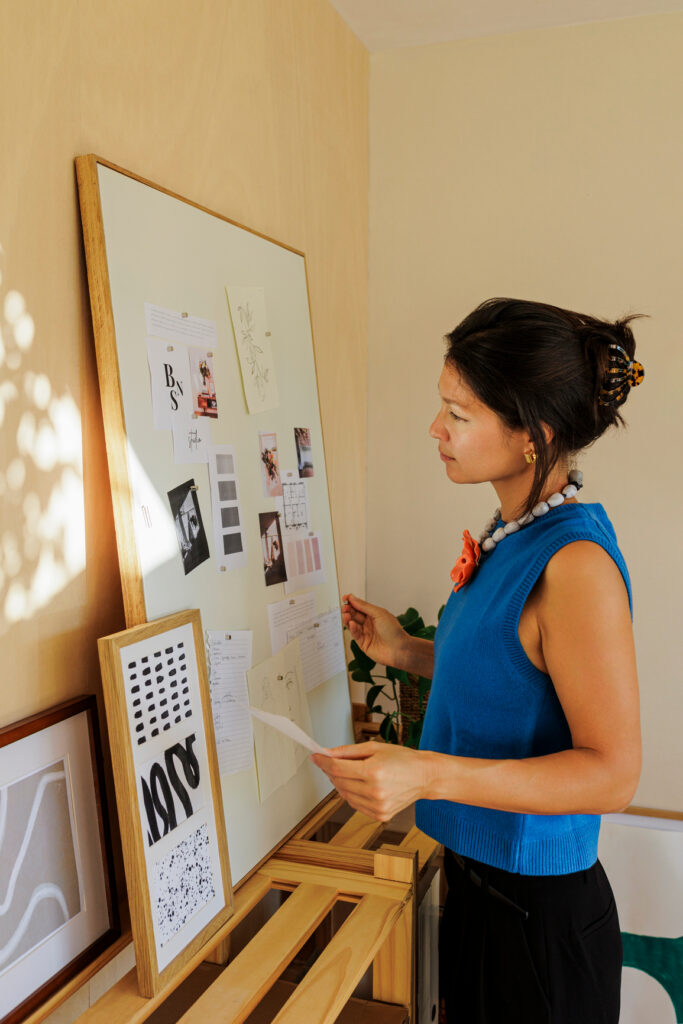
Instead of focusing on quantity, treat each one as a case study. That means providing full context by including a project narrative, supporting visuals, process documentation (e.g., design concepts, mood boards, sketches, and layouts). Then, wrap up with the final outcome, along with any key insights or lessons learned.
What to include in your interior design portfolio
While there are no hard-and-fast rules on how to create an interior design portfolio, it should clearly highlight your fundamental skills and style.
Here are core elements that can help showcase your strengths as an interior designer:
- Before-and-after photography: Use high-quality “before” and “after” images to demonstrate your ability to reimagine and elevate a space.
- Project narrative: Briefly outline your end-to-end process, so clients feel confident you can deliver. Include how you established project timelines, met client goals, addressed constraints, and delivered a final, cohesive solution.
- Process documentation: Add visuals that detail the creative process and design thinking, such as mood boards, sketches, computer-aided design (CAD) drawings, 3D renderings, and material or finish selections.
- Specializations and design style: Feature case studies that reflect your preferred aesthetic and niche. Emphasize key design elements, space types, industries, and stylistic strengths to help attract aligned clients.
- Bio and credentials: Build credibility by sharing your background, design philosophy, professional training, and what sets you apart from other designers.
- Contact information and CTA: Make it easy for potential clients to reach you with clear contact details and a direct invitation to connect.
How to build an interior design portfolio as a beginner
If you’re fresh out of design school and don’t yet have finished client examples, there are still many effective ways to create a professional portfolio. At this stage, the goal is to demonstrate your creativity, technical skills, and design perspective.
Here are some practical approaches to get started:
- Use academic or personal design projects: Turn strong academic assignments or passion projects into portfolio pieces by presenting them as case studies, including how they reflect the type of work you want to do.
- Create conceptual or spec projects: Develop mock projects using a start-to-finish design process and professional design tools, showcasing your technical skills.
- Focus on a specific design style or room type: Go niche, adding portfolio elements that demonstrate a specialized aesthetic to stand out to potential clients.
- Share the inspirations for your design philosophy: Reserve a section of your portfolio to define and present examples of your design philosophy.
- Include testimonials from peers or mentors: Even early feedback from instructors, mentors, or peers in your niche can help build credibility and reinforce strengths.
- Consider a discounted first project: Offer a discount on your first project to nudge interested clients into booking and help you gain real-world experience.

Stop starting from scratch every time.
Build reusable docs for every client stage and send polished, on-brand materials in seconds, not hours.
Explore templatesTips for presenting your interior design portfolio like a pro
Ultimately, your portfolio should be true to your design style and values. Use these interior design portfolio tips to present a portfolio that aligns with career goals and makes you look like a pro.
- Lead with projects that reflect the client’s space and goals: Tailor your portfolio elements to the lead’s sense of style and spatial challenges.
- Tell the story of each project: Share a brief narrative explaining how the project developed, from initial sketches to final look.
- Use process work to justify fees: Show what your interior designer services include, particularly your process documentation (e.g., mood boards and CAD drawings). Often, this section is a persuasive demonstration of why the fees are worth it.
- Bring a printed lookbook to in-person consultations with luxury clients: While a digital portfolio is a must, you’ll also want a printed brochure or lookbook for high-end clients to page through during consultations.
- End with a clear next step: Close your portfolio by clearly explaining how clients can work with you, including contact and consultation details. Where possible, include a link to a sample proposal to help them understand your process and encourage them to reach out.
Common mistakes to avoid in your interior design portfolio
Even in the early stages of your interior design career, you can exemplify a high level of professionalism by avoiding a few common pitfalls:
- Limiting yourself to a single format: Create a digital portfolio for your website and social media channels, as well as a printed lookbook for in-person meetings.
- Overlooking presentation fundamentals: Poor presentation can undermine design excellence. Use high-quality images, a clean layout, and consistent typography, and make sure to include essentials like a table of contents.
- Not tailoring to your target audience: Curate your interior design portfolio according to the type of design jobs you want to attract, including specific aesthetics, spaces, and industries.
- Using uncredited imagery: Always credit any images that aren’t your own to maintain professionalism and integrity.
- Allowing your portfolio to become outdated: An outdated portfolio can raise doubts about your current skills. Always refresh your interior design portfolio as you complete new work and seek out new niches.
Creating a portfolio that attracts clients—and keeps them
As every designer knows, your portfolio is never truly complete. It should evolve as you land new projects, expand your skills, and refine your design style, growing alongside your career.
Your portfolio opens the door—and HoneyBook helps guide clients through it. With HoneyBook, you can create a polished, automated client experience that turns portfolio interest into real, booked projects. Start your free trial today.
FAQs
How often should I update my interior design portfolio?
In an ideal scenario, you should update your interior design portfolio every three to six months, or whenever you’ve completed a significant or high-profile project.
How do I get professional photos of my interior design projects without a big budget?
Achieve high-quality project images without a large budget by learning to photograph your work with a smartphone. With thoughtful lighting and well-styled shots, you can capture clear, professional-looking visuals of your interior designer work.
How do I use my portfolio to attract higher-budget interior design clients?
To attract luxury clients, you should meet premium interior design portfolio requirements, including using high-quality imagery and showing the holistic process behind your design work. Demonstrate how you handle complex business requirements, such as space planning, enterprise budgets, building regulations, and vendor coordination.
What is the best format for an interior design portfolio?
There’s no single “best” format. Strong portfolios are typically multi-format to suit different contexts. Create a digital format for your website (both an interactive gallery and a PDF download), a carousel version for social media, and a printed lookbook for in-person consultations.

HoneyBook's client relationships platform makes it easy for independent business owners to streamline their processes and create remarkable client experiences by combining essential tasks like an online contract, online invoice, client communication, online payment software, and more all in one place.