










Simplify invoicing with our
Streamline your invoicing process with our completely free invoice generator - the ultimate tool for simplifying your process and creating a professional invoice in seconds.

Own a small business?
How to use our
invoice generator
Track payments effortlessly and foster client engagement with a seamless invoicing experience. Elevate your brand, ensure timely payments, and enjoy a custom invoice maker with HoneyBook.
Benefits of our
invoice generator
Experience a new level of efficiency with HoneyBook's invoice generator. Streamline your billing process effortlessly by creating your own custom invoice templates. Enjoy the ease of tracking and receiving payments while fostering client engagement through a friendly interface. Elevate your brand, save time, and ensure a seamless experience with HoneyBook's powerful invoice generator.

Try it for free
Online invoice templates to make your own
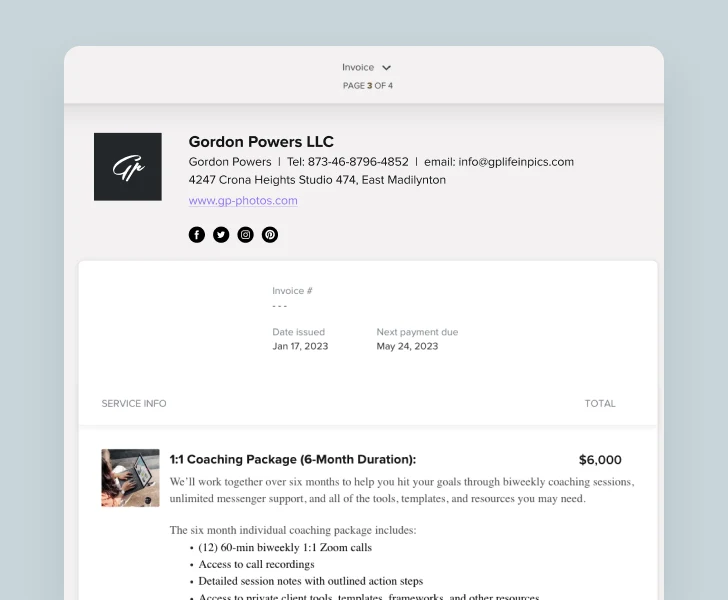
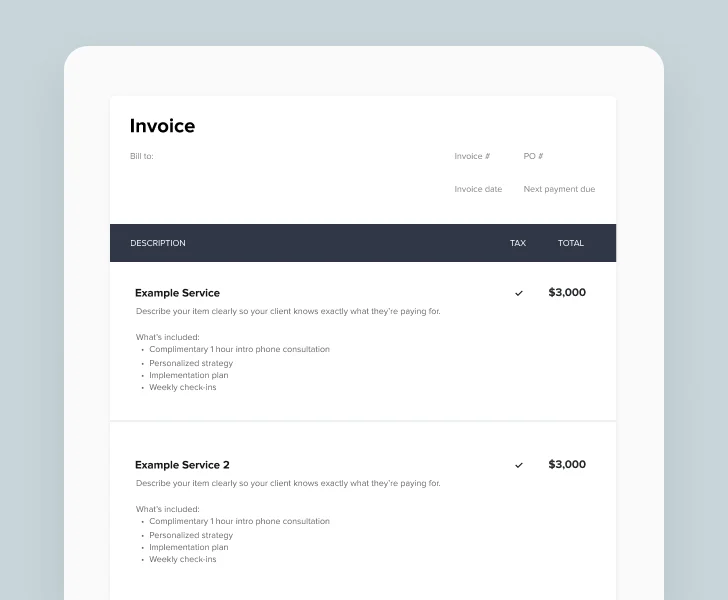
HoneyBook users have access to many professionally-designed invoice templates to make their own, and send in seconds.
Try for free

Use the invoice generator
in three easy steps

Create your template
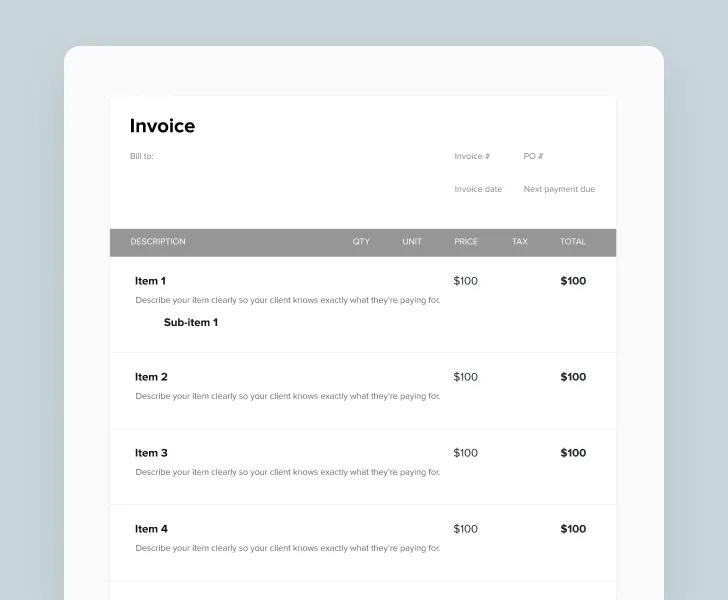
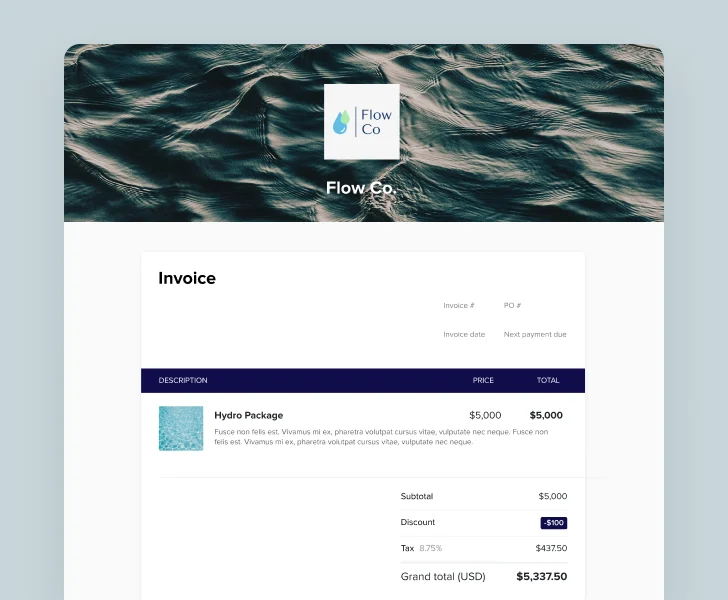
Choose from a variety of professional invoice template designs from our invoice maker or add your branding for a customized touch.

Tailor your invoice
Elevate your brand by adding your business details, customize the payment terms, and offer a variety of
payment options.

Effortless invoicing
Download your customized invoices and experience the efficiency of receiving payments seamlessly.




Make 2026 your
Invoice generator FAQs
Make the most of our free invoice generator
Put simply, an invoice is a commercial document that includes an itemized list of products and/or services that a business or seller provides to a customer or buyer. An invoice should include the price of each item being sold, a subtotal, and any added taxes, as well as clearly communicate the total price of all items. Invoices are commonly used by small businesses, freelancers, independent contractors, or even larger enterprises. In recent years, online invoicing and the use of online payment software has become a preferred method for both businesses and customers. Platforms like HoneyBook make it easy to get started with online invoices for free.
Remember that in and of itself, no invoice is a legally binding agreement. The key is to ensure the invoice is clear and includes essential information, such as accurate details about the transaction, compliance with tax regulations, and any necessary terms and conditions. HoneyBook’s invoice maker includes all these crucial elements, and additionally, it offers you the flexibility to personalize the invoice by enabling the selection of a logo and background picture.
The easiest way to make an invoice for free is to use an online invoice generator like the one above. The main body of an invoice is made up of what are referred to as "items," or the product, goods, or services being sold. Need more info? Check out our breakdown of how to create an invoice or how to send an invoice. For invoicing in the United States, be sure to include sales tax, so that you are in accordance with state tax regulations. If you need a hand, you can find your state's current sales tax rate here. Our invoice generator automatically calculates your grand total from the subtotal (sum of all items) plus the added tax. Keep reading for more specific details on formatting an invoice.
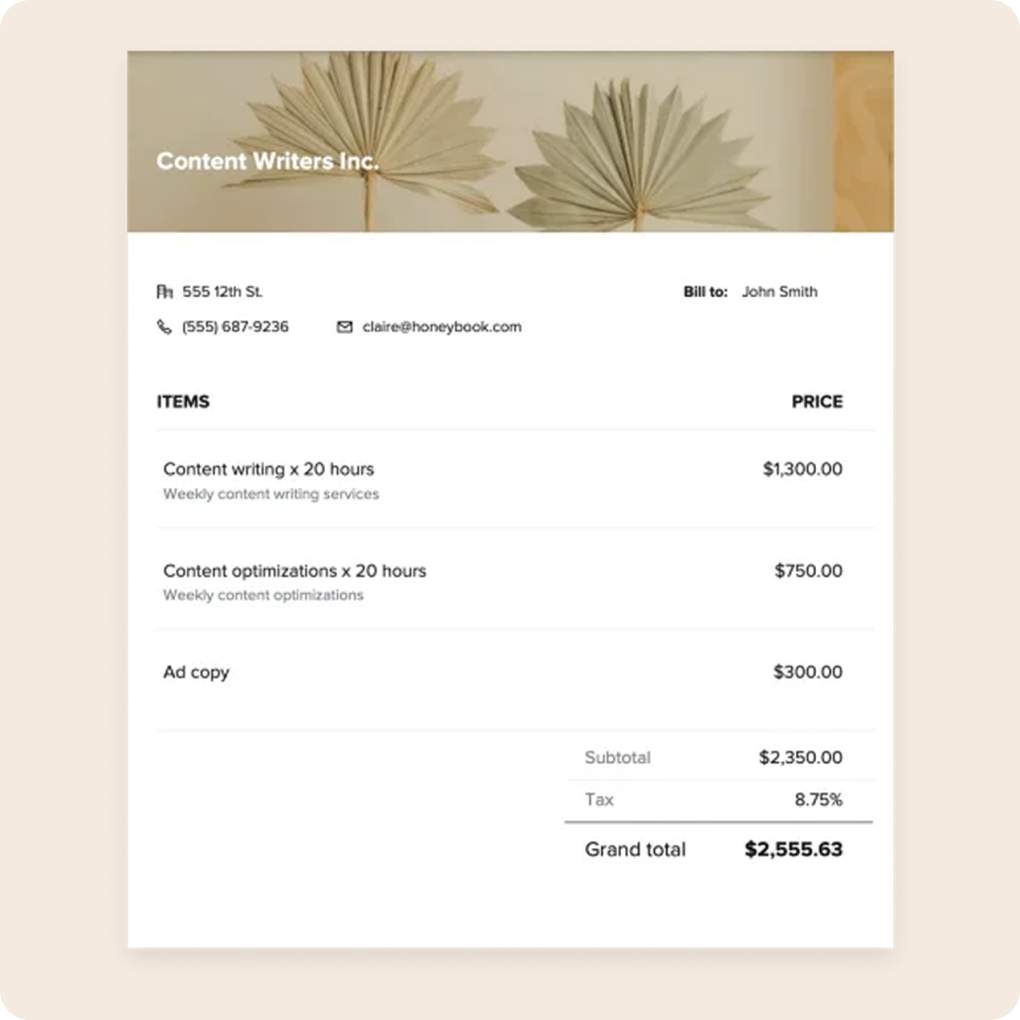
Formatting an invoice is fairly standard besides some built-in differences based on industry and preference. For photographers, consultants, designers, freelancers, and any small businesses who favor more branding on their invoice, invoice details like a header image and logo at the top of the document is a nice option. HoneyBook also offers photography invoice templates, consulting invoice templates as well as many different industry options. For all invoices, regardless of industry, essential business information, like address, phone number, and email address should be toward the top of your invoice, along with the client details or recipient’s information name (ie: 'Bill to' Jessica Smith).
The body or main section of an invoice should be an itemized list with item names left-aligned and a description under each one. Adding descriptions gives your customer more clarity into the specifics of each cost and gives your invoice a professionally detailed finish.
Next, corresponding prices for each item should be placed across from each item title, right-aligned on the invoice page. In the end, all item prices should form a right-aligned column.
Finally, the subtotal, or the pre-tax sum of all prices, should sit below the column of prices. The sales tax rate should follow directly beneath subtotal, and it is often helpful to show both the tax rate and the dollar amount (i.e.: for an invoice with a subtotal of $100, show 7.25% and $7.25). Last but not least, the grand total sits at the bottom right corner of the invoice and summarizes the subtotal plus added tax, as well as payment details to make payment simple for your client.
Sticking to this common invoice format and including these invoice details provides a consistent and easily understandable experience for clients, which means fewer late payments for you!
A purchase order (commonly abbreviated as PO) is a document that lists the products or services a buyer agrees to purchase from a "supplier", or seller. In commercial business transactions, the buyer will produce a PO, which will clearly list the types, quantity, and price at which they will buy goods or services. PO's often help track inventory and facilitate repeat purchases.
Alternatively, an invoice is a commercial document sent from business to customer listing the price and quantity of previously agreed upon goods or services. Similar to an invoice, a bill summarizes charges for goods or services, and is presented to the customer by the seller. Thus, the main difference between a purchase order, invoice, and bill is that a purchase order is initiated by the buyer, whereas invoices and bills are initiated by the seller. Try SmartSheet for a PO template.
Creating an invoice is pretty simple, but finding a good invoicing software can be a tougher task. A great software can mean the difference between getting paid on time and spending hours collecting thousands in outstanding payments.
Here are five key things to look for in an invoicing software:
- Flexible invoice templates: In order to save time, look for a software with plug-and-play invoices that you can save online for your records, duplicate for new customers, tweak as needed and send easily. For on-the-go invoicing, take a look at mobile invoicing on the top-rated HoneyBook app (available on iOS and Android ).
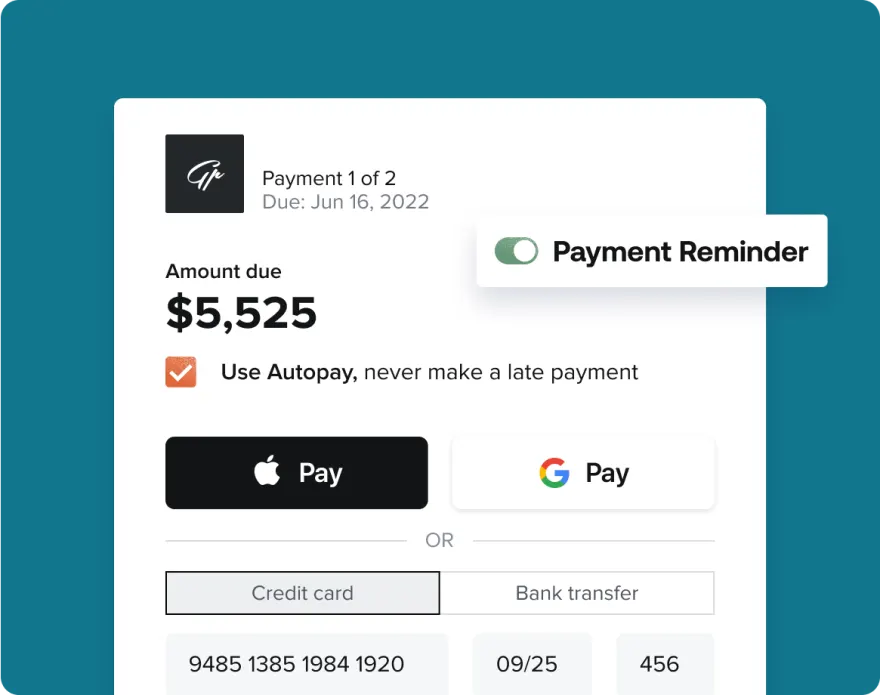
- Online payments: Sending an invoice is only the first step in collecting money from clients or customers. Allowing customers to immediately pay online via credit card or bank transfer increases your likelihood of getting paid quickly and on time. Online payment software like HoneyBook enables clients to review, sign, and make payments quickly and easily online, from any device.
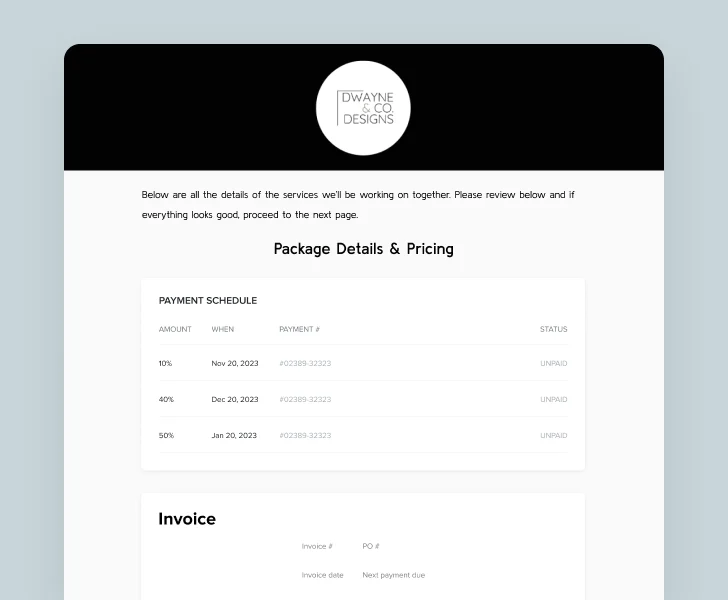
- Payment scheduling: For freelancers and small businesses that charge retainers or collect multiple payments, the ability to set up a payment schedule is critical. A great invoicing software will allow you to pre-define a payment schedule and prompt your client to pay on scheduled dates. HoneyBook, for example, allows businesses to divide payments by percentage (ie: three payments of 33% each, where $1500 is broken up into $500 payments) or lump sums (i.e.: three payments, where a $500 retainer is the first payment, followed by two $200 payments). Learn more about online invoices and payment schedules.
- Automated payment reminders: Invoicing software with automatic payment reminders can save critical amounts of time and business-saving amounts of money. Take it from this photographer who used payment reminder emails on HoneyBook to recover $14,000. HoneyBook allows users to send up to three automatic reminders - seven days before a payment is due, one day before a payment is due and two days after a payment is due. Learn more about setting up payment reminders here.
- A friendly integration with Quickbooks: Invoicing software that integrates with Quickbooks by Intuit helps consolidate your transactions and bookkeeping into one business platform. HoneyBook seamlessly integrates with three versions of Quickbooks (Plus, Essentials, Simple Start) in the U.S. and Canada. When using HoneyBook and Quickbooks, your invoices will automatically sync to your Quickbooks Online account, as soon as a customer submits a payment. If you have multiple payments making up one invoice, your Quickbooks will update after each payment. Learn more about integrating HoneyBook with QuickBooks.
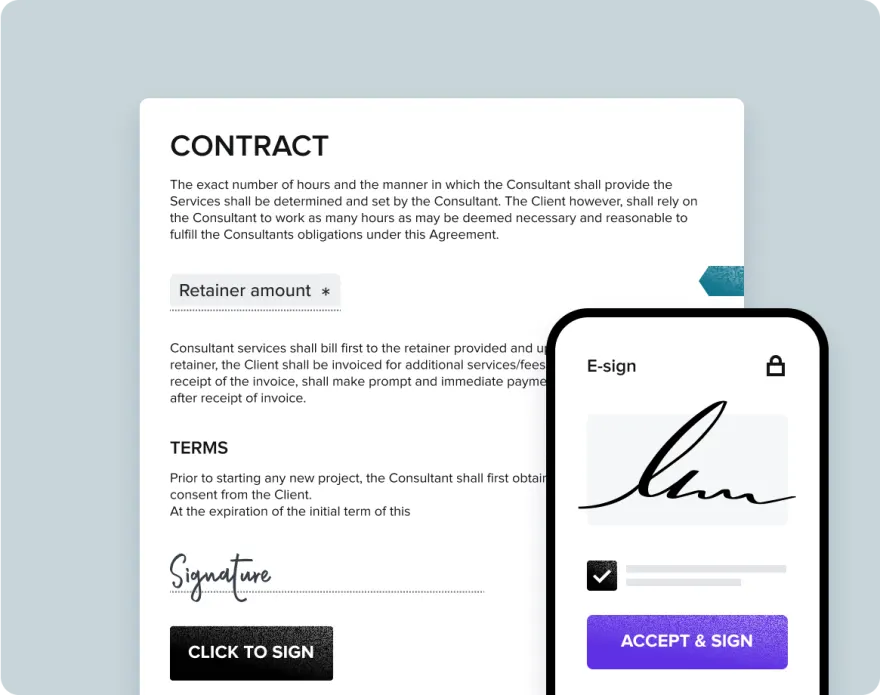
For HoneyBook members, we've made it simple for you to get paid promptly. When you send an invoice, your clients can conveniently pay using major credit/debit cards or bank transfers. We offer an integrated payment system that combines invoicing, contracts, and payments into a single streamlined step. Clients can even set up auto-pay for hassle-free, on-time payments. Our platform is mobile-friendly, providing flexibility for your clients to make payments from anywhere. Automated payment reminders help ensure timely payments, and you can track payments with ease. Your funds are directly deposited into your account, offering quick access, and our Instant Deposits feature ensures you get your money within minutes, rather than waiting for 2-3 business days.