











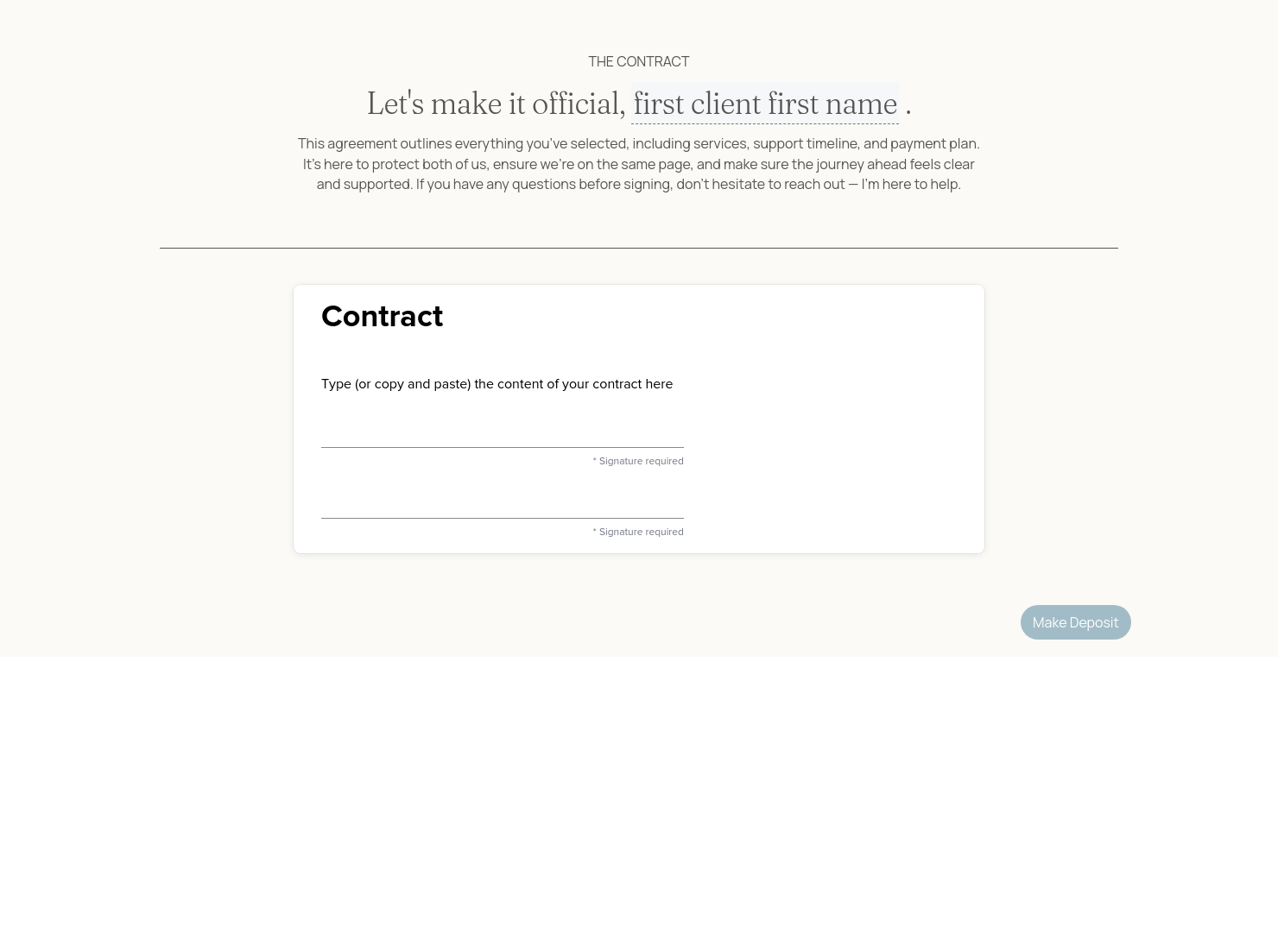

Contract for eSigning

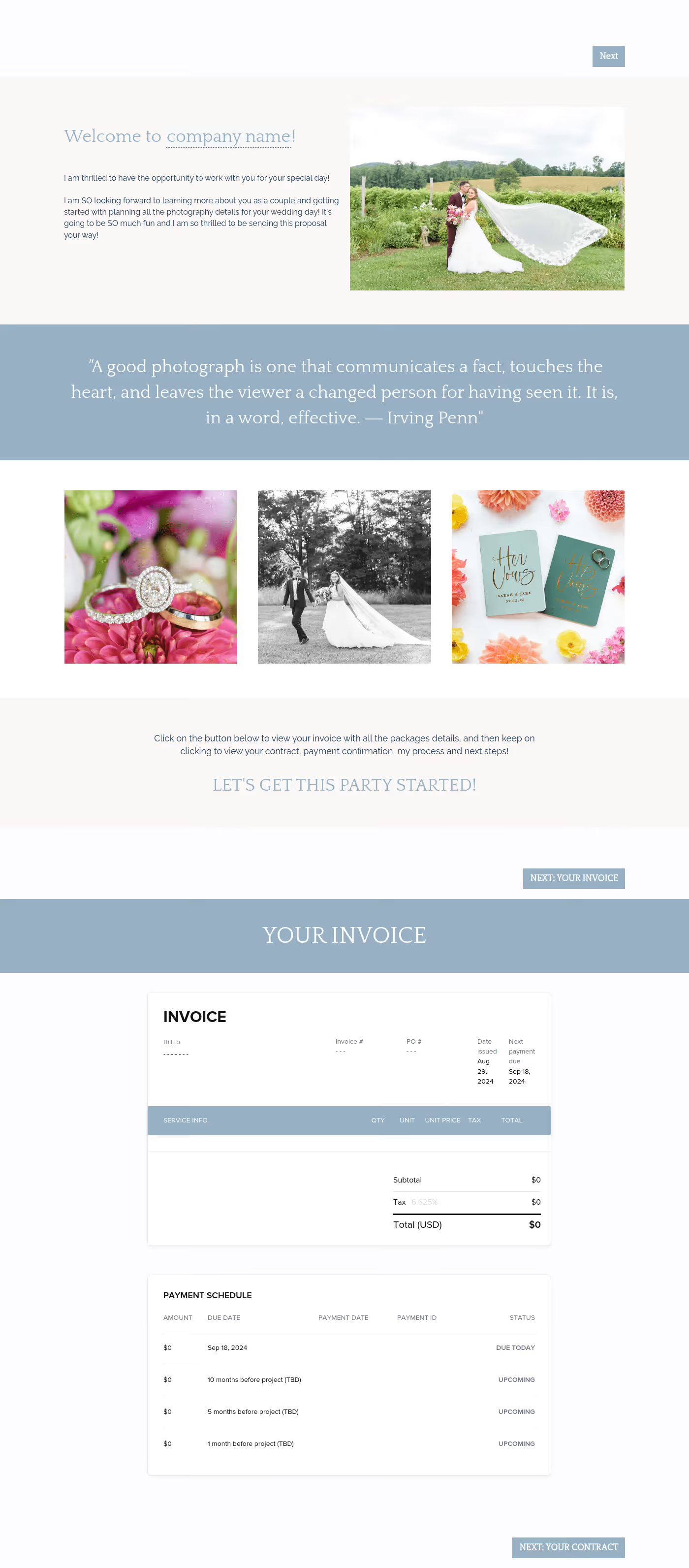
Sign clients easily on the go via eSign with your contracts, or use one of HoneyBook's lawyer-approved contracts

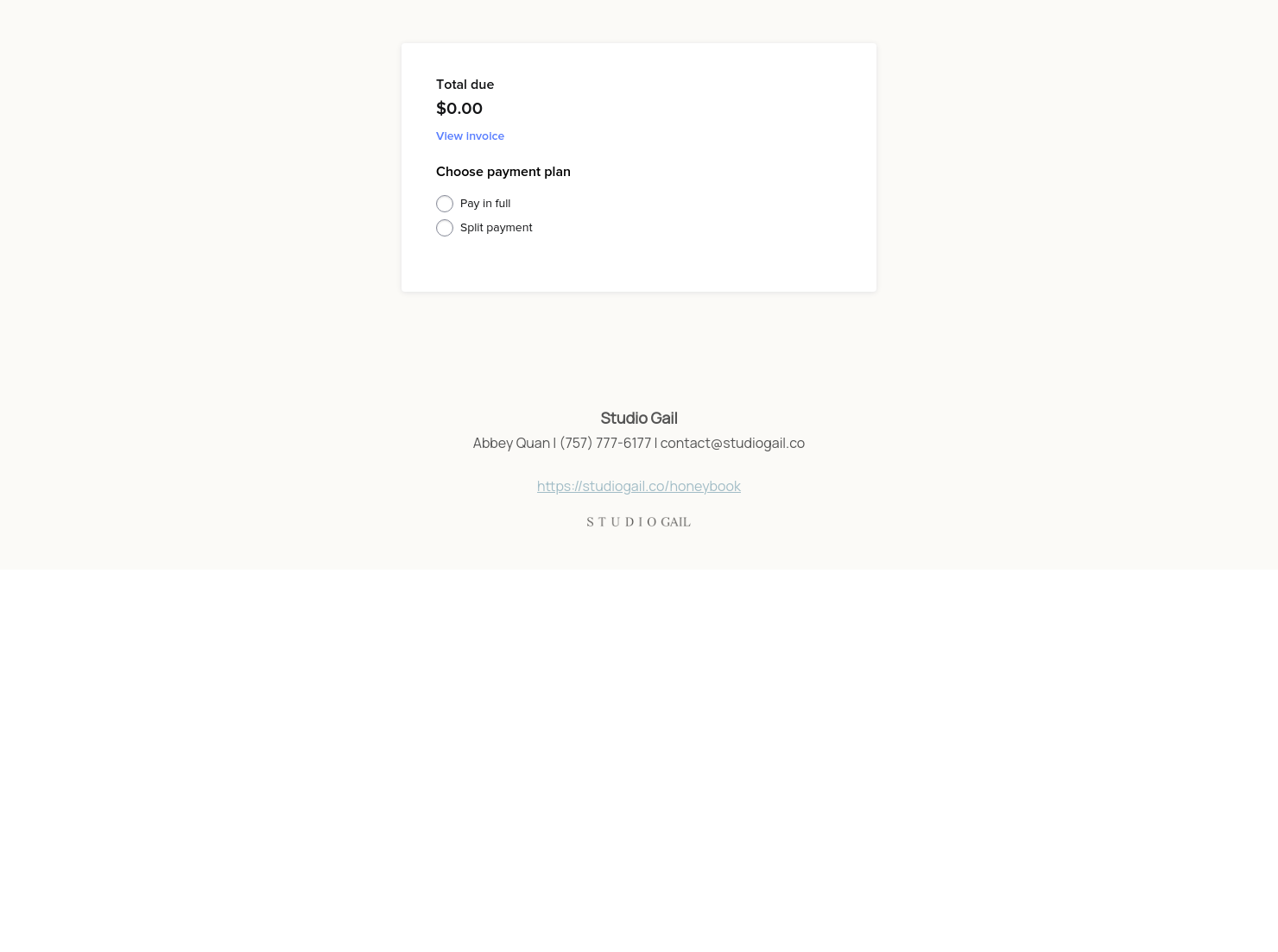
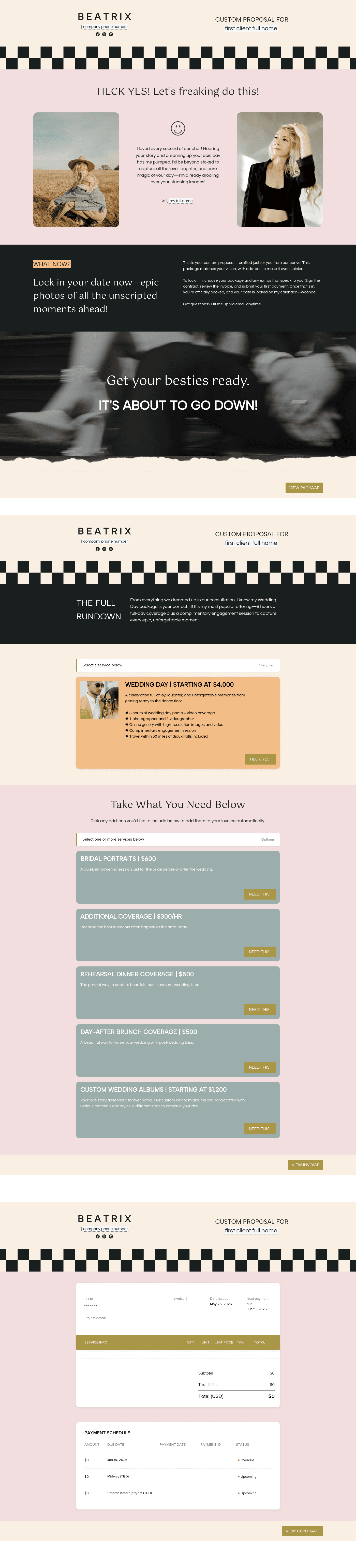
Invoice & online payments
Make it easy for clients to book and pay for your services–all in one file.

Ready-to-use copy
Templates come filled with prewritten copy you can use as is or edit to match your brand and business.

Scheduling
Let clients book meetings, sessions, or appointments during your available time slots.

Services
Showcase your services for easier client booking.


“
Send this when a client is ready to move forward — everything they need to book, all in one place.
”

October 18, 2026

Doula proposal template: How to customize it for top results
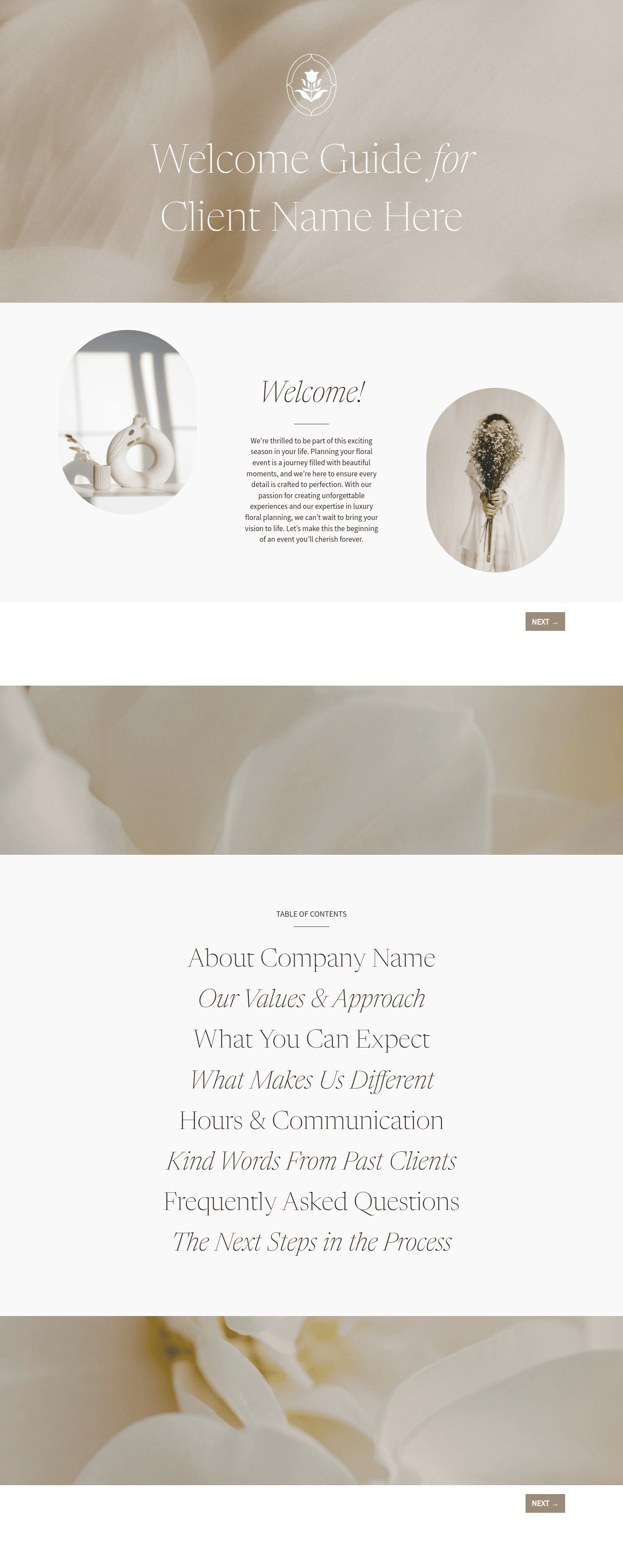
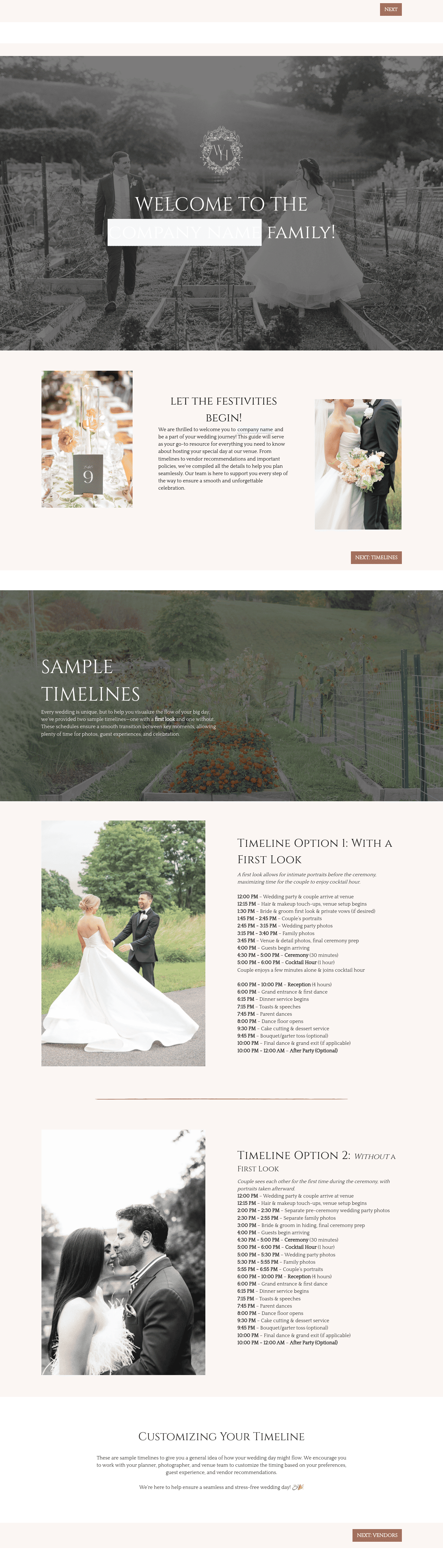
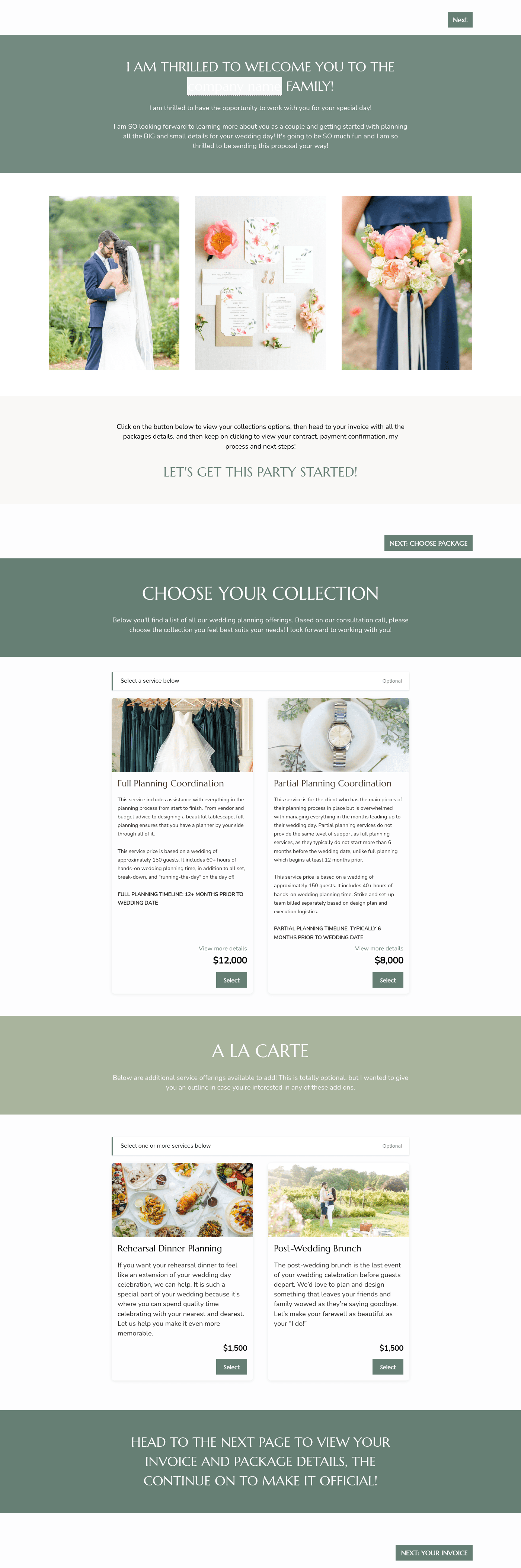
A family reaches out to a doula during pregnancy. They may already have a few questions in mind — what kind of support is offered, how the process works, and what happens if they decide to book. Services need explaining. Pricing may come up too. The problem is that those details don’t always live in one place. A doula proposal helps streamline this. Instead of piecing together information from several conversations, families receive one document that explains everything. A doula proposal opens with a short welcome that introduces the doula and their approach to birth support. From there, the proposal walks through the services being offered, availability, and the investment involved. It also includes the agreement and the final booking step, allowing families to review everything before confirming care.
Birth work is deeply personal, but the logistics surrounding it still need structure. Families often leave an initial consultation feeling enthusiastic about a doula’s approach. Later, practical questions start to surface. They may want to revisit the services offered, the cost of care, availability around their due date, or what support looks like during labor.
If those answers are scattered, uncertainty can creep in. A clear proposal helps prevent that by offering:
- Clarity: Services, pricing, and expectations appear in one place.
- Professional presentation: Clients see a thoughtful overview of the doula’s work.
- Better understanding: Families can review the details at their own pace.
- Efficiency: Doulas avoid repeating the same explanations for each inquiry.
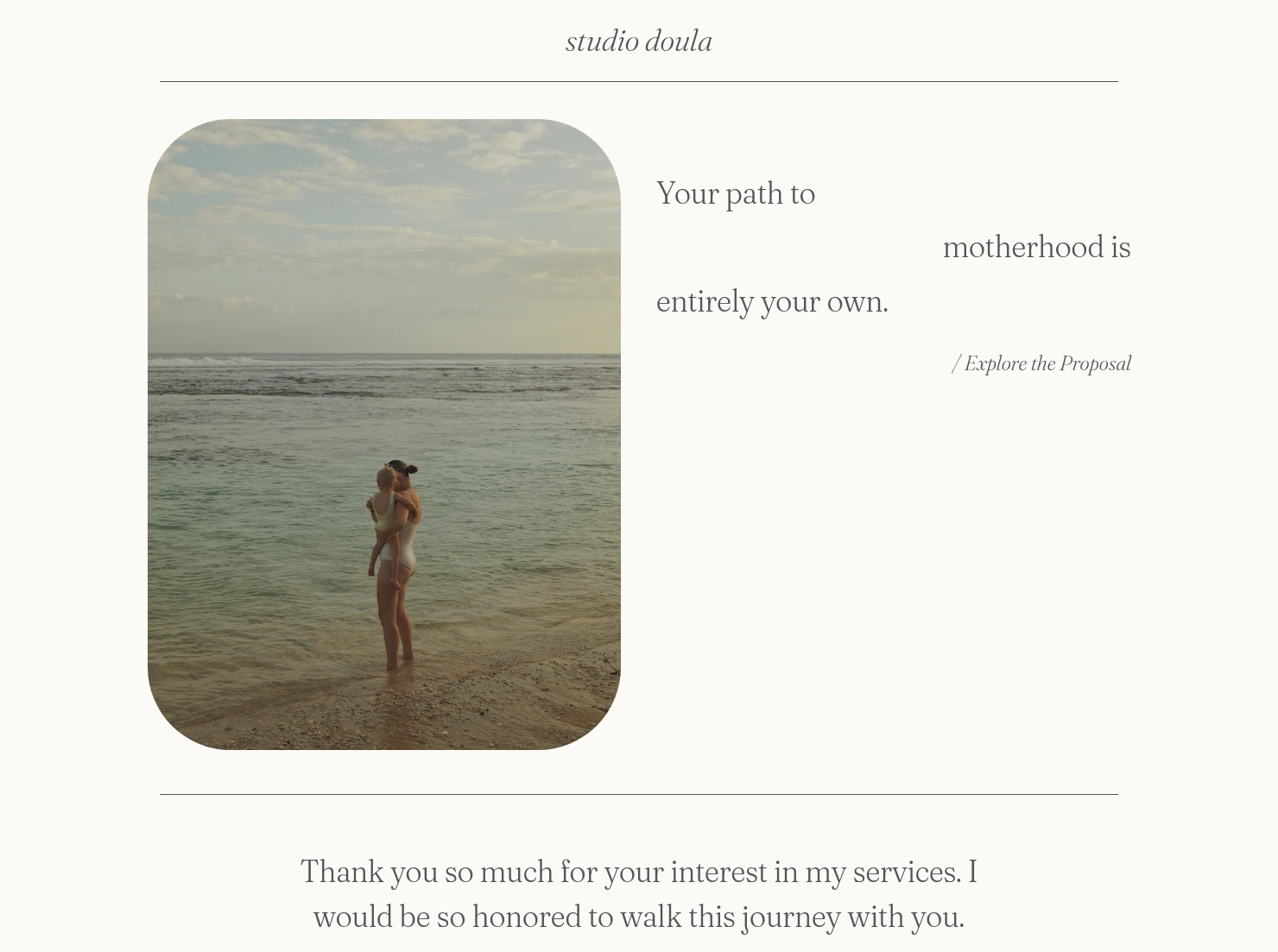
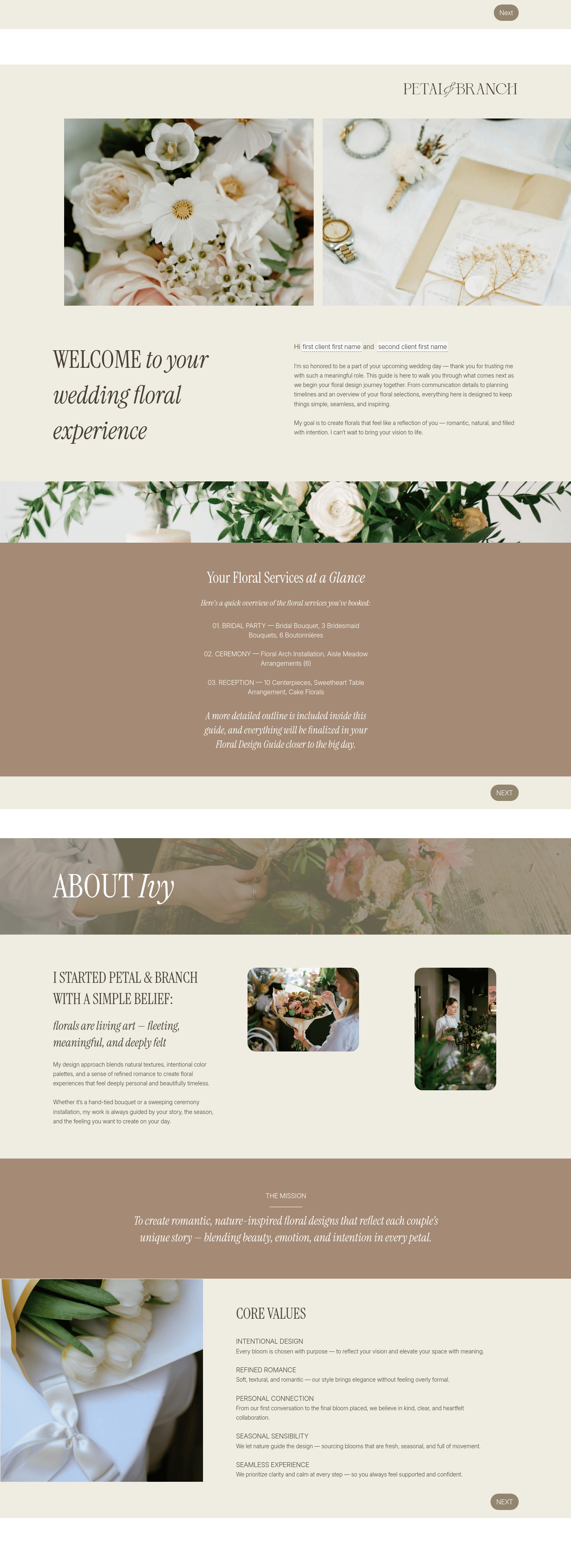
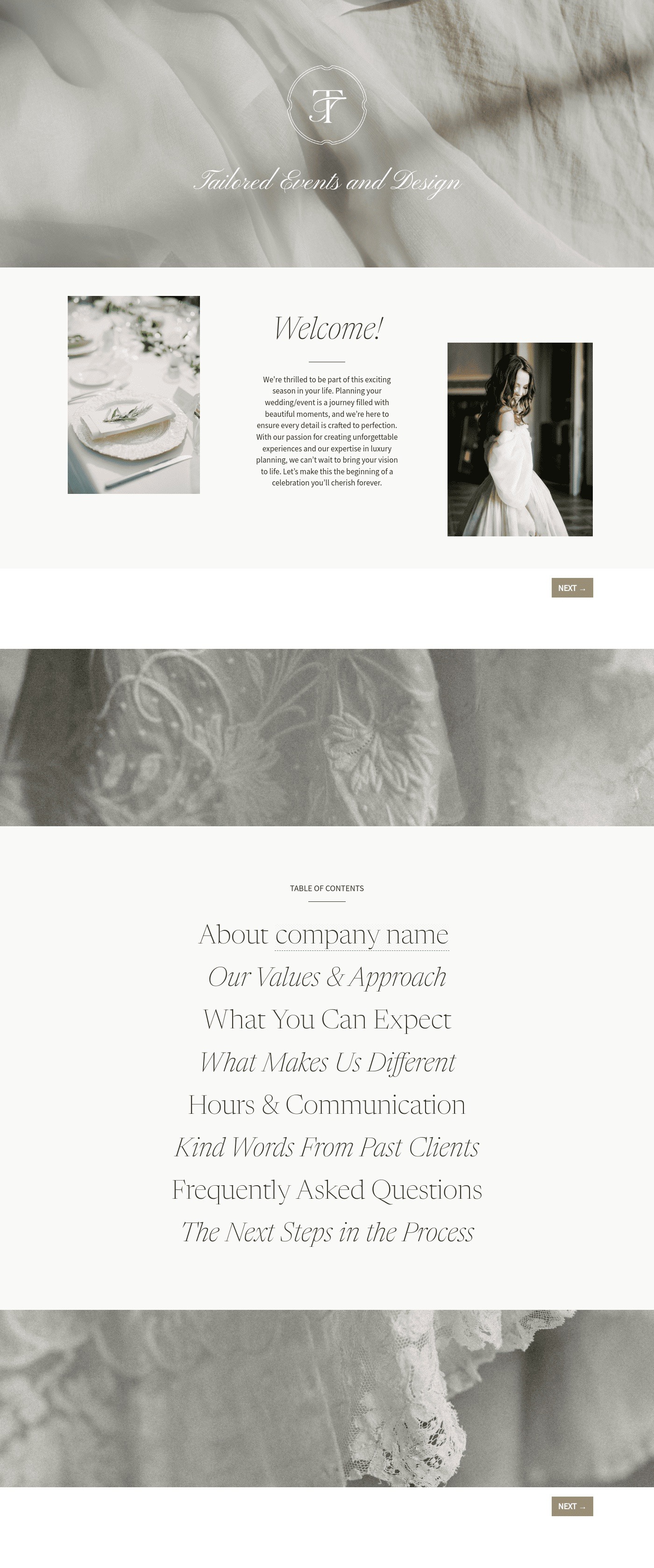
A good doula proposal usually mirrors the way a conversation with a client unfolds. It often begins with a welcome message. This opening section allows the doula to briefly share their philosophy and approach to supporting families during pregnancy, labor, and postpartum care.
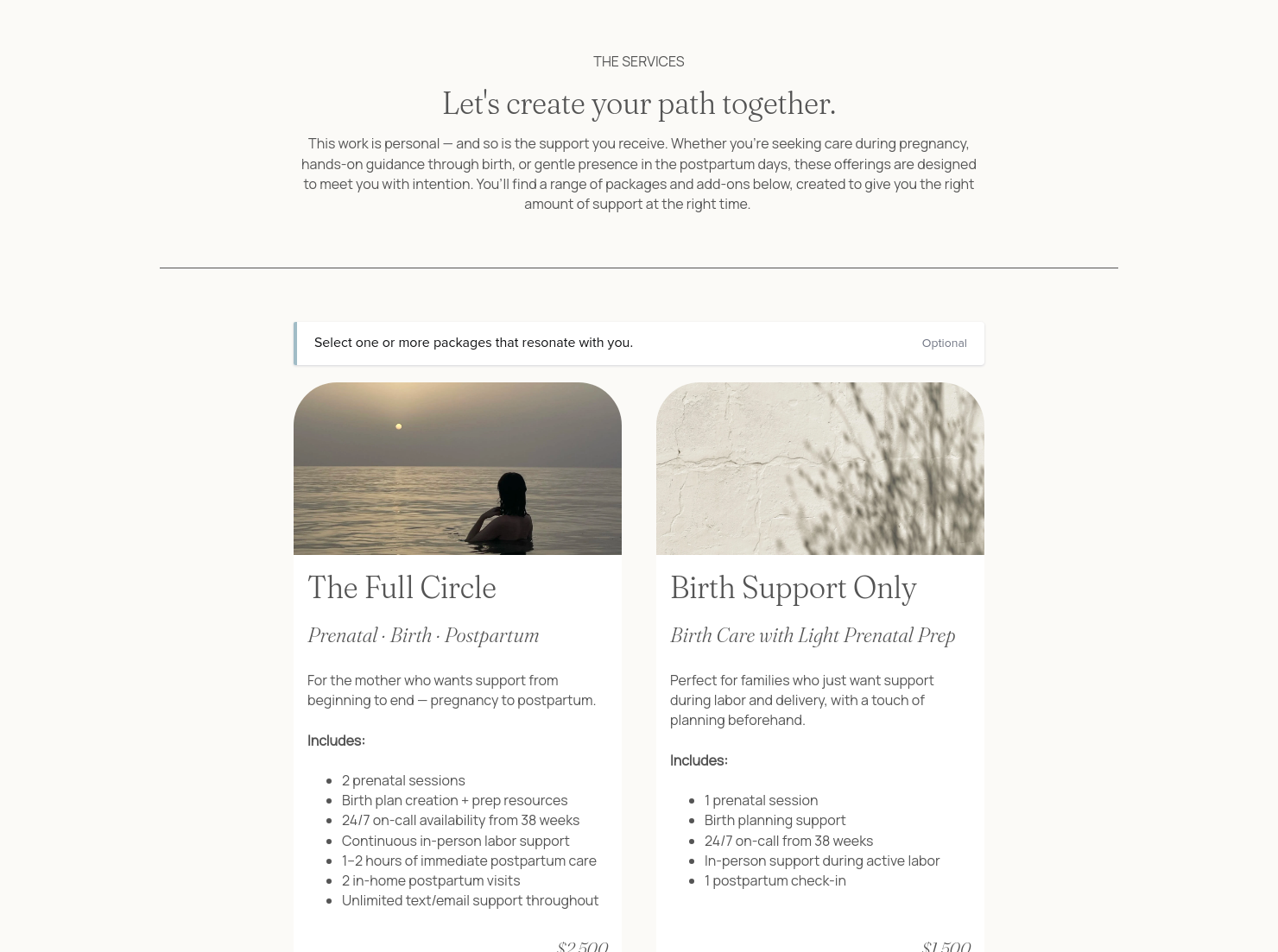
Once that connection is established, attention shifts to the support itself. Clients want to understand what working together will actually involve. The proposal details the services available, which might include prenatal consultations, ongoing communication during pregnancy, on-call support in the weeks leading up to the due date, continuous labor support, and follow-up visits after the baby arrives. Some doulas may also outline backup doula coverage in case of scheduling conflicts.
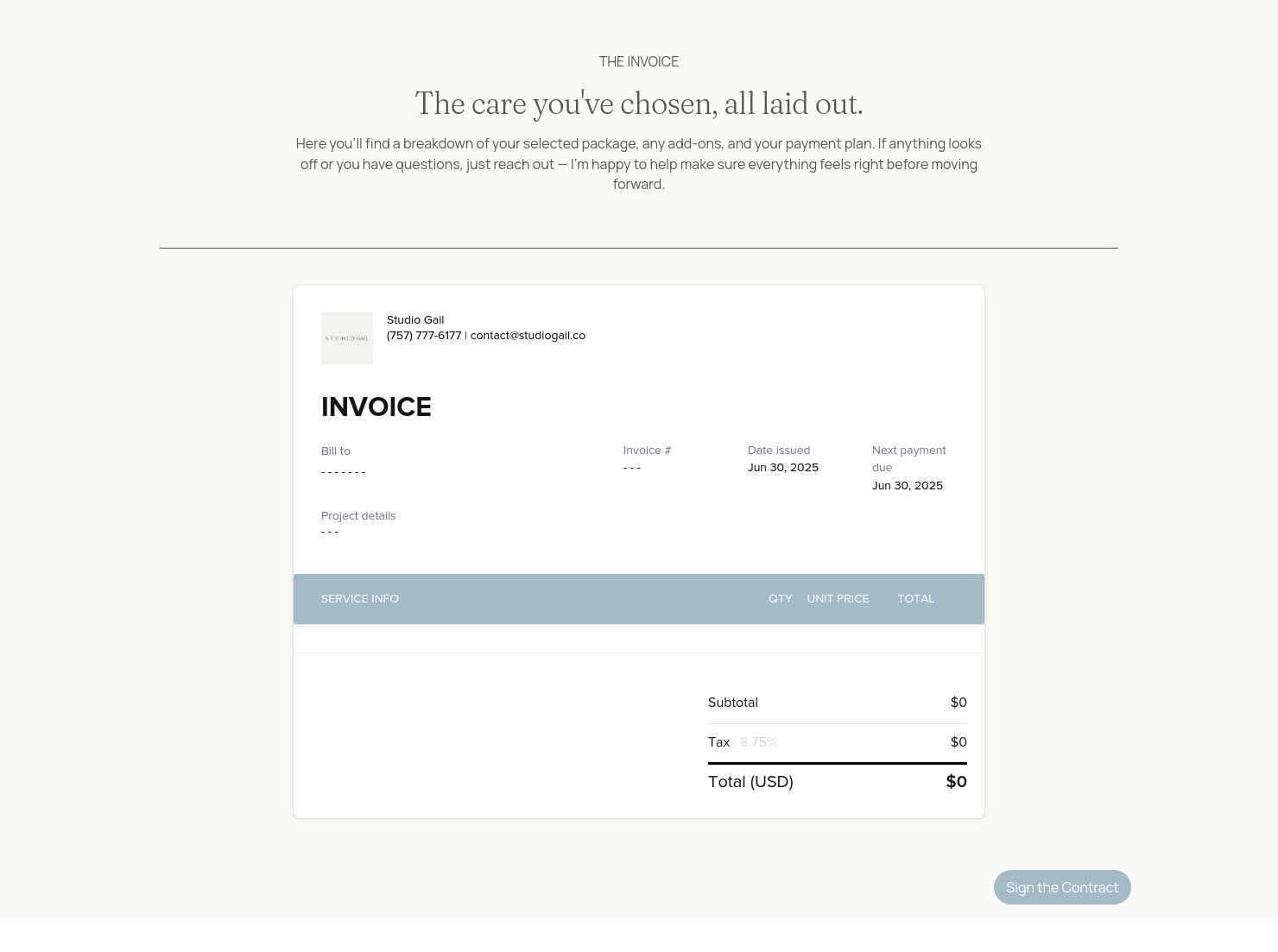
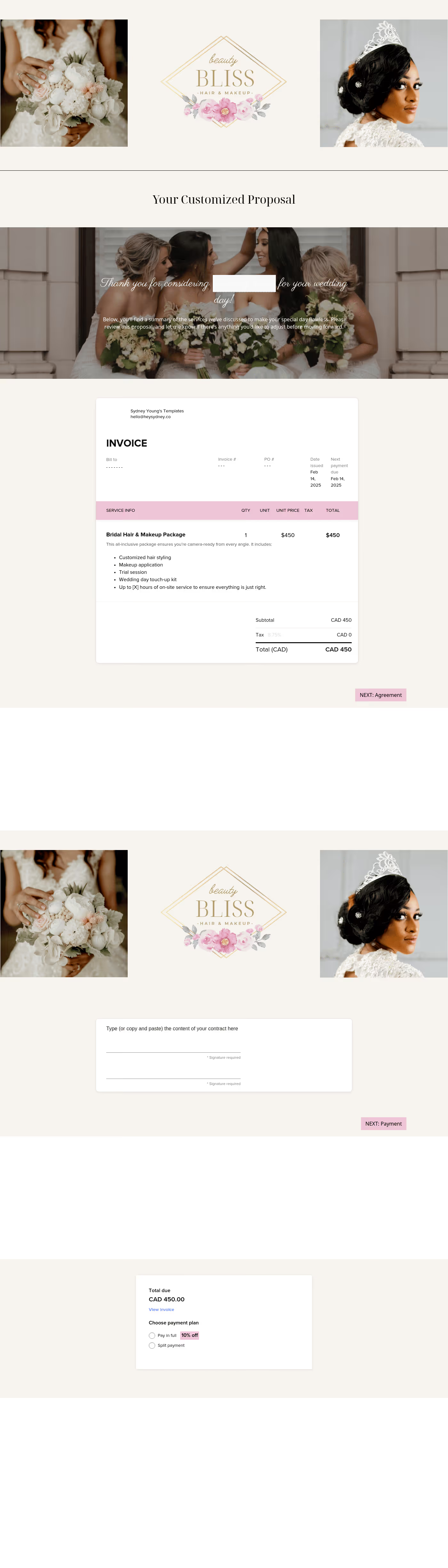
Financial details appear alongside those services. Instead of separating pricing into another conversation, the investment is presented directly within the proposal through an invoice. This may include package options, deposits to secure availability, and, in some cases, payment plans.
Further along in the document, the agreement becomes visible. The contract clarifies what the doula and the client can expect from each other, including the scope of support, the doula’s non-medical role, and availability around the due date window. This helps prevent misunderstandings later on.
The proposal also covers the booking process. A payment section is included, enabling the client to finalize the agreement, pay the deposit, and reserve their spot on the doula's calendar.
An effective proposal feels clear rather than overwhelming. Families usually aren’t looking for complicated documents. They simply want to understand what support looks like and how the arrangement will work.
A thoughtful welcome section can help establish the tone early. It reminds clients that the work is personal, not purely transactional.
From there, clarity matters most. Services should be described in plain language, including how support is provided during pregnancy, labor, and postpartum care. Pricing should feel transparent, with clear expectations around deposits, payment timelines, and what is included in each package.
Also, when the document flows naturally — from introduction to services, agreement, and booking — the entire process becomes easier to follow. That ease matters, as families preparing for birth already have plenty to think about.
Most doulas send a proposal after an introductory consultation. At that stage, families usually understand the doula’s role and are deciding whether the relationship feels like the right fit. The proposal provides the remaining details they need to make that choice.
The template can be useful when:
- Welcoming new clients: Following an initial discovery call.
- Presenting customized support plans: Outlining services based on a family’s needs and due date timeline.
- Confirming birth support: Finalizing the agreement and securing on-call availability before the due date.
- Arranging postpartum care: Documenting visits and recovery support.
Catering has a lot of moving parts, and the menu sits in the center. If your catering menu is scattered across emails, texts, and screenshots, mistakes show up at the worst time.
A structured menu template helps in practical ways.
- Builds client trust and a professional first impression.
- Speeds approvals by making choices simple.
- Reduces payment disputes by documenting totals and terms.
- Saves time by cutting back and forth.
That means fewer surprises for clients and fewer fire drills for you.
FAQs
Below are quick answers to common questions from caterers building a catering menu that clients can approve with confidence.
A doula proposal is the document a doula sends after an initial consultation outlining services, pricing, and agreement terms so families can review the details before confirming support.
The template includes a welcome introduction, a description of services, an invoice presenting pricing, a contract outlining the agreement, and a payment step that allows clients to confirm their booking.
A proposal provides context. Instead of seeing only pricing, families can understand the support being offered and how the working relationship will function.
HoneyBook templates help professionals organize recurring steps in the client process so proposals, contracts, and invoices can be sent without rebuilding documents each time.
Yes. HoneyBook Smart Files allow proposals, contracts, invoices, and other elements to appear together in a single document that clients can review and complete.
Yes. Templates can be customized with fonts, colors, images, pricing tables, and messaging so the document reflects your brand’s voice and visual identity.
Related templates




Related Templates
.png)
.png)


.png)

Make it your own
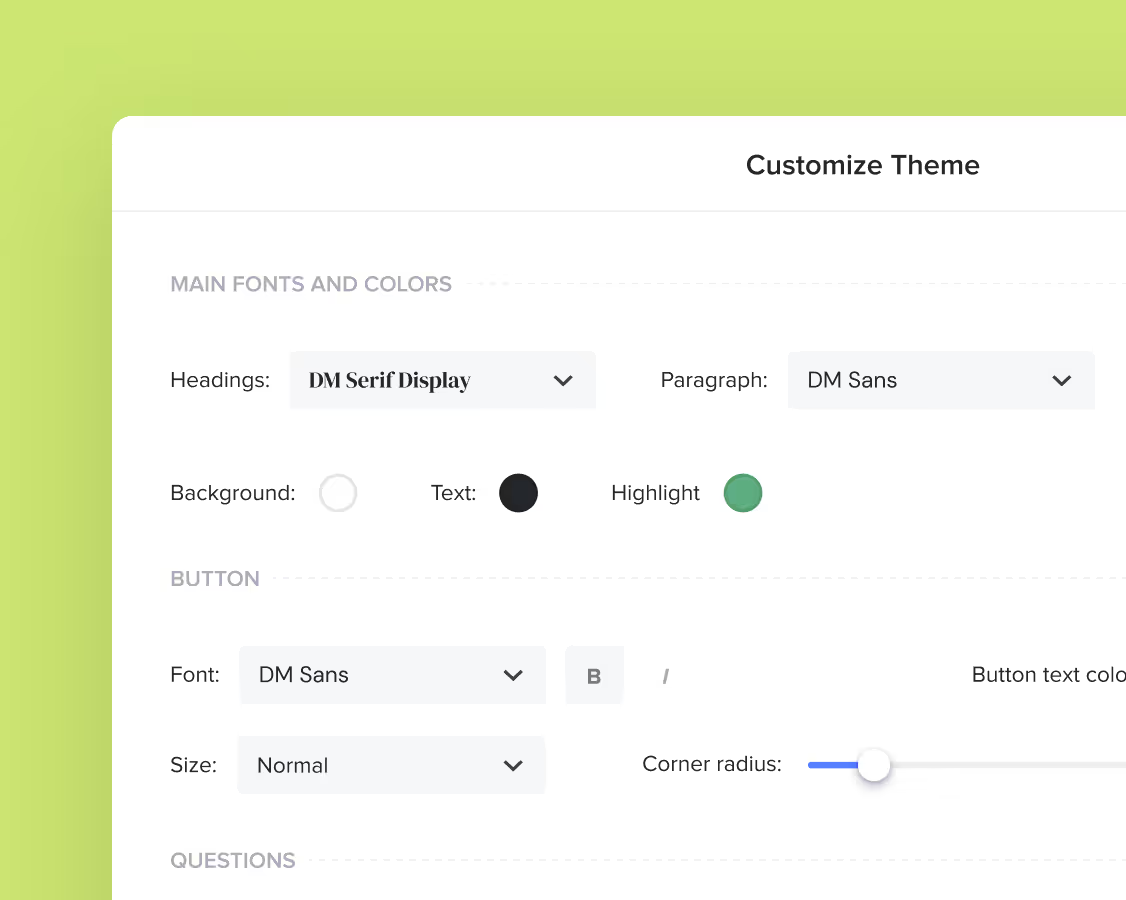
Fully customize the template to fit your needs. Quickly apply your company branding with just a few clicks.
Share with clients
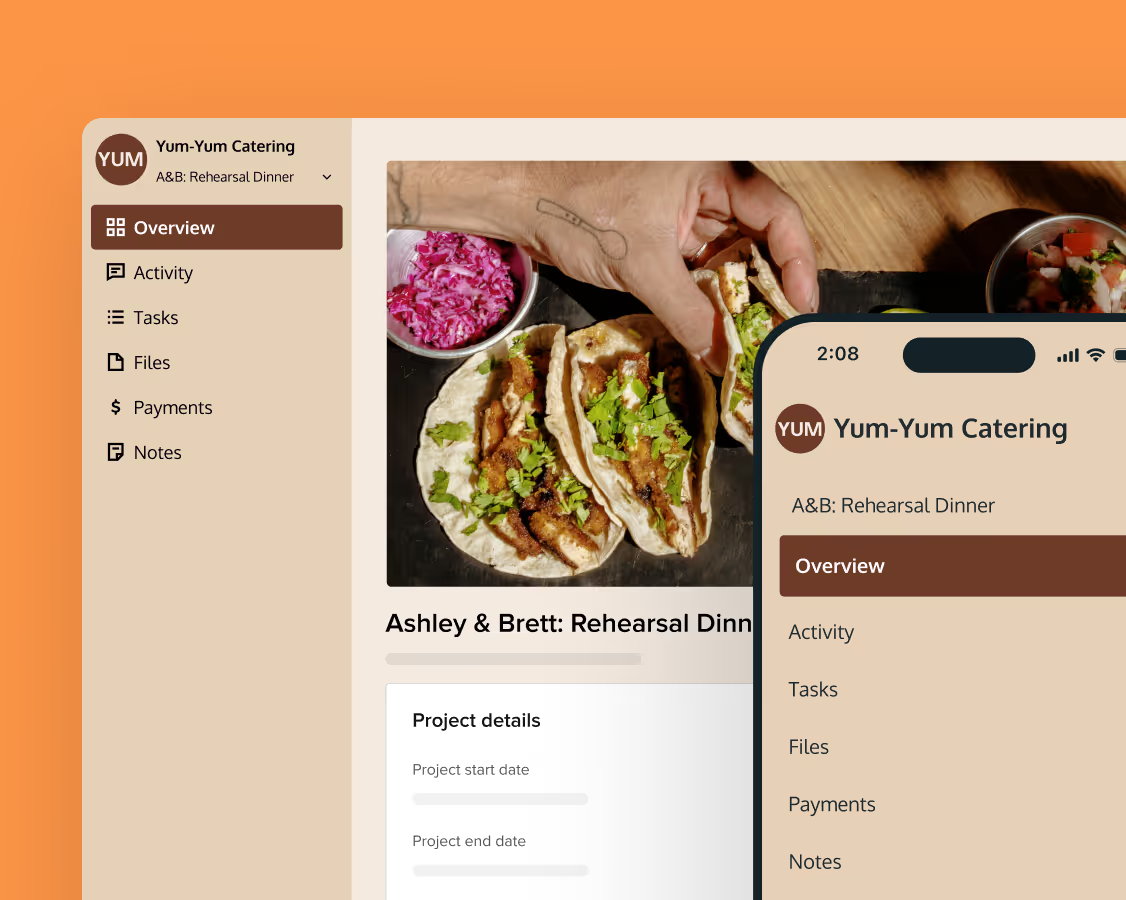
Create exceptional client experiences through HoneyBook’s dedicated client portal, allowing them to read, review, and take action from any device.
Reuse and scale
Use your customized files with different clients again and again to save time and make managing client interactions that much easier.
Join the 100,000+ businesses growing with HoneyBook.