












Questionnaire

Get client input, collect project details, and set expectations ahead of—or during—any project.

Ready-to-use copy
Templates come filled with prewritten copy you can use as is or edit to match your brand and business.

Scheduling
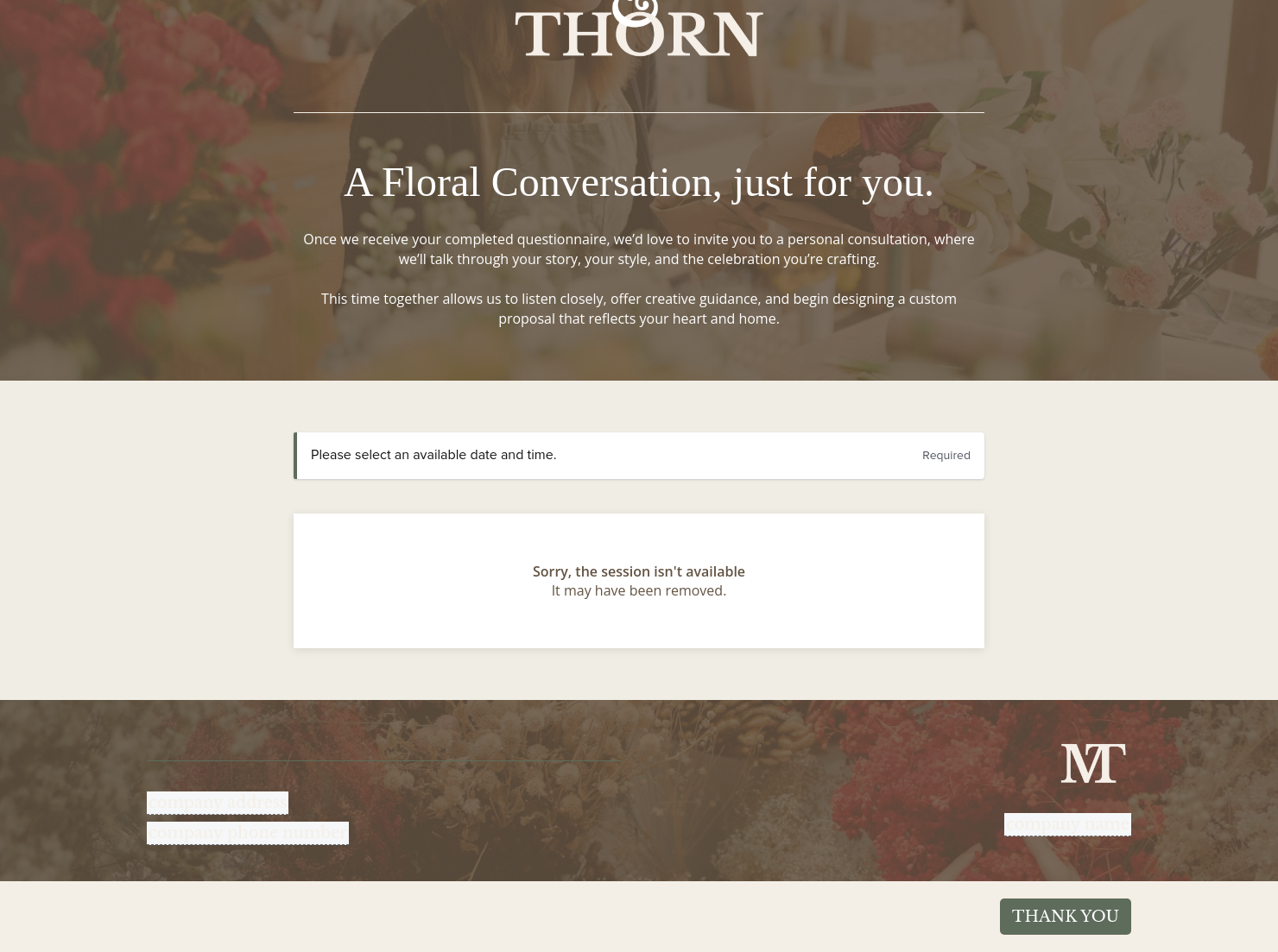
Let clients book meetings, sessions, or appointments during your available time slots.


“
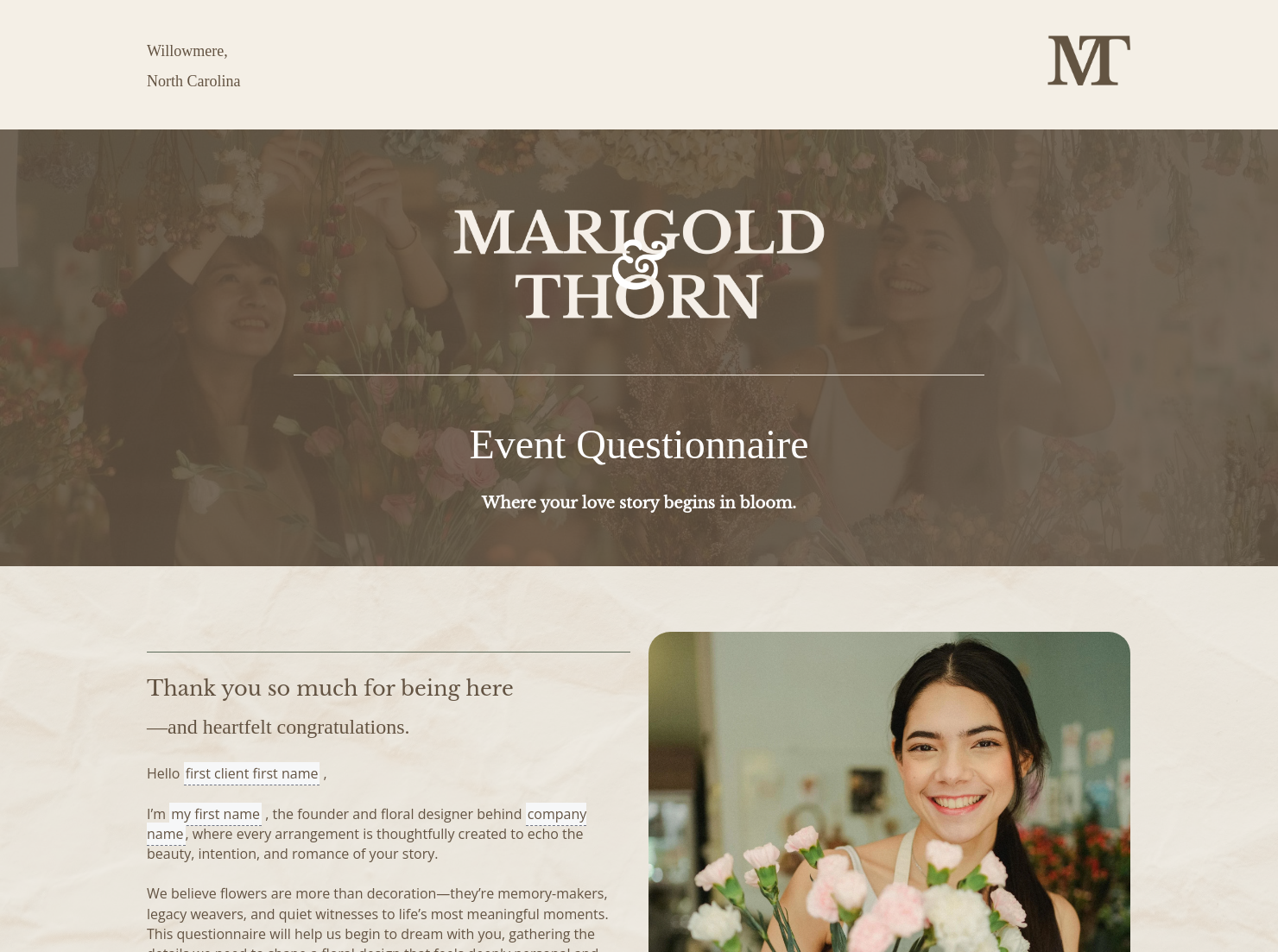
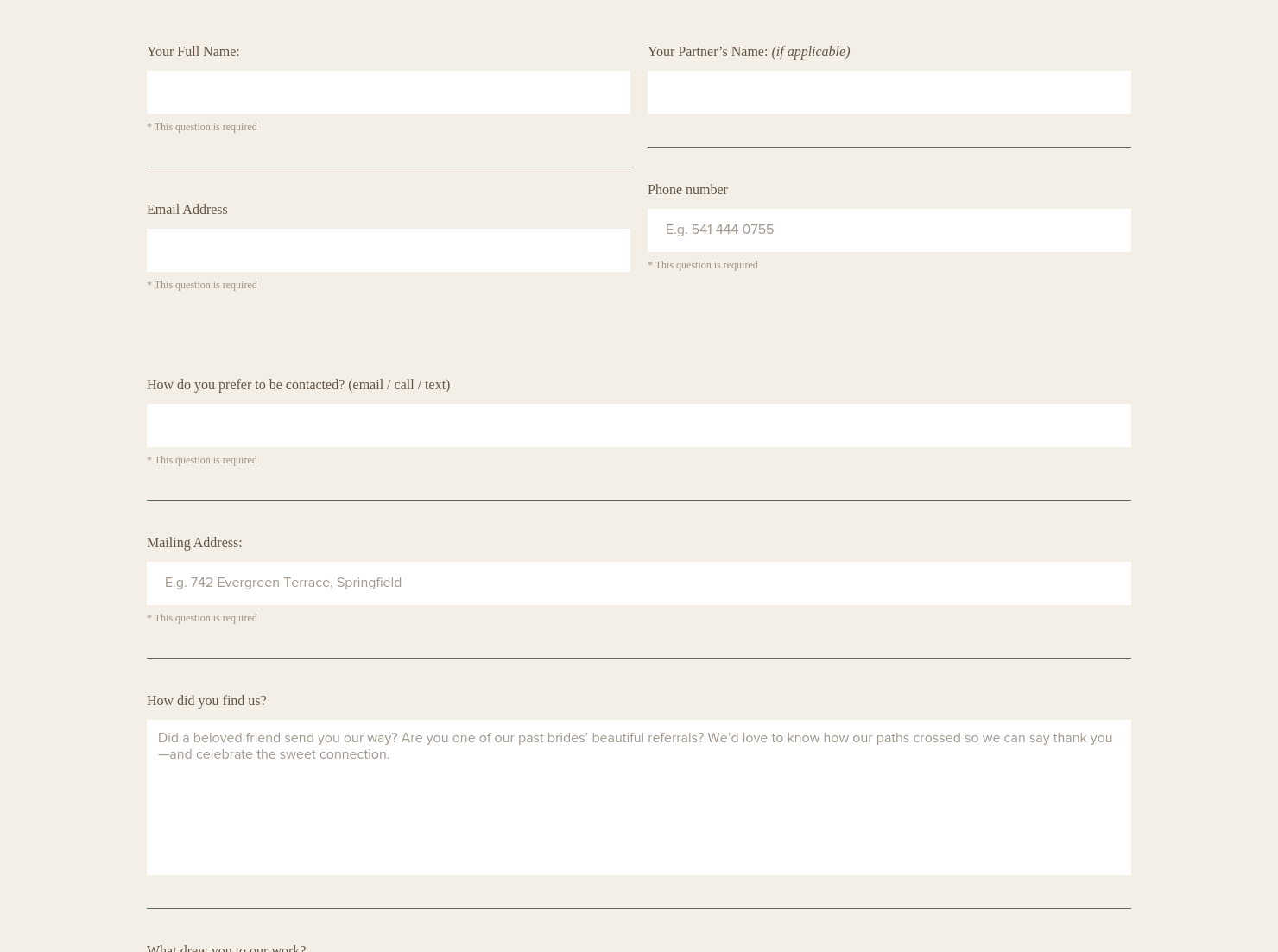
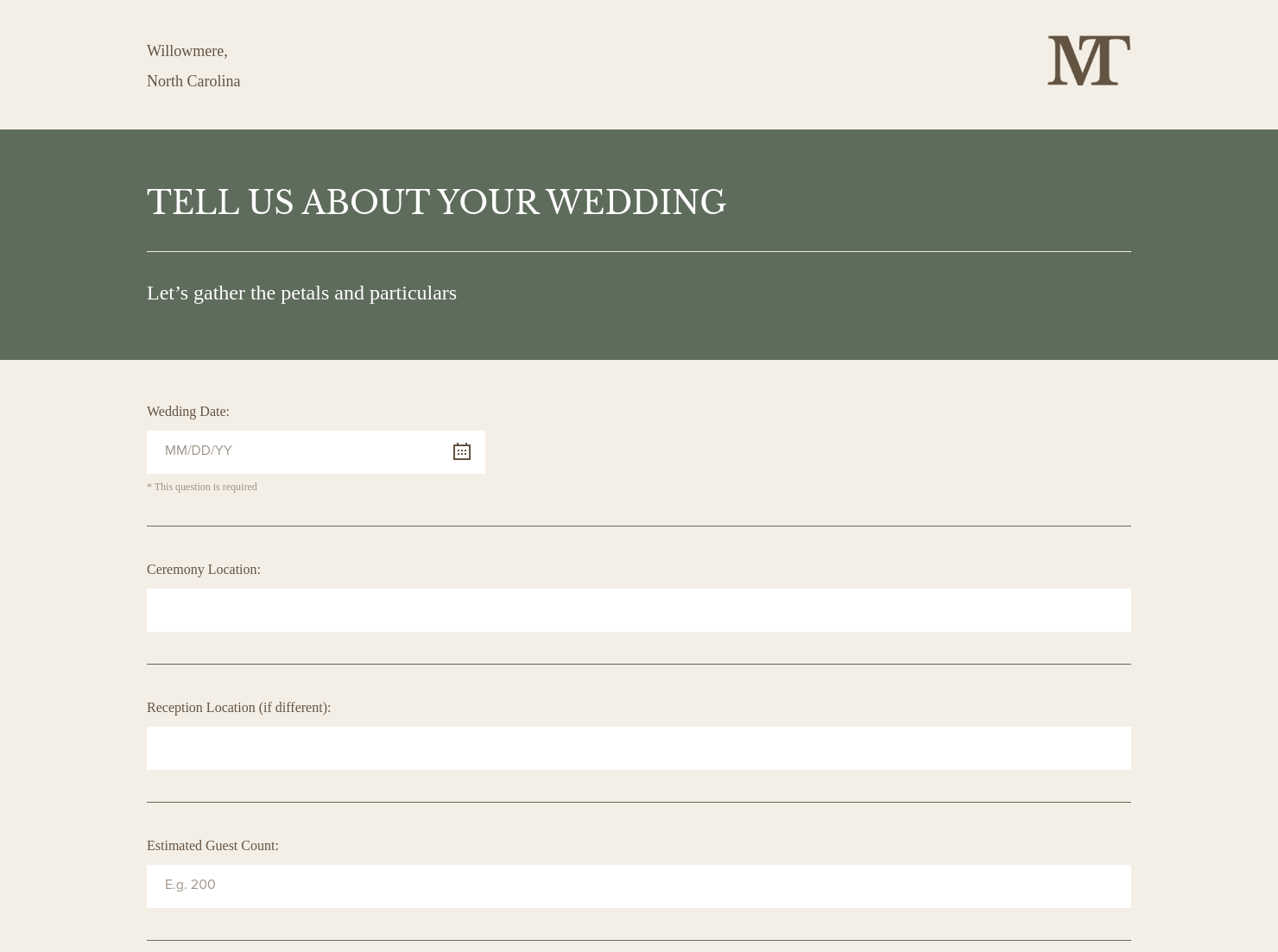
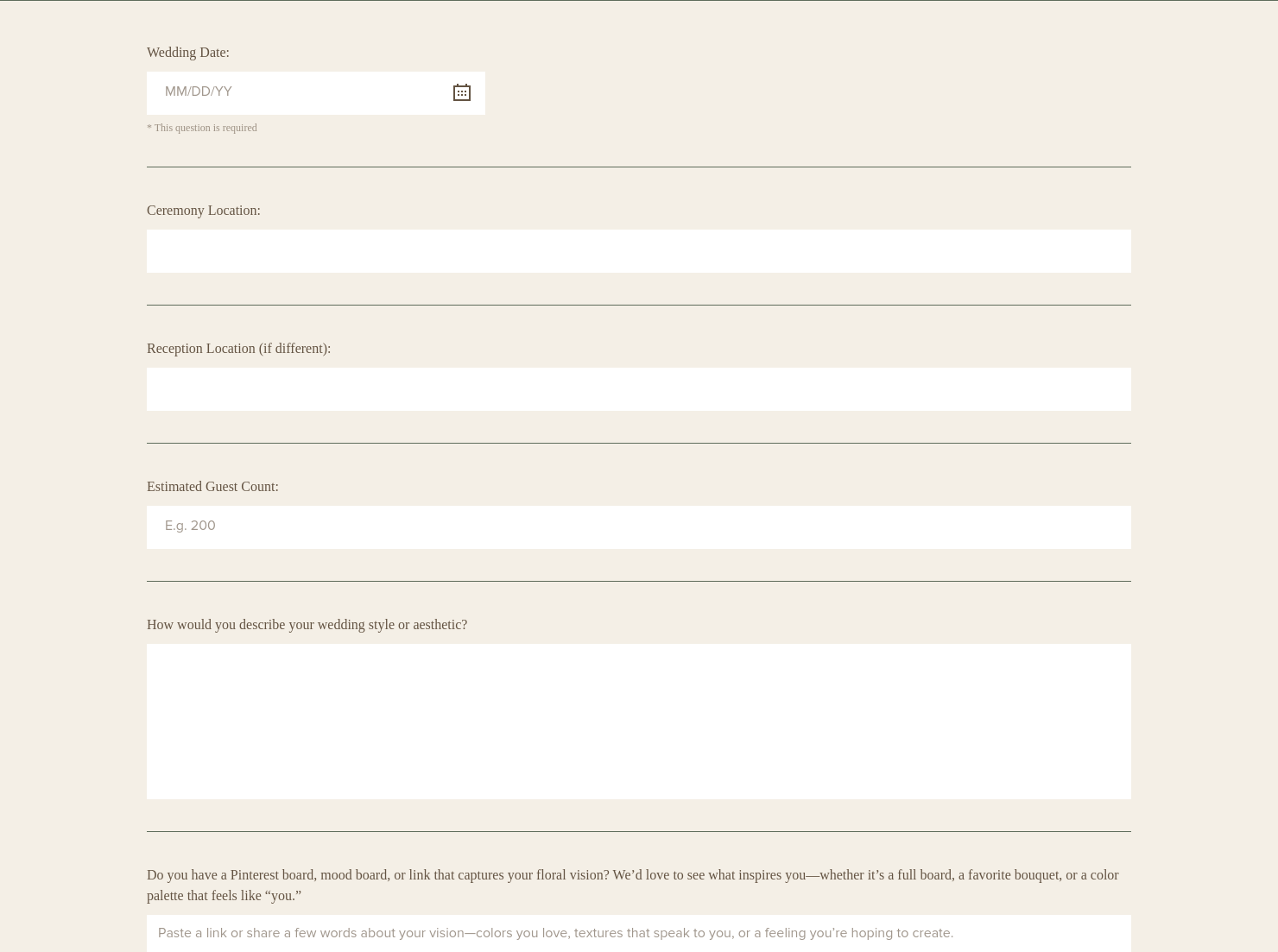
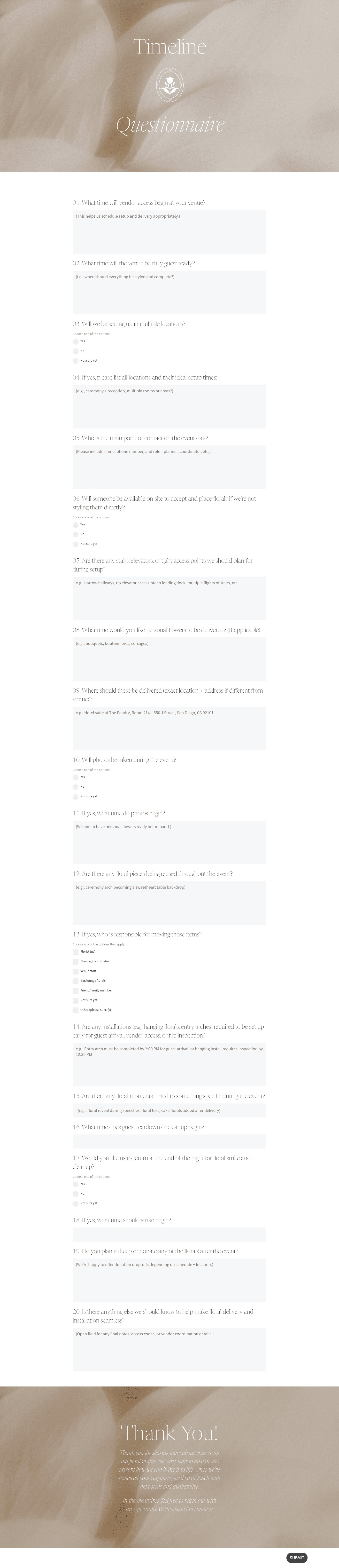
Use this template to collect floral details and inspiration from wedding clients before your consultation, helping you prepare a thoughtful, tailored proposal.
”

October 18, 2026

What To Include In Your Initial Questionnaire For Florists (And What To Leave Out)
An initial questionnaire for florists is one of the most important steps in the client onboarding process. It helps florists gather all the information needed to plan floral designs, understand client expectations, and prepare accurate proposals. Instead of relying on scattered messages or incomplete conversations, a structured questionnaire brings everything into one place. Florists can collect details about the event, design preferences, and logistical requirements before beginning any creative work. Using a consistent initial questionnaire for florists also helps create a repeatable workflow. As the business grows, this structure makes it easier to manage multiple clients while maintaining quality and consistency.
Floral design projects often depend on small but important details. Missing information about the venue, timeline, or design preferences can lead to delays or misaligned expectations.
An initial questionnaire for florists helps prevent these issues by collecting all relevant information upfront. It allows florists to understand the full scope of the event before creating arrangements or pricing services.
For events like weddings or large gatherings, there are often multiple decision-makers involved. A structured questionnaire ensures that everyone’s input is considered early in the process.
This clarity improves both efficiency and client satisfaction. When florists begin with the right information, they can deliver designs that align closely with the client’s vision.
A well-structured initial questionnaire should guide clients through the information florists need to begin their work.
Event details
This section captures basic information such as event date, venue, guest count, and type of event. These details help determine availability and the overall scale of the project.
Design preferences
Clients can share their vision through color palettes, themes, inspiration images, and preferred flower styles. This helps florists understand the creative direction for the event.
Budget expectations
Understanding the client’s budget early helps florists recommend appropriate floral arrangements and avoid unrealistic expectations.
Venue and logistics
Details about the venue, setup requirements, and access times are essential for planning installations and deliveries.
Timeline requirements
This section outlines when services are needed, including setup, event timing, and breakdown schedules.
Including these elements ensures that the questionnaire collects both creative and operational details needed for successful projects.
An effective initial questionnaire for florists should be clear, focused, and easy for clients to complete.
First, it should guide clients through the process without overwhelming them. Too many questions can discourage completion, while too few may leave important gaps.
Second, clarity is important. Questions should be simple and direct so clients can provide accurate answers without confusion.
Third, flexibility allows florists to adapt the questionnaire for different types of events. A wedding may require more detailed design input, while a corporate event may focus more on logistics and scale.
A well-designed questionnaire helps florists move from inquiry to proposal more efficiently while maintaining a professional experience.
An initial questionnaire for florists template should be used at the beginning of every client engagement.
It is especially useful after the first inquiry, when gathering detailed information before creating proposals or design concepts. Collecting this information early helps florists avoid delays and ensures that all requirements are clearly understood.
Florists can also use this template when managing multiple events, allowing them to maintain a consistent onboarding process across clients.
Catering has a lot of moving parts, and the menu sits in the center. If your catering menu is scattered across emails, texts, and screenshots, mistakes show up at the worst time.
A structured menu template helps in practical ways.
- Builds client trust and a professional first impression.
- Speeds approvals by making choices simple.
- Reduces payment disputes by documenting totals and terms.
- Saves time by cutting back and forth.
That means fewer surprises for clients and fewer fire drills for you.
FAQs
Below are quick answers to common questions from caterers building a catering menu that clients can approve with confidence.
An initial questionnaire for florists is a document used to collect information about a client’s event, design preferences, and service requirements.
It helps gather essential details upfront, reducing miscommunication and improving project planning.
It should include event details, design preferences, budget, logistics, and timeline requirements.
Yes. Florists can adjust questions depending on the type of event and services being offered.
Related templates
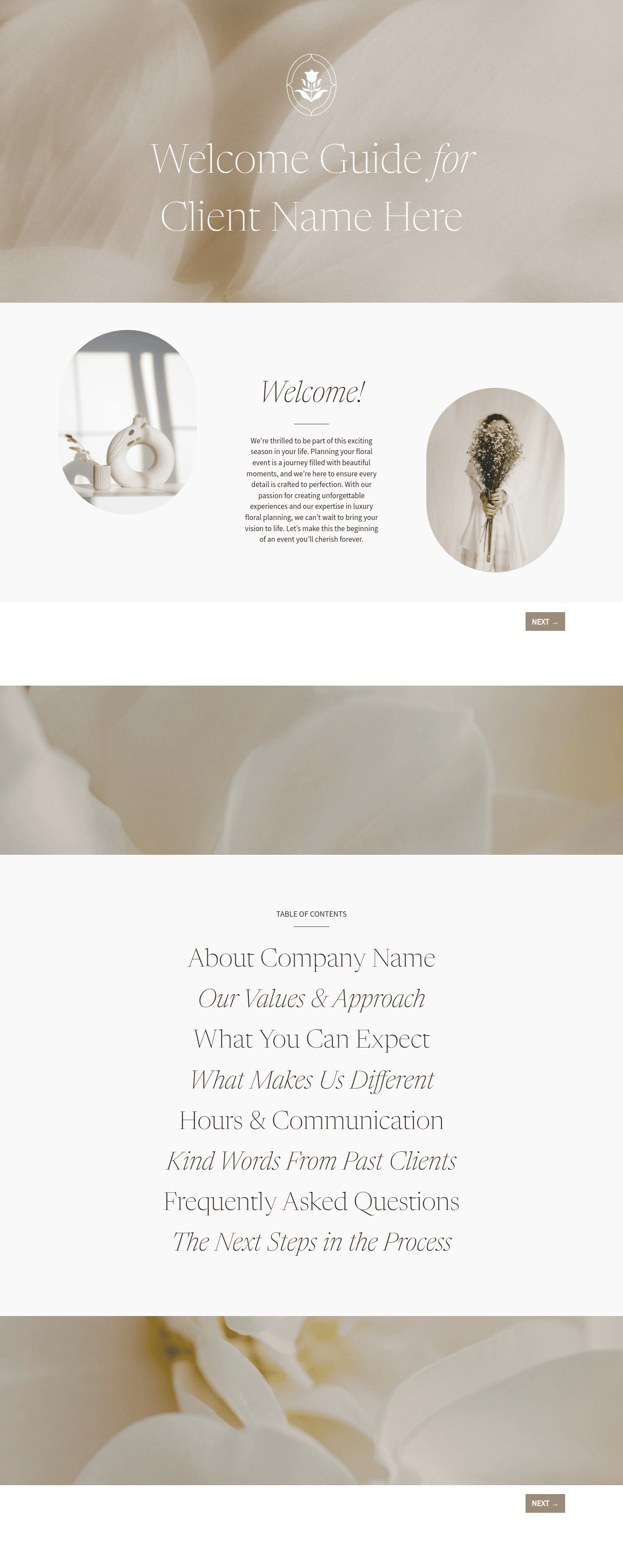

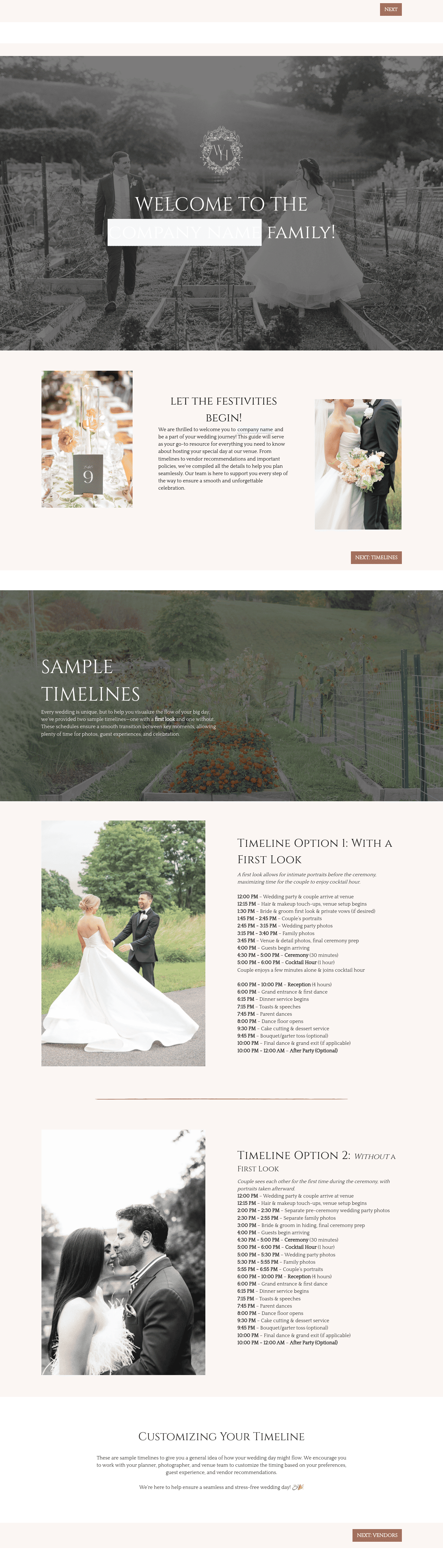


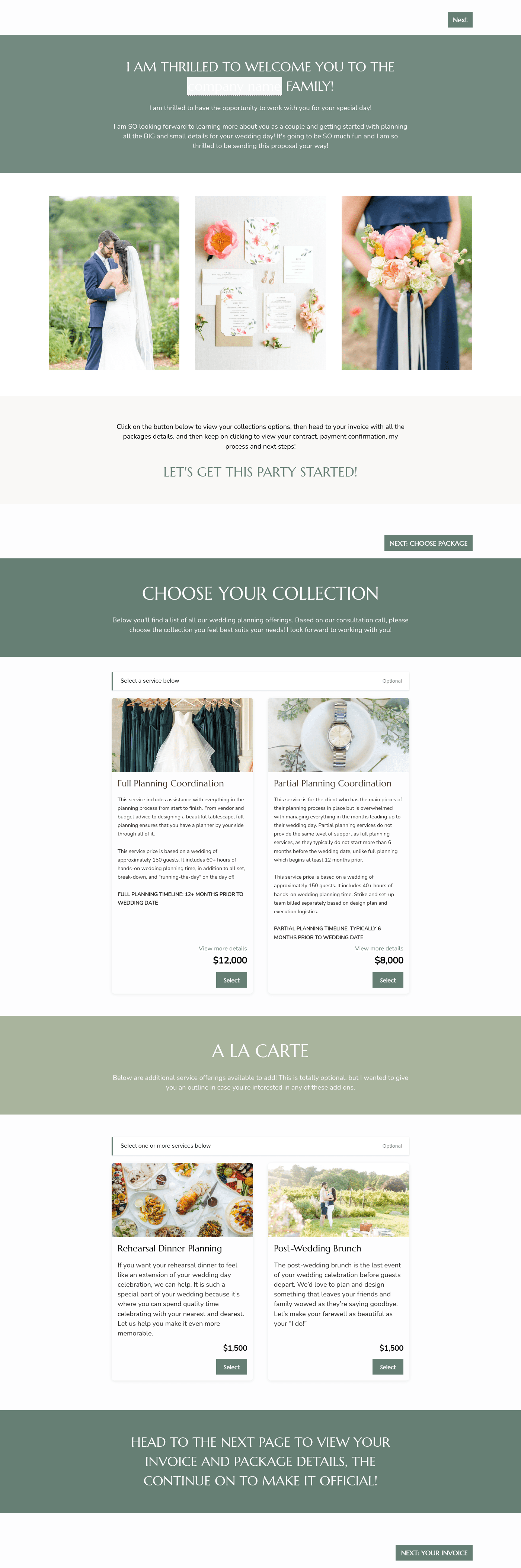

Related Templates




Make it your own
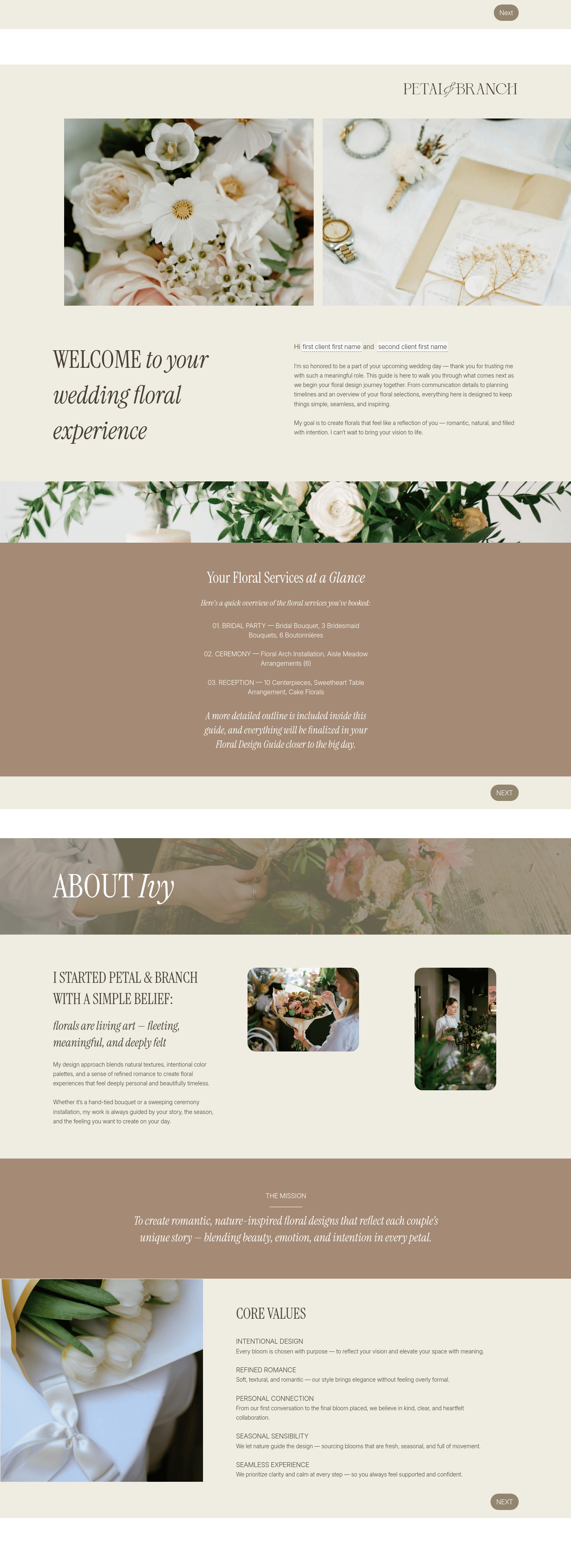
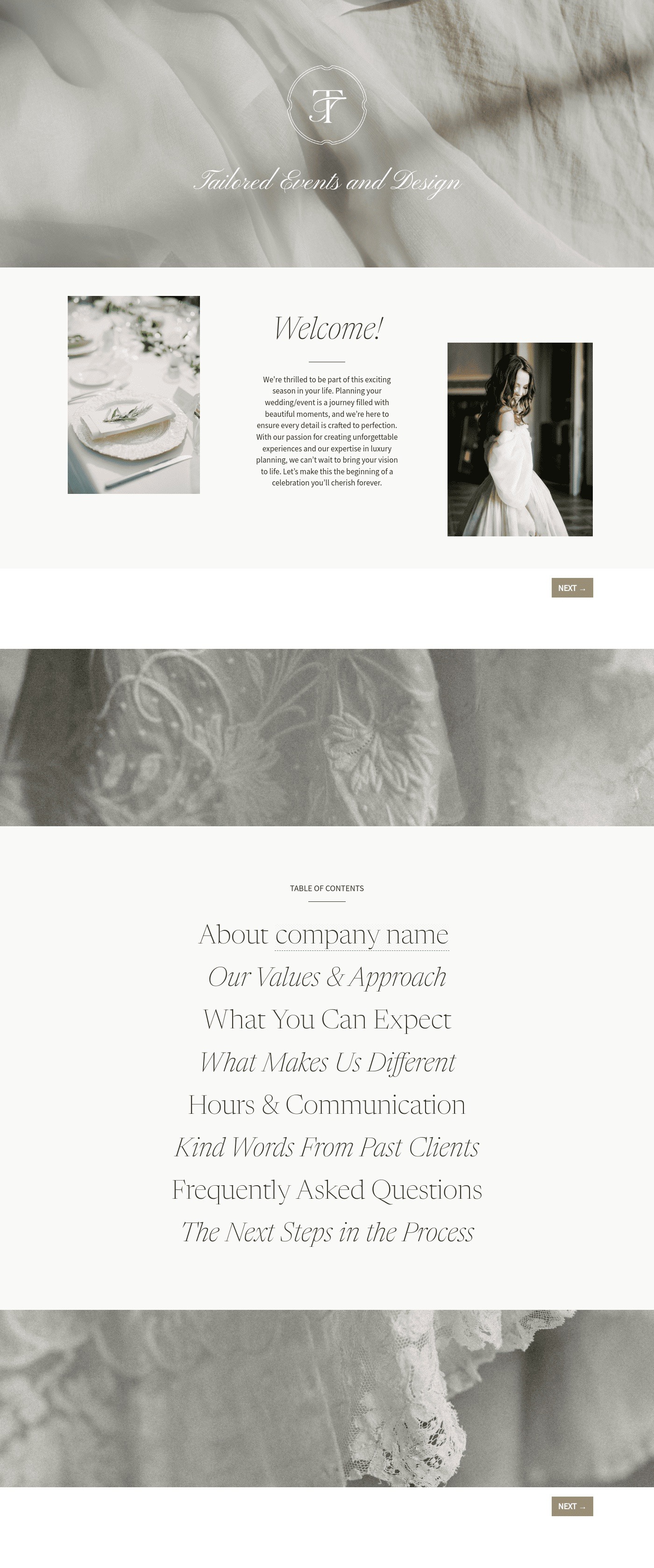
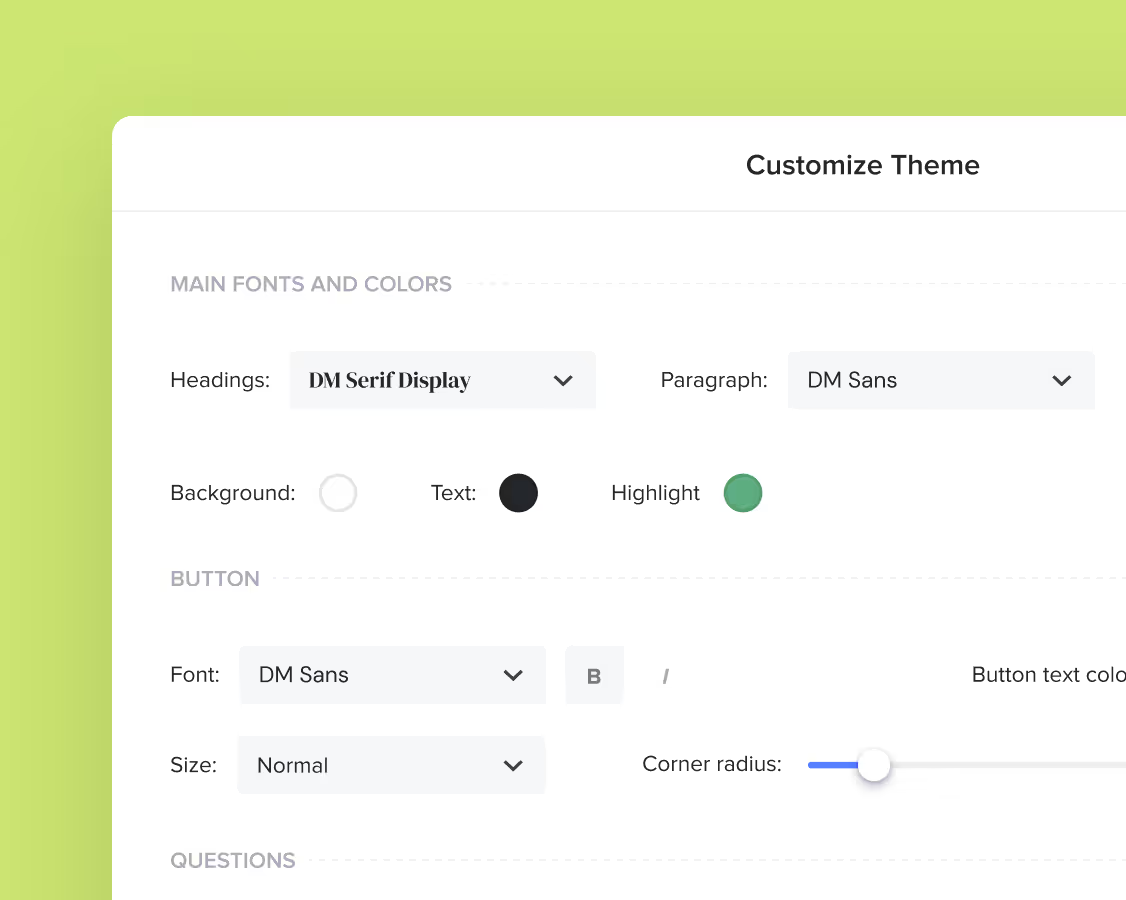
Fully customize the template to fit your needs. Quickly apply your company branding with just a few clicks.
Share with clients
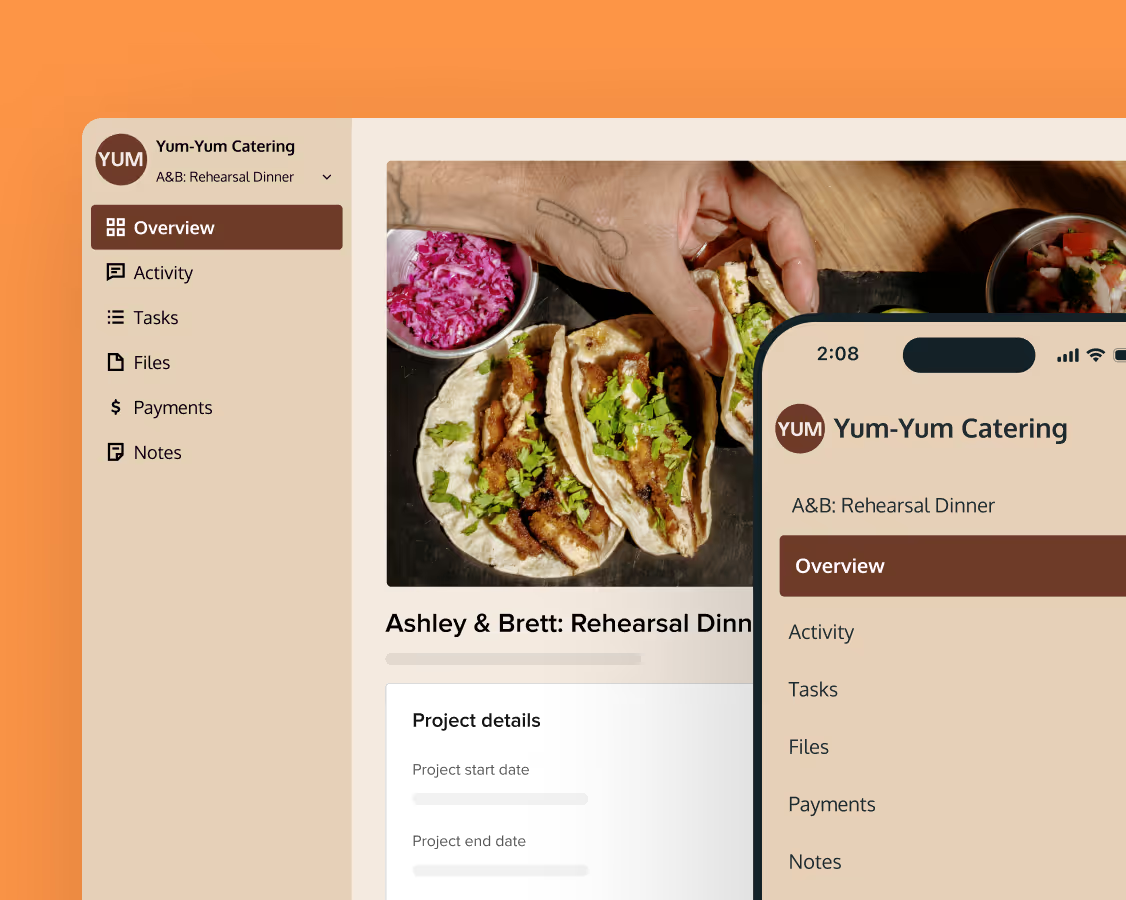
Create exceptional client experiences through HoneyBook’s dedicated client portal, allowing them to read, review, and take action from any device.
Reuse and scale
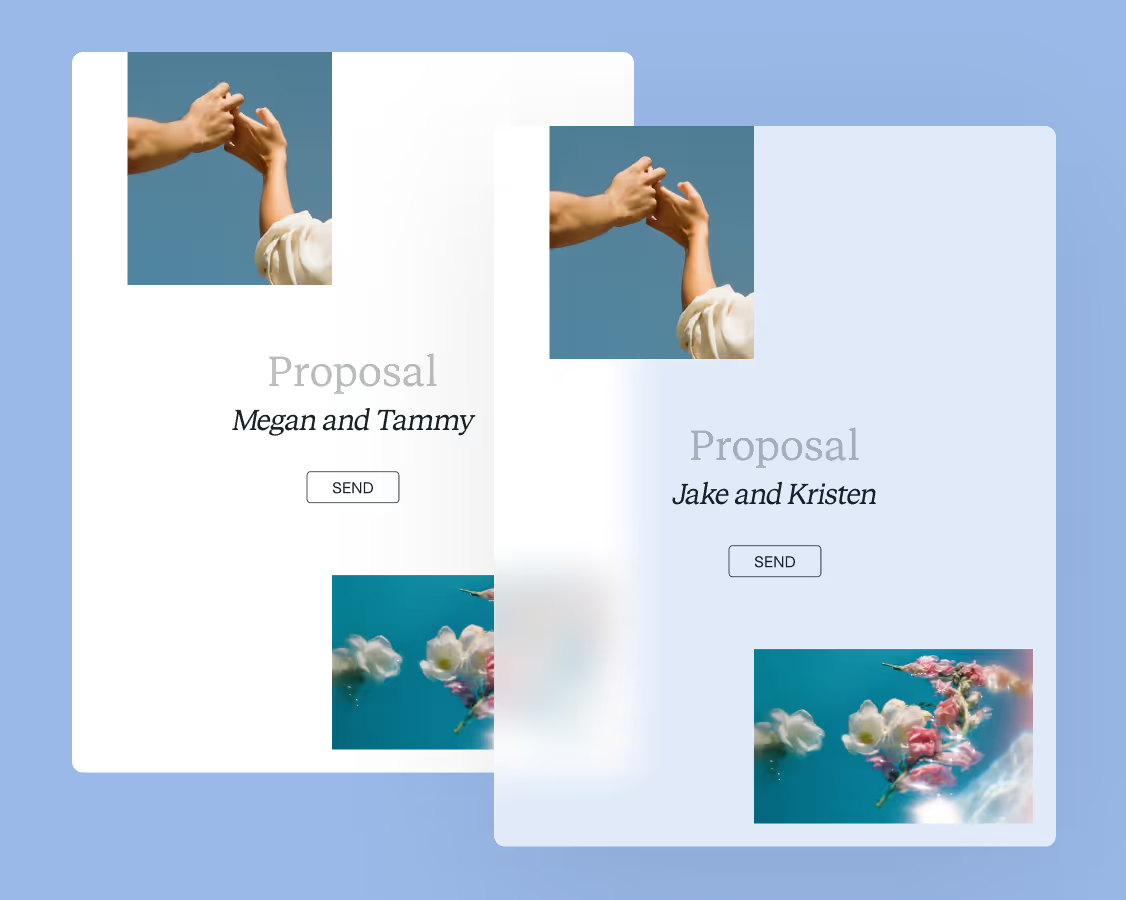
Use your customized files with different clients again and again to save time and make managing client interactions that much easier.
Join the 100,000+ businesses growing with HoneyBook.