












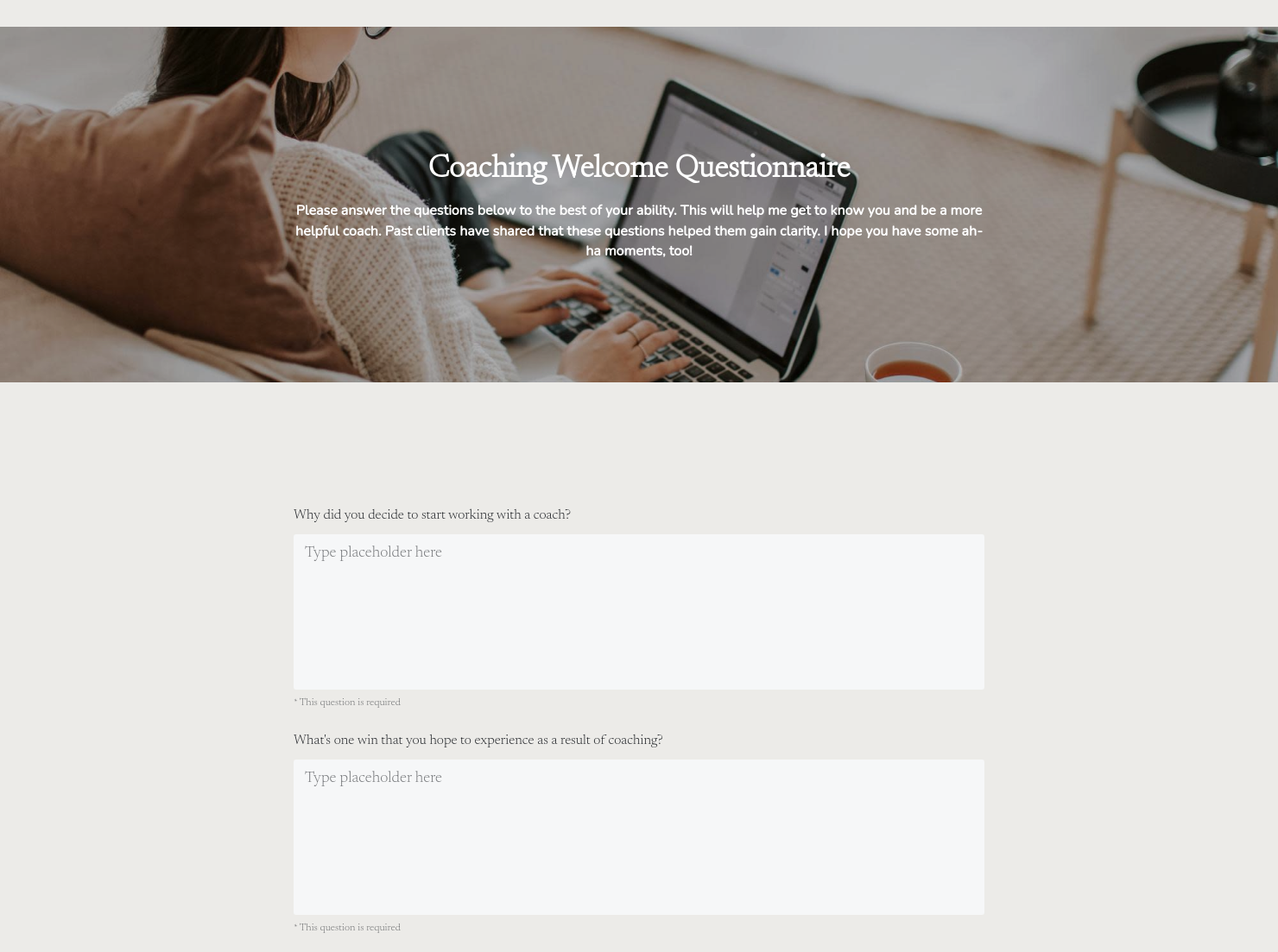
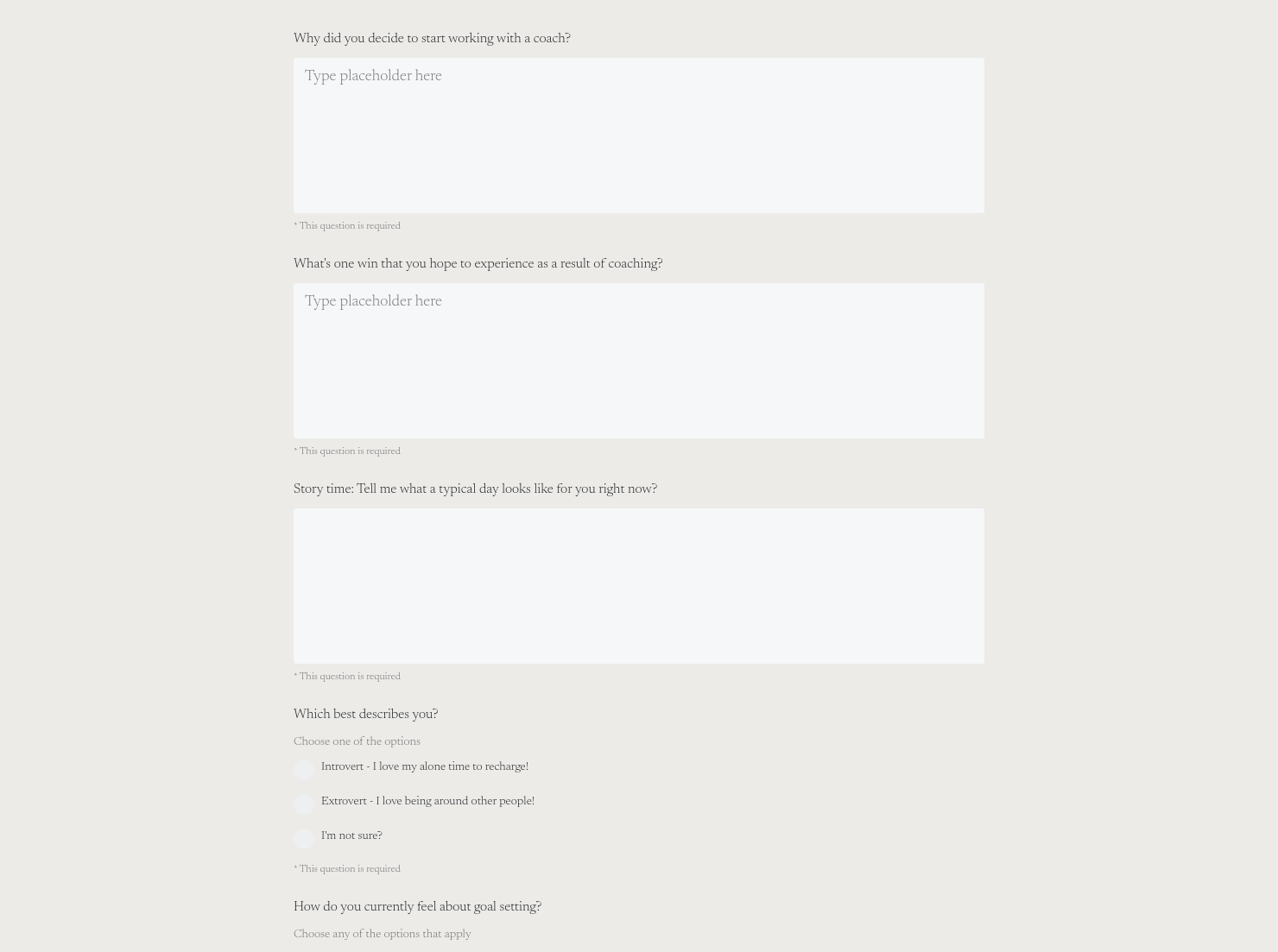

Questionnaire

Get client input, collect project details, and set expectations ahead of—or during—any project.

Ready-to-use copy
Templates come filled with prewritten copy you can use as is or edit to match your brand and business.


“
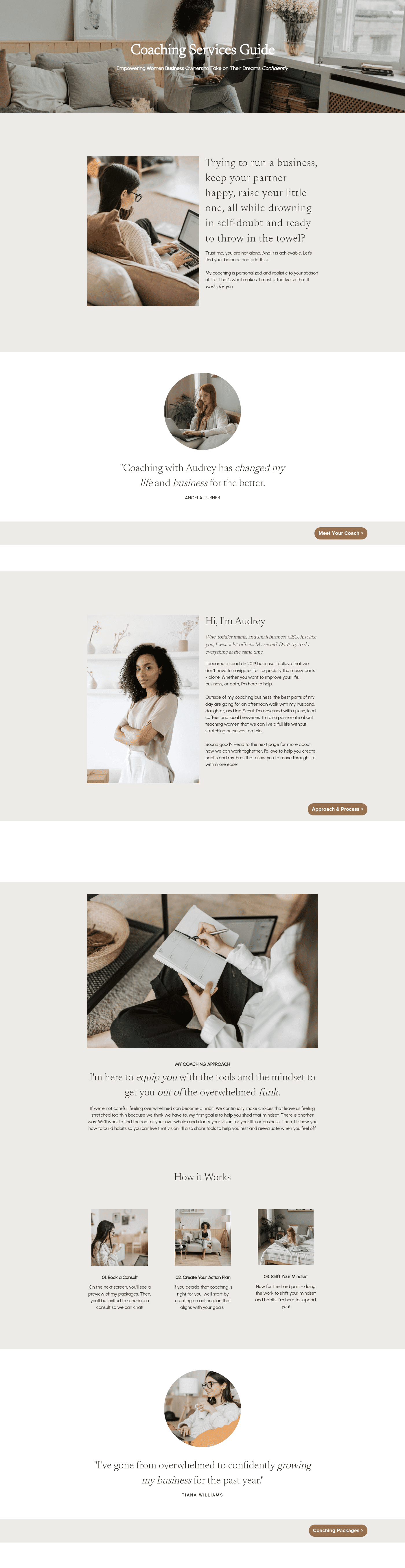
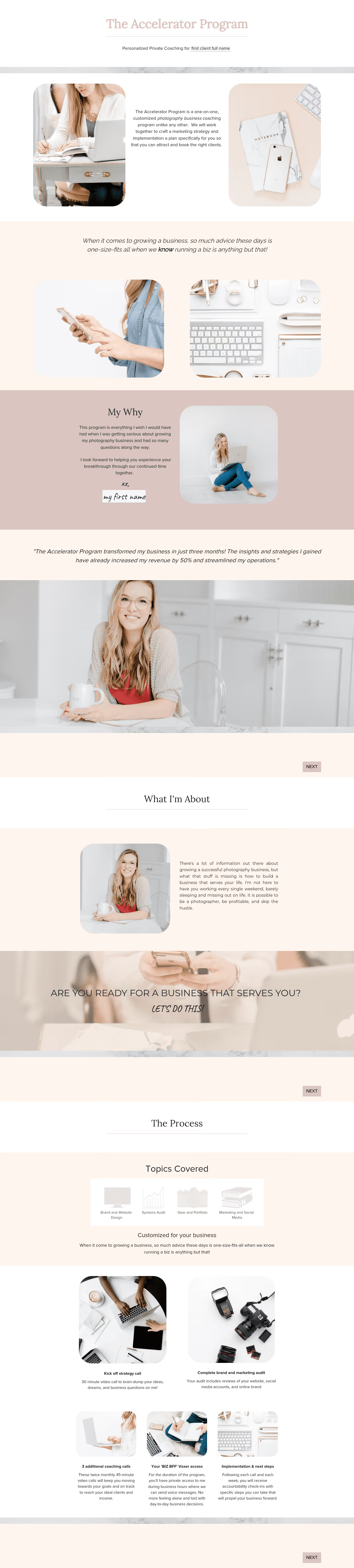
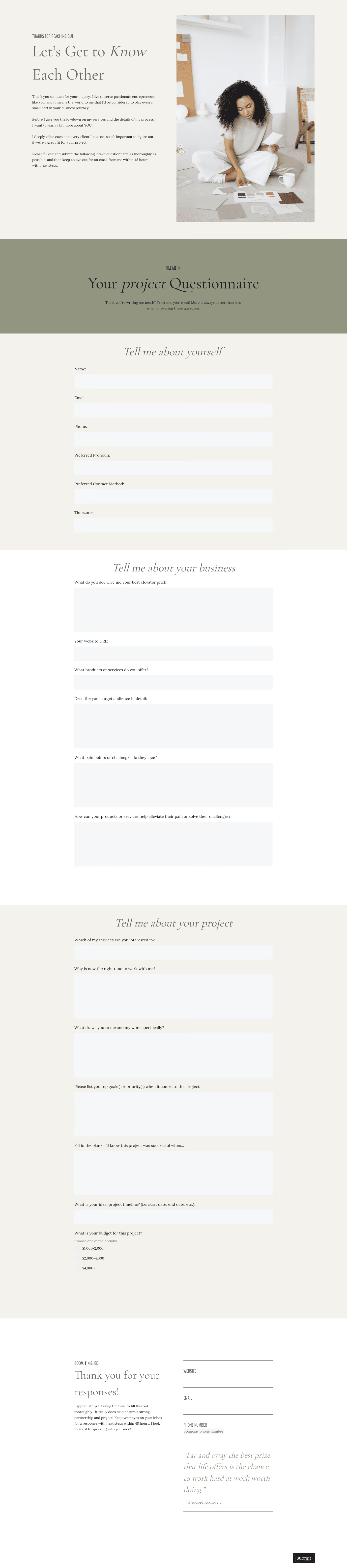
Use this questionnaire to gather information about your clients as you onboard or welcome them!
”

October 25, 2026

Best Practices for Using Audrey James Coaching Questionnaire Templates
An Audrey James coaching questionnaire template is an intake document that can help you and your clients work together more easily. If you're a coach or consultant, you might use it during client onboarding to clarify goals, expectations, and background information so that you can deliver more personalized sessions and better results.
For coaching professionals, having a well-designed questionnaire ensures every client relationship starts on the right foot. Without it, you could miss the clarity and structure needed for key insights into clients' goals, challenges, or readiness for change, which could lead to ineffective sessions and misaligned expectations.
A well-structured questionnaire helps build client trust by demonstrating thoughtful, organized processes and improves conversion rates by focusing on intention and results. It also saves time and avoids back-and-forth by collecting key information upfront, and sets clear expectations for goals, timelines, and coaching outcomes.
A professional coaching questionnaire should always include core elements to ensure clarity and consistency. Some of the biggest parts of your questionnaire should be:
- Business and client information, like names, contact details, and relevant background information
- Client goals and motivations, such as what the client hopes to achieve through coaching and why it matters
- Current challenges or obstacles, like key areas where the client feels stuck or needs guidance
- Timeline or expectations for desired milestones or urgency around goals
- Service scope or coaching focus, including clarification of the coaching areas the client wants to work on
- Next steps or onboarding actions, like instructions for scheduling sessions, reviewing materials, or preparing for the first meeting
- Consent or acknowledgement, including confirmation that the client understands the coaching process and expectations
Including these elements helps you get the information you need to tailor sessions and provide meaningful guidance, so your clients get the support they're looking for, and you understand their needs.
An effective onboarding questionnaire invites reflection and sets the tone for a collaborative relationship. The questions you ask should encourage your clients to think deeply about their goals, current habits, and desired outcomes. Open-ended prompts are especially valuable because they reveal mindset, motivations, and potential barriers to progress.
Customization also plays a key role in that coaches can tailor questionnaire sections to align with their specialty, whether that's life coaching, career coaching, business coaching, or leadership development. No matter what area you focus on, having a questionnaire you can adjust to fit your coaching style and client requirements makes everything you do a little easier.
The Audrey James coaching questionnaire template is most useful during the early stages of the client relationship, particularly when you're gathering insights before the first coaching session.
Consider using it for new-client onboarding, discovery or consultation calls, coaching program applications when clients must qualify or prepare for a structured program, and goal-setting exercises at the start of a new coaching phase or milestone.
Catering has a lot of moving parts, and the menu sits in the center. If your catering menu is scattered across emails, texts, and screenshots, mistakes show up at the worst time.
A structured menu template helps in practical ways.
- Builds client trust and a professional first impression.
- Speeds approvals by making choices simple.
- Reduces payment disputes by documenting totals and terms.
- Saves time by cutting back and forth.
That means fewer surprises for clients and fewer fire drills for you.
FAQs
Below are quick answers to common questions from caterers building a catering menu that clients can approve with confidence.
A coaching questionnaire should include questions about the client's goals, current challenges, motivations for seeking coaching, and expectations for the coaching relationship.
Clients typically complete a coaching questionnaire before their first session or discovery call, giving you time to review their responses in advance and prepare a more focused, productive conversation.
A coaching questionnaire should be thorough enough to gather meaningful insights yet concise enough for clients to complete easily. Most effective questionnaires include 10 to 20 thoughtful questions that focus on goals, mindset, and areas for growth.
Yes! HoneyBook templates are built to simplify the steps between inquiry and booking, so you can deliver a professional client experience while saving time on repeat tasks.
You can change fonts, colors, images, pricing tables, contract language, and messaging to reflect your brand's voice and visual identity, so clients have a strong feel for who they're working with and the information you provide to them matches your other offerings.
Yes, with the HoneyBook mobile app, you can create, customize, send, and manage templates and Smart Files from anywhere with an internet connection. That means you can respond to questions, share documents, and keep projects moving for all your clients, even if you're not at your desk.
Related templates




Related Templates



.avif)

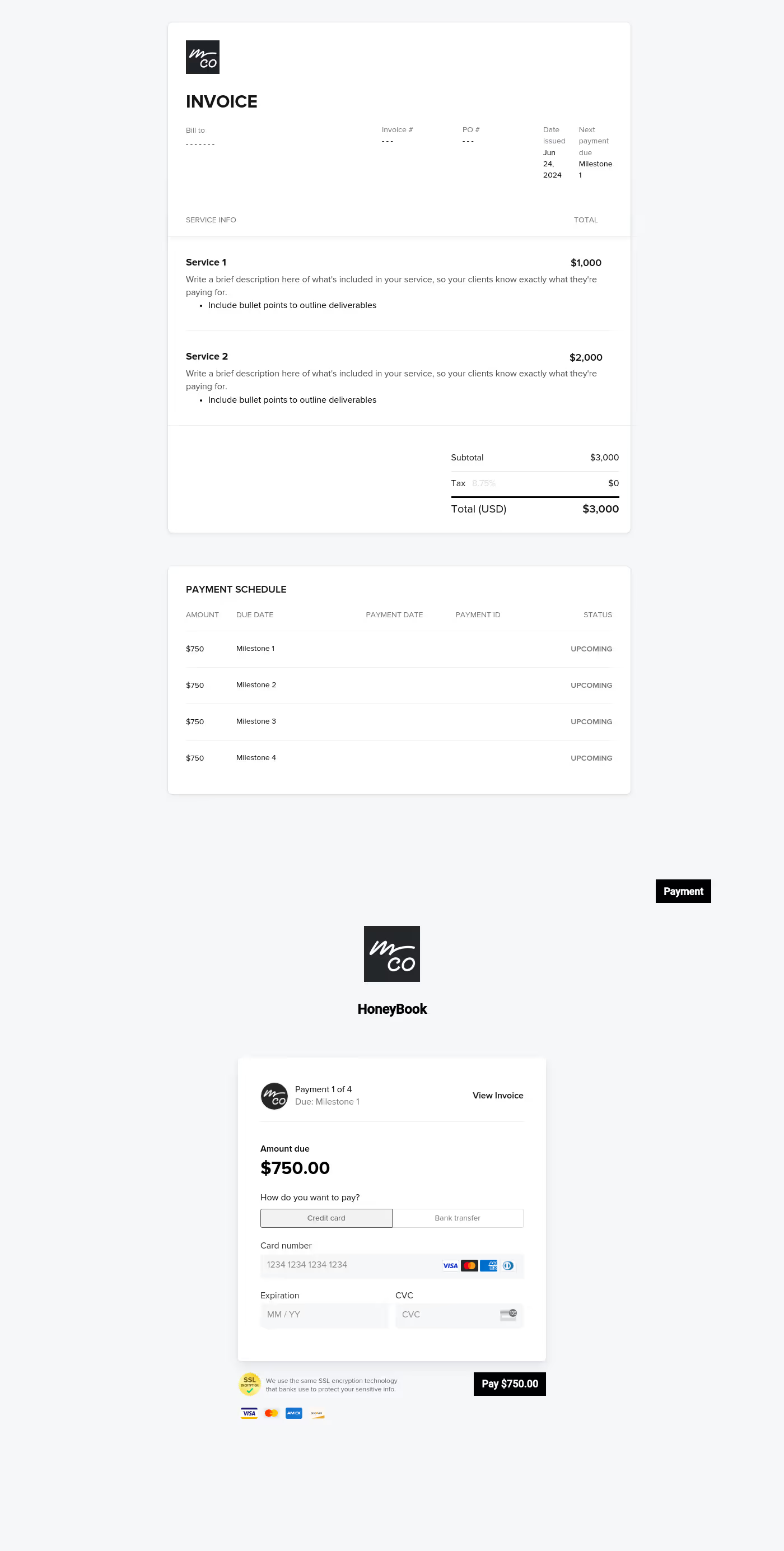
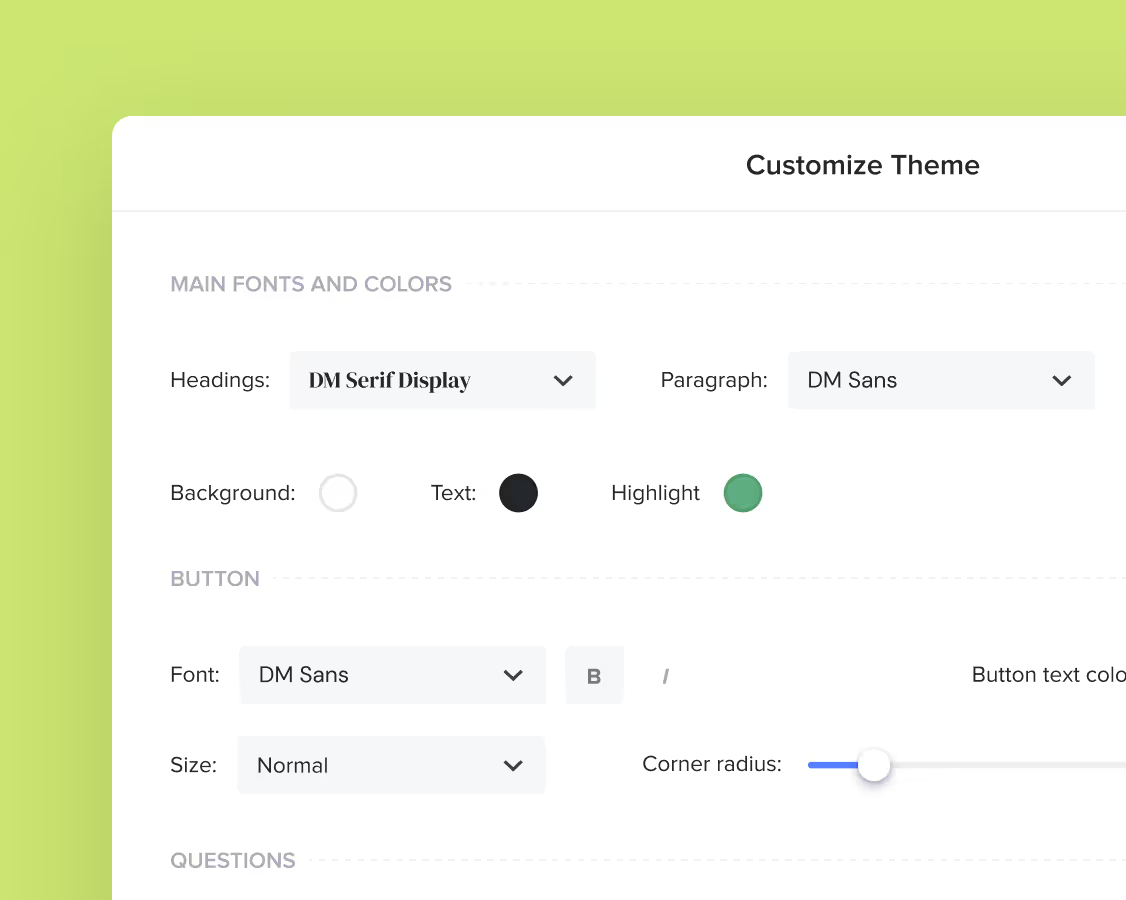
Make it your own
Fully customize the template to fit your needs. Quickly apply your company branding with just a few clicks.
Share with clients
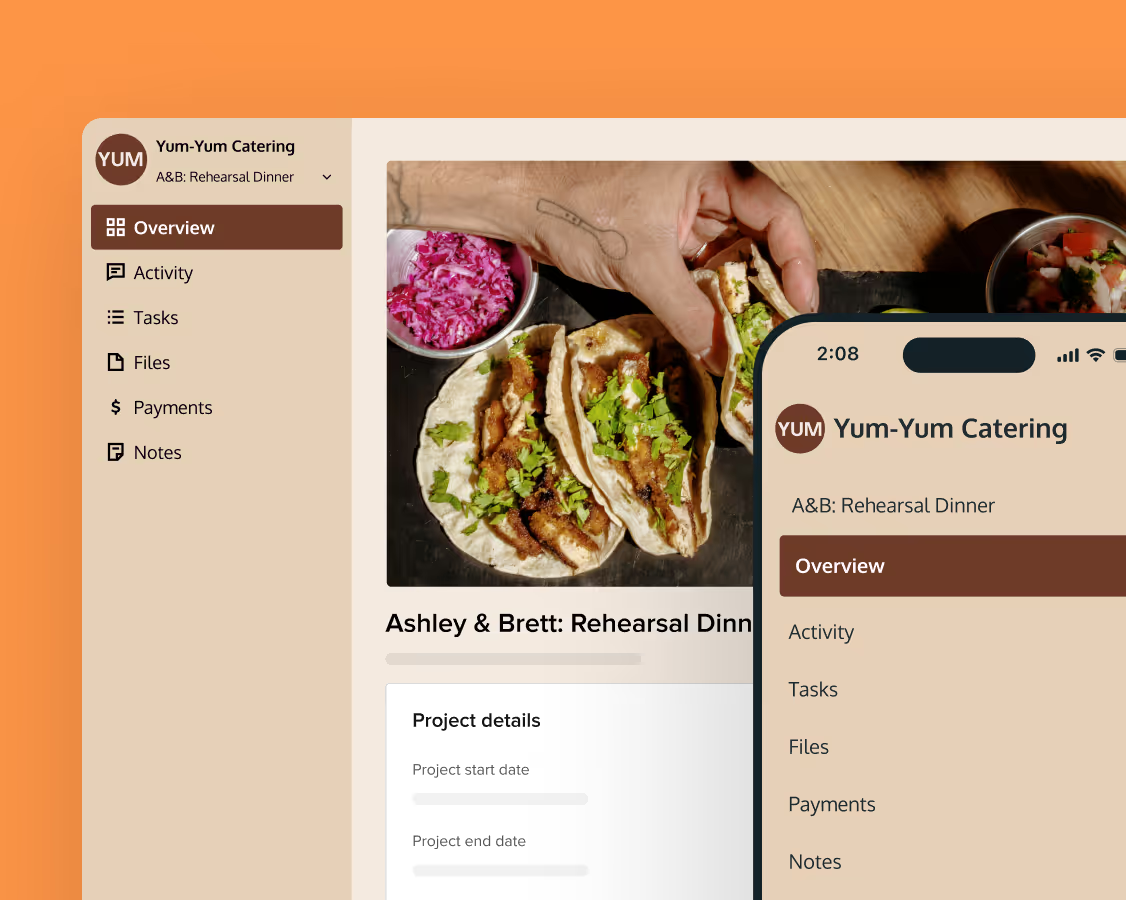
Create exceptional client experiences through HoneyBook’s dedicated client portal, allowing them to read, review, and take action from any device.
Reuse and scale
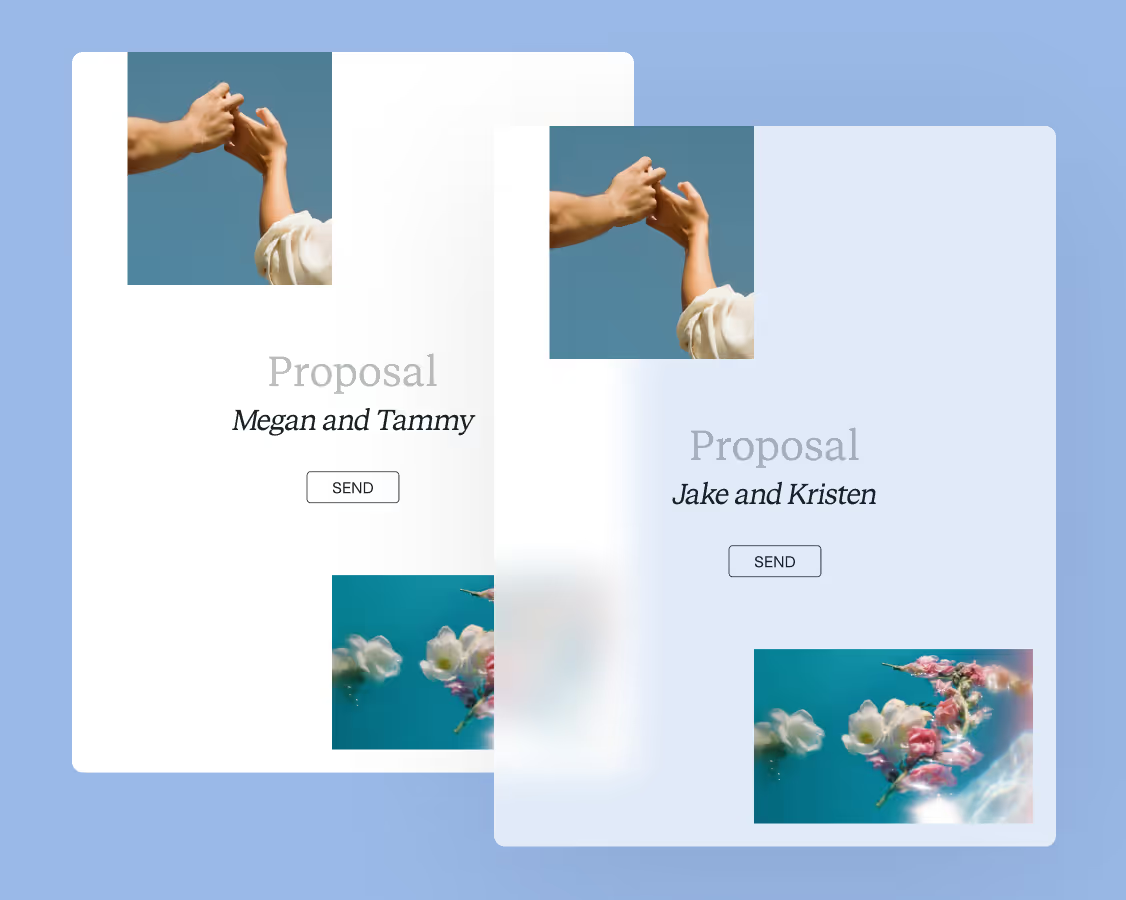
Use your customized files with different clients again and again to save time and make managing client interactions that much easier.
Join the 100,000+ businesses growing with HoneyBook.