












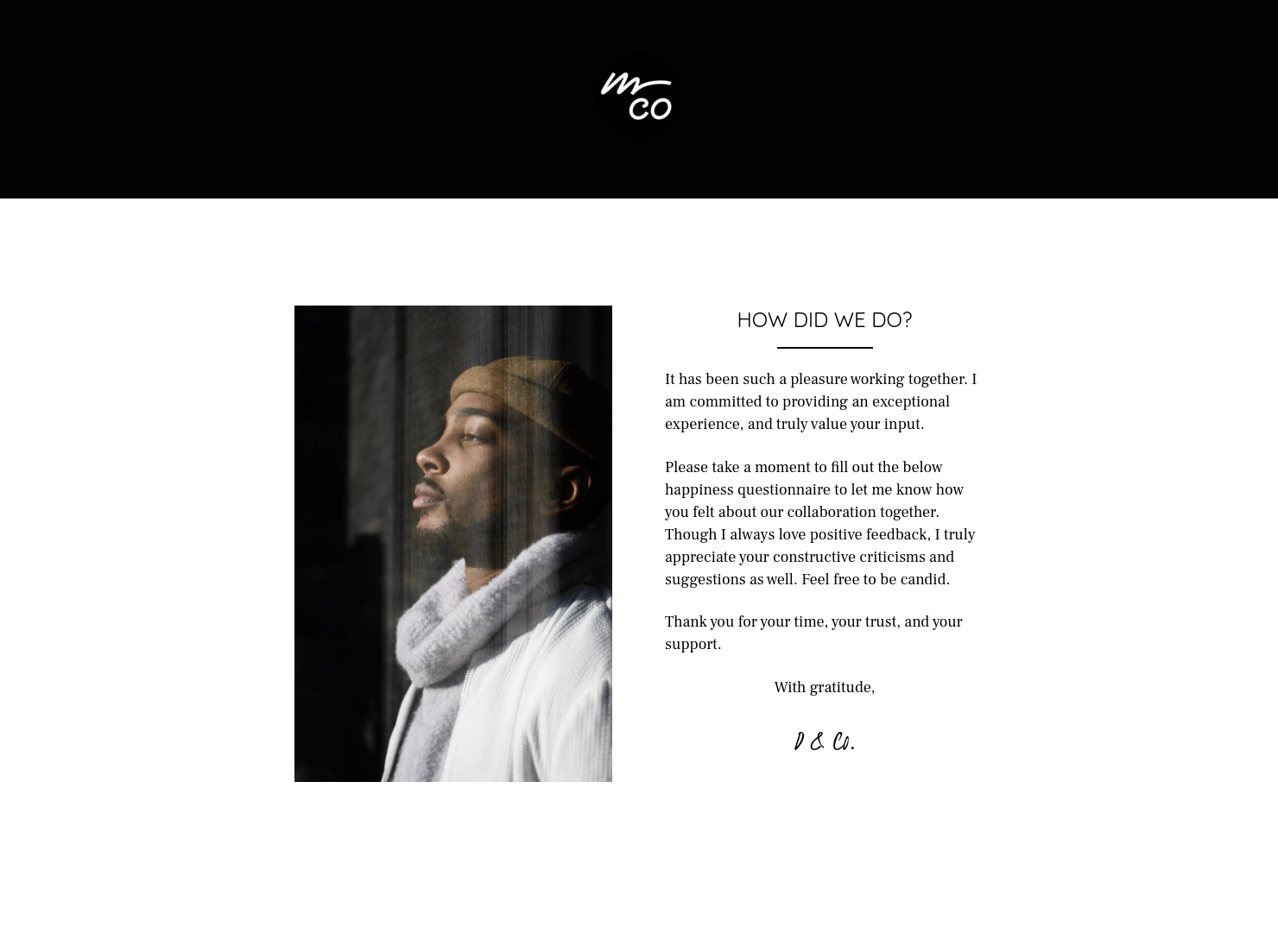

Questionnaire

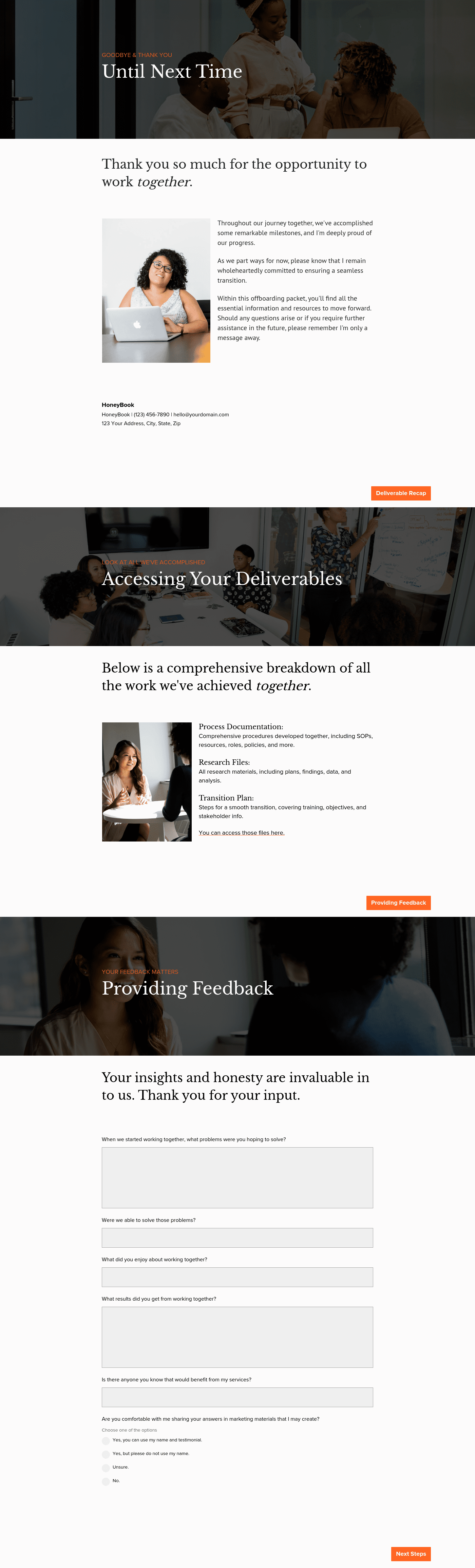
Get client input, collect project details, and set expectations ahead of—or during—any project.


“
”

October 18, 2026

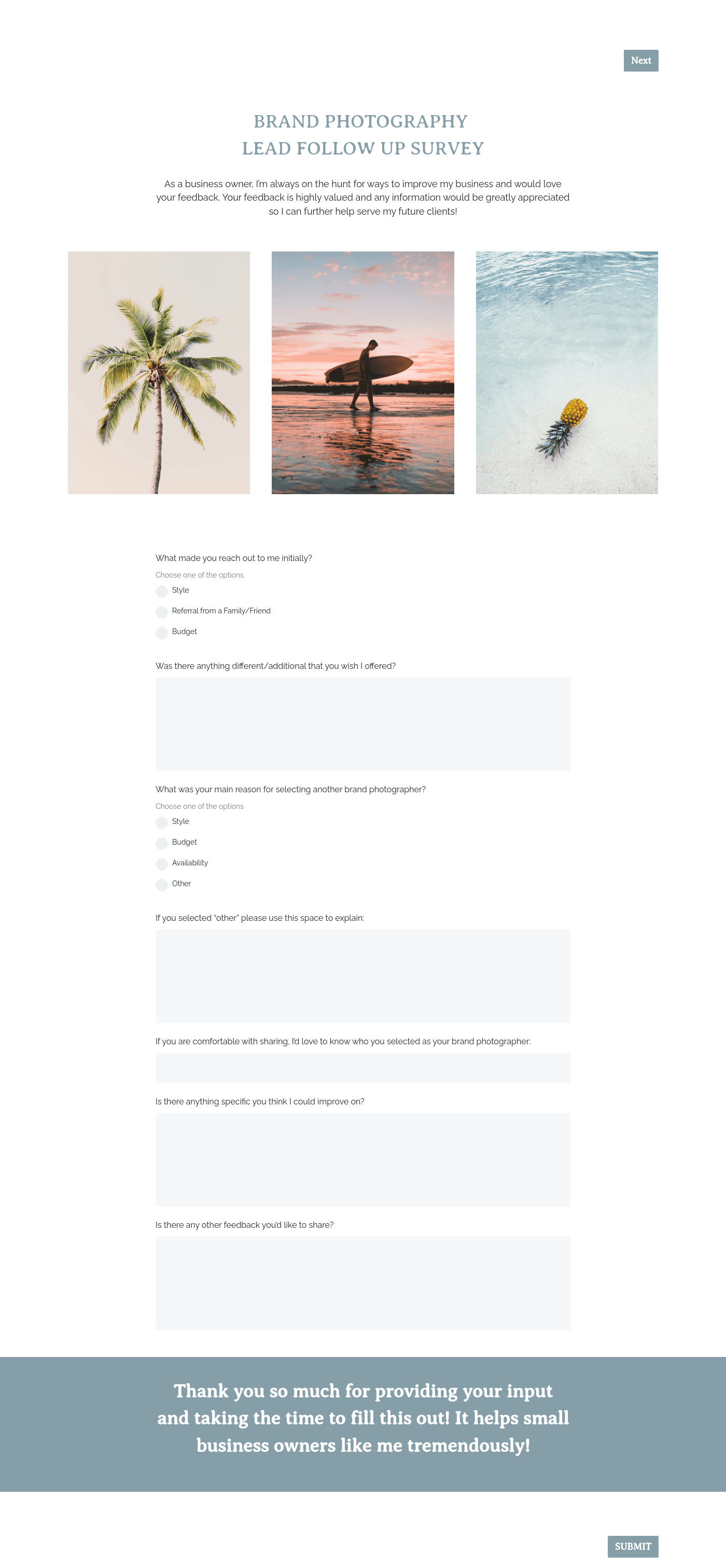
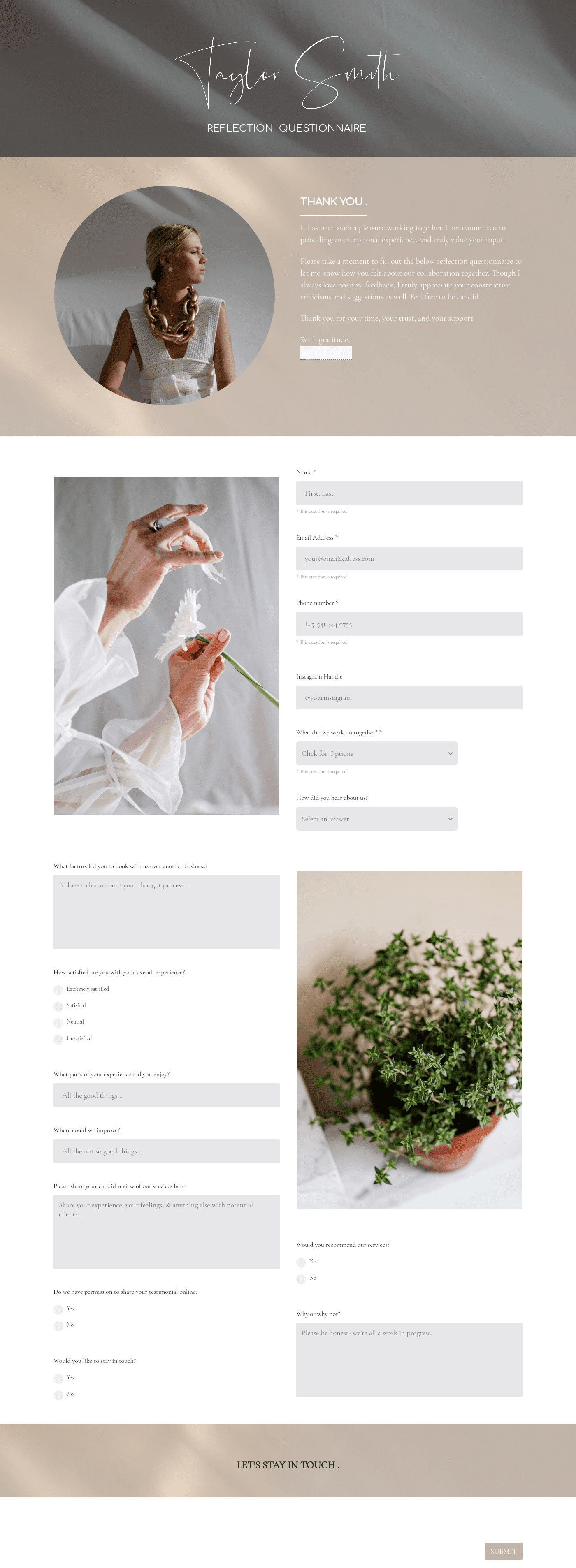
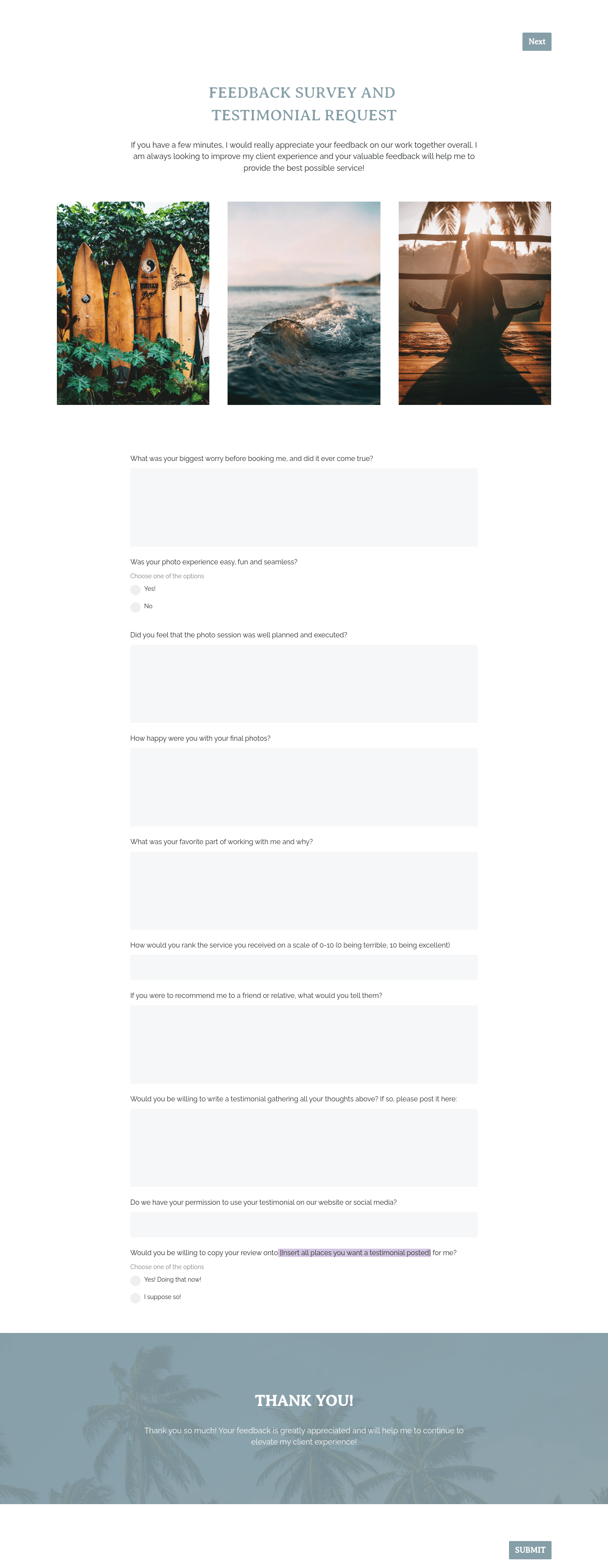
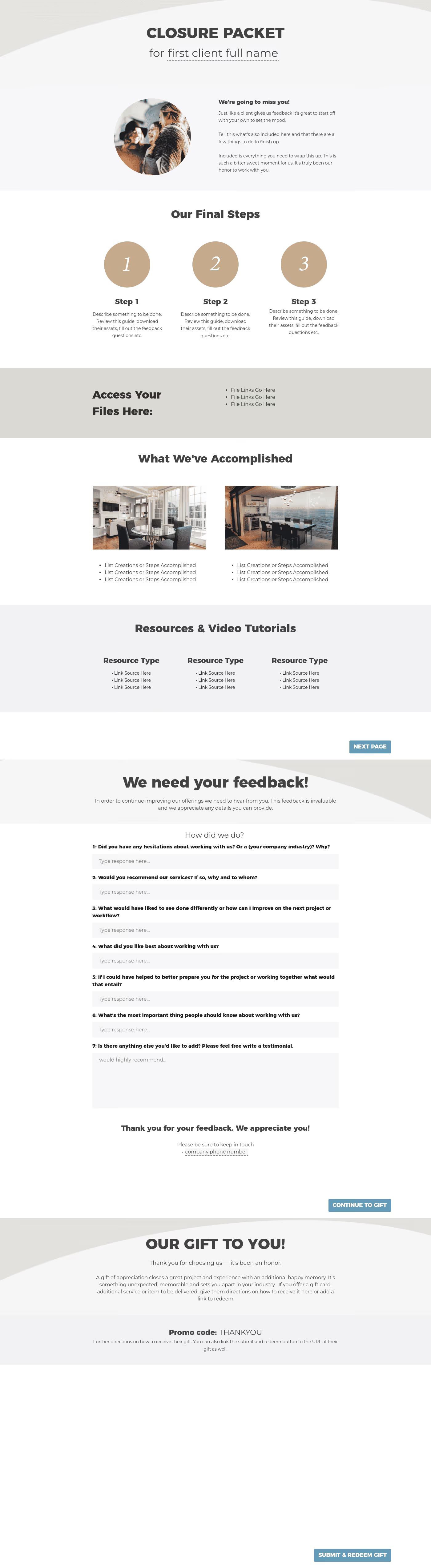
Satisfaction questionnaire template: how to customize it for top results
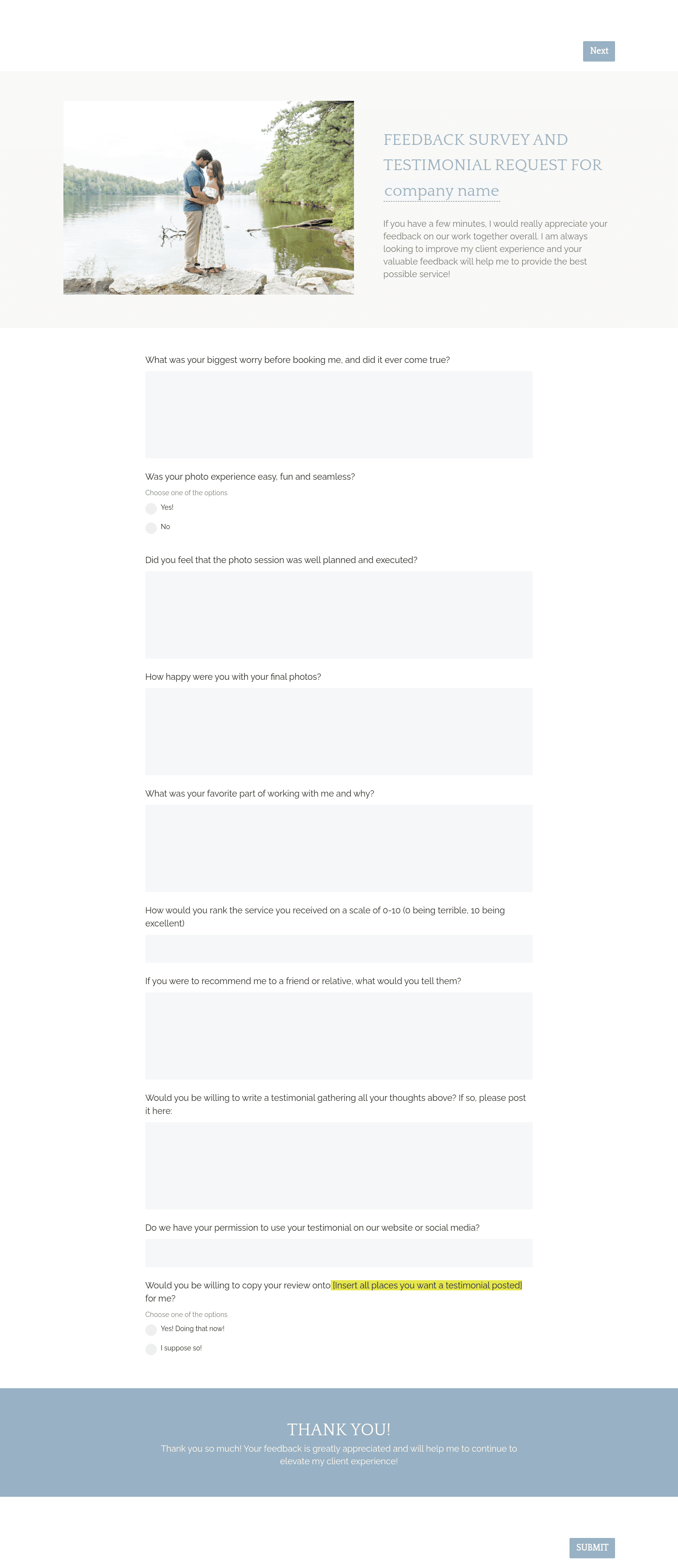
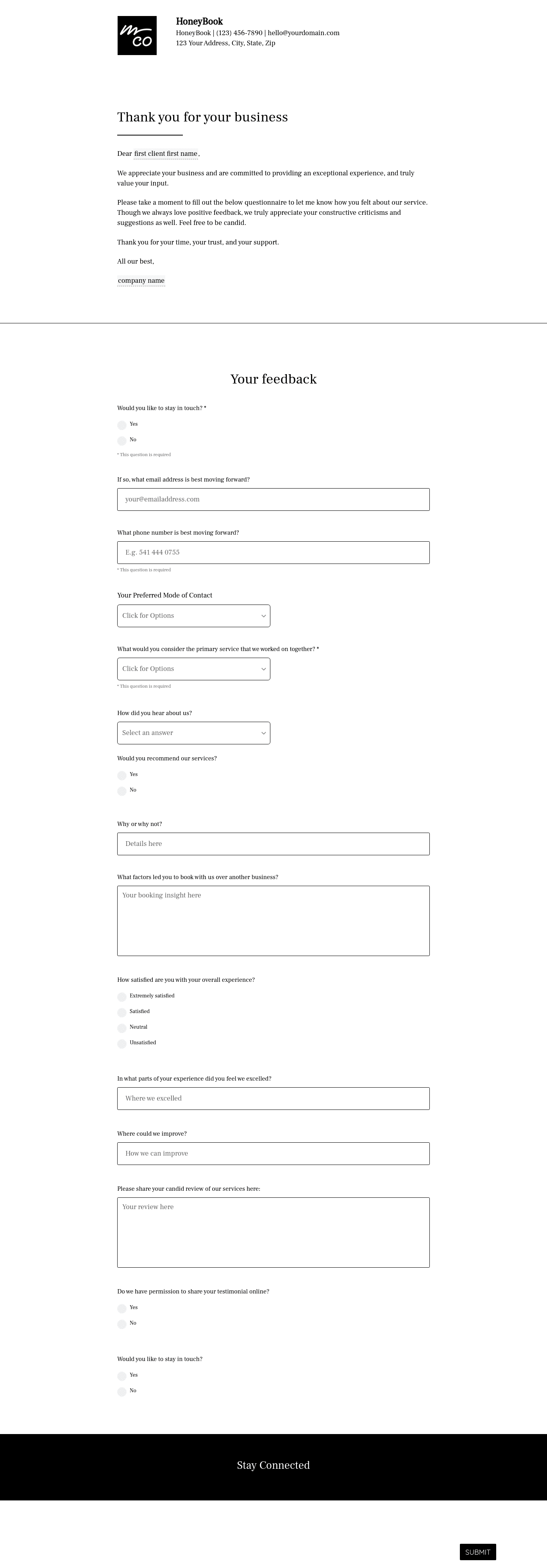
A satisfaction questionnaire is a research tool used to collect feedback from your customer. It helps you to find out how customers perceive your service. Then, you can use these insights to help you improve your service, get more referrals and finally, increase revenue. Unlike a general questionnaire, a satisfaction questionnaire focuses specifically on experience, expectations, and outcomes. It typically includes a combination of rating questions and open-ended responses. This guide will help you to set up your questionnaire to easily survey client satisfaction, collect that data and use it for growth.
For service-based businesses client perception is the product. A strong client satisfaction survey helps you:
- Identify gaps in your service
- Get more referrals and repeat customers
- Gather testimonials
- Improve communication with clients
- Detect churn risks early
For serviced-based businesses, customer feedback is key for understanding what clients value and expect.
An effective satisfaction questionnaire should include:
1. Overall satisfaction rating
A clear CSAT survey questionnaire-style question such as:
“How satisfied were you with your overall experience?”
(Use a 1-5 or 1-10 scale.)
2. Service quality evaluation
Questions addressing professionalism, communication, timelines, and expertise.
3. Outcome-based assessment
Did the service meet the client’s expectations or goals?
4. Net Promoter-style question
“How likely are you to recommend us to others?”
5. Open-ended feedback
- "What did you value most?"
- "What could we improve?"
6. Testimonial permission section
Optional opt-in for public use of positive feedback.
Each questionnaire should balance quantitative (ratings) and qualitative (written) insights.
To achieve top results, your survey client satisfaction strategy should be:
- Short and focused - Limit to 5-10 core questions. Long surveys reduce completion rates.
- Sent at the right time - Immediately after project completion or a major milestone.
- Customized to your service model - Include questions addressing your specific business.
- Easy to complete - Keep your questions specific, clear and short.
- Action-driven - Only ask what you are prepared to improve.
Use this template:
- After completing a project
- After onboarding or offboarding
- At quarterly or annual review points
- After a support interaction
- When refining pricing or service packages
It is especially useful during scaling phases when systems must replace assumptions.
Catering has a lot of moving parts, and the menu sits in the center. If your catering menu is scattered across emails, texts, and screenshots, mistakes show up at the worst time.
A structured menu template helps in practical ways.
- Builds client trust and a professional first impression.
- Speeds approvals by making choices simple.
- Reduces payment disputes by documenting totals and terms.
- Saves time by cutting back and forth.
That means fewer surprises for clients and fewer fire drills for you.
FAQs
Below are quick answers to common questions from caterers building a catering menu that clients can approve with confidence.
A CSAT survey questionnaire is typically a short, rating-based format focused on overall satisfaction. A satisfaction questionnaire may include deeper descriptive questions.
Ideally 5-10 questions. Completion rates drop significantly after 10 questions.
Anonymous surveys increase honesty. Named surveys allow follow-up. Choose based on your goal, or allow the customer to decide.
At minimum, after each completed service cycle. Ongoing clients can be surveyed quarterly or biannually.
- Send within 24–48 hours of service completion
- Keep it short
- Explain why feedback matters
- Offer a small incentive if appropriate
You can start a template from the Templates > File Templates section, then choose Create New. From there, you can build your file.
Related templates
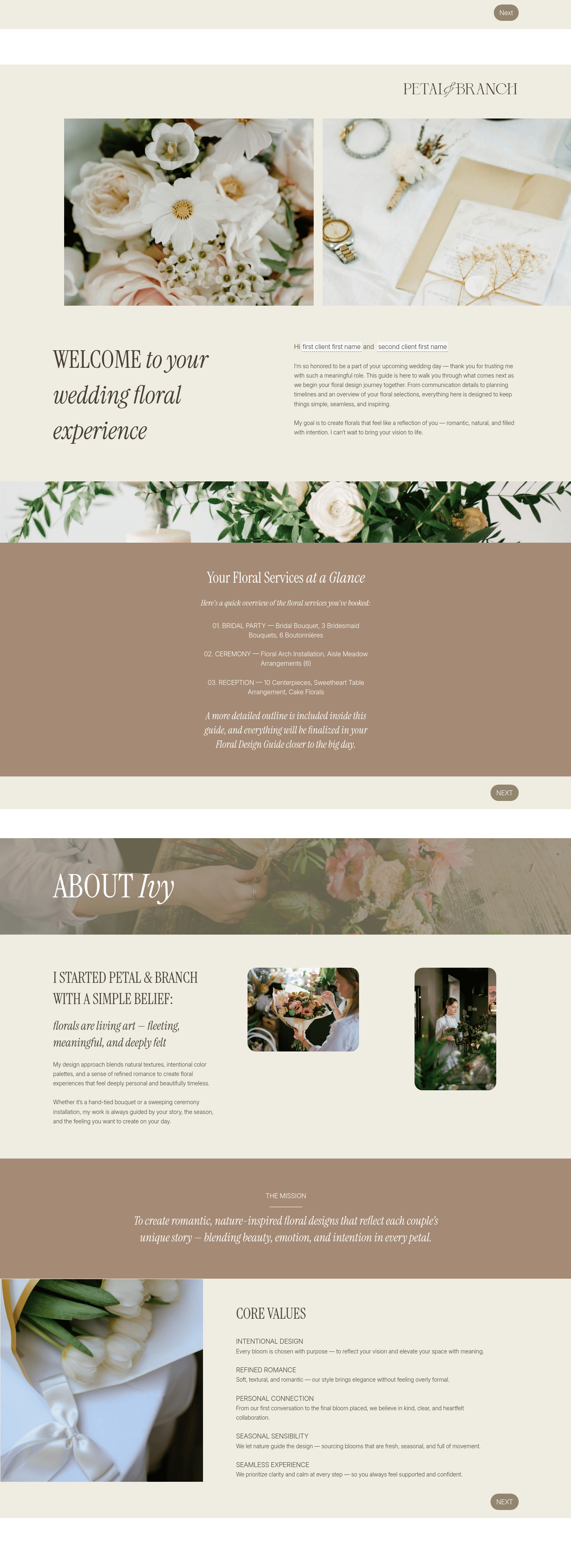
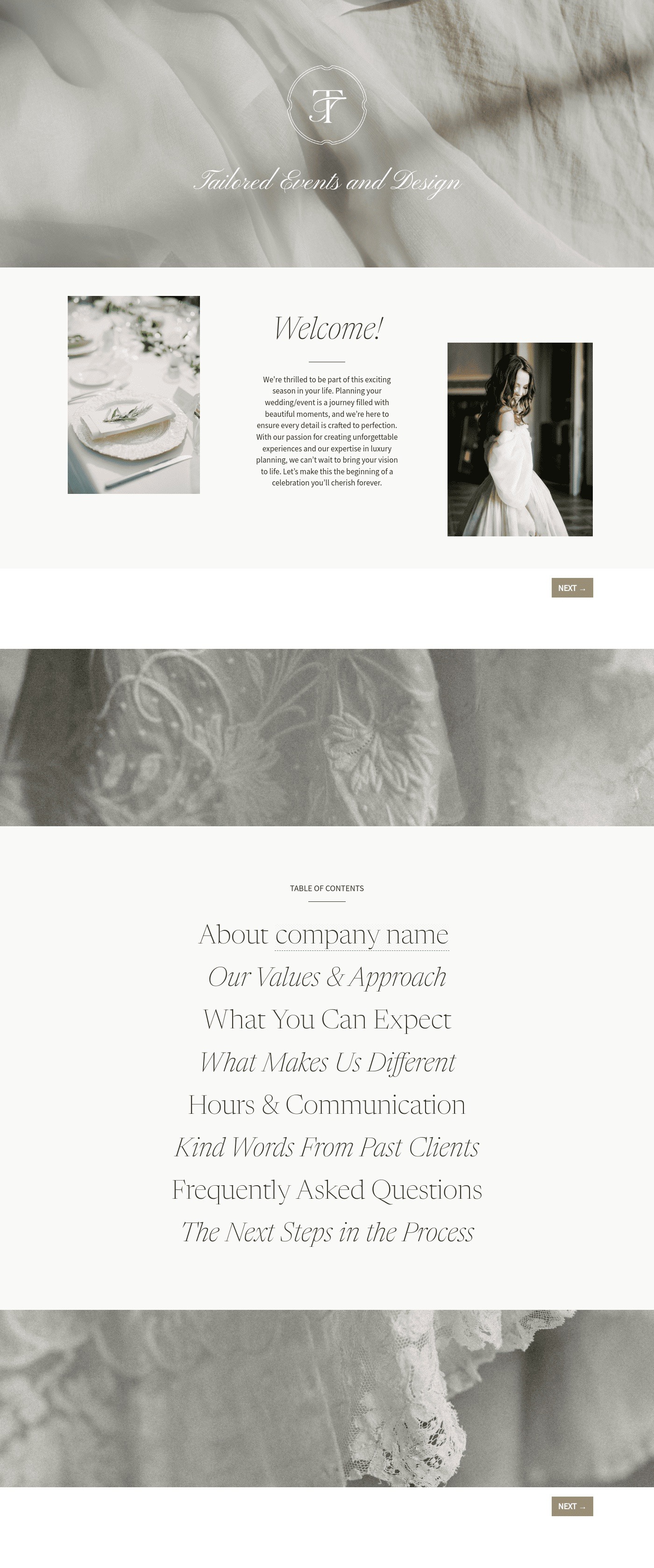
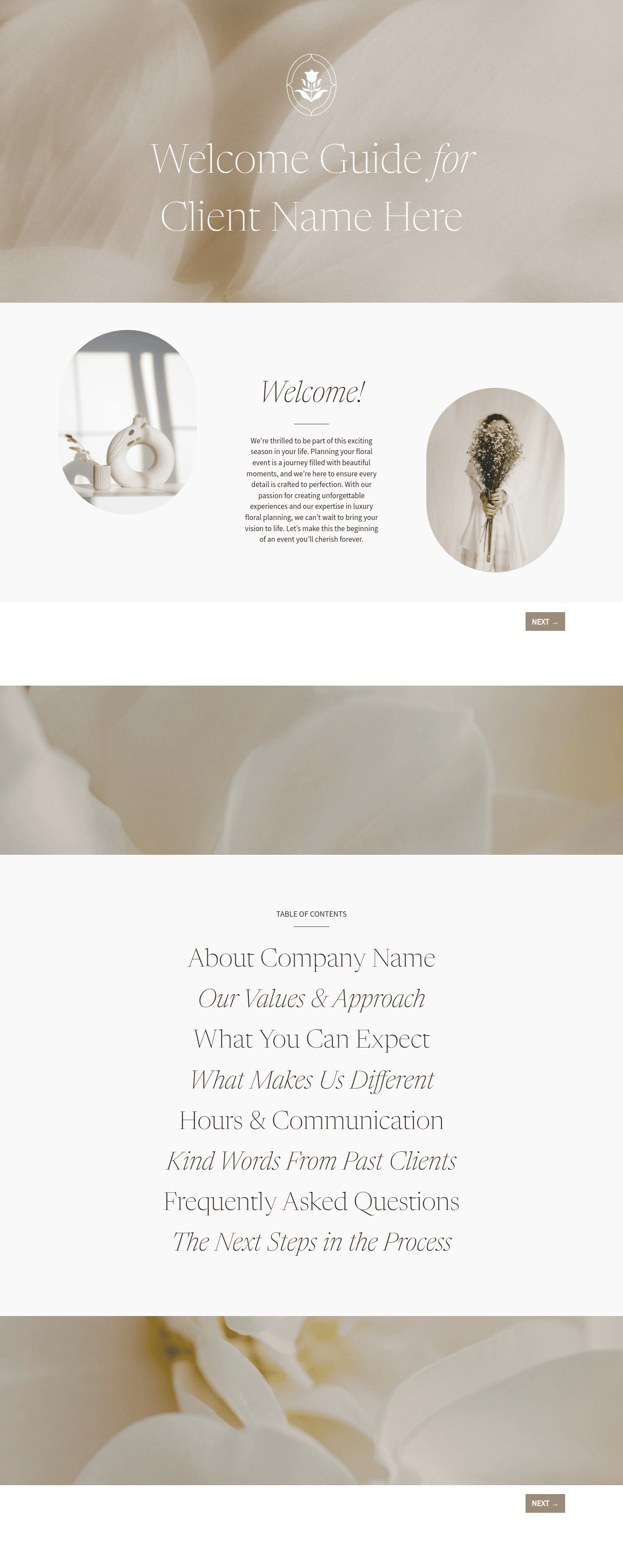




Related Templates


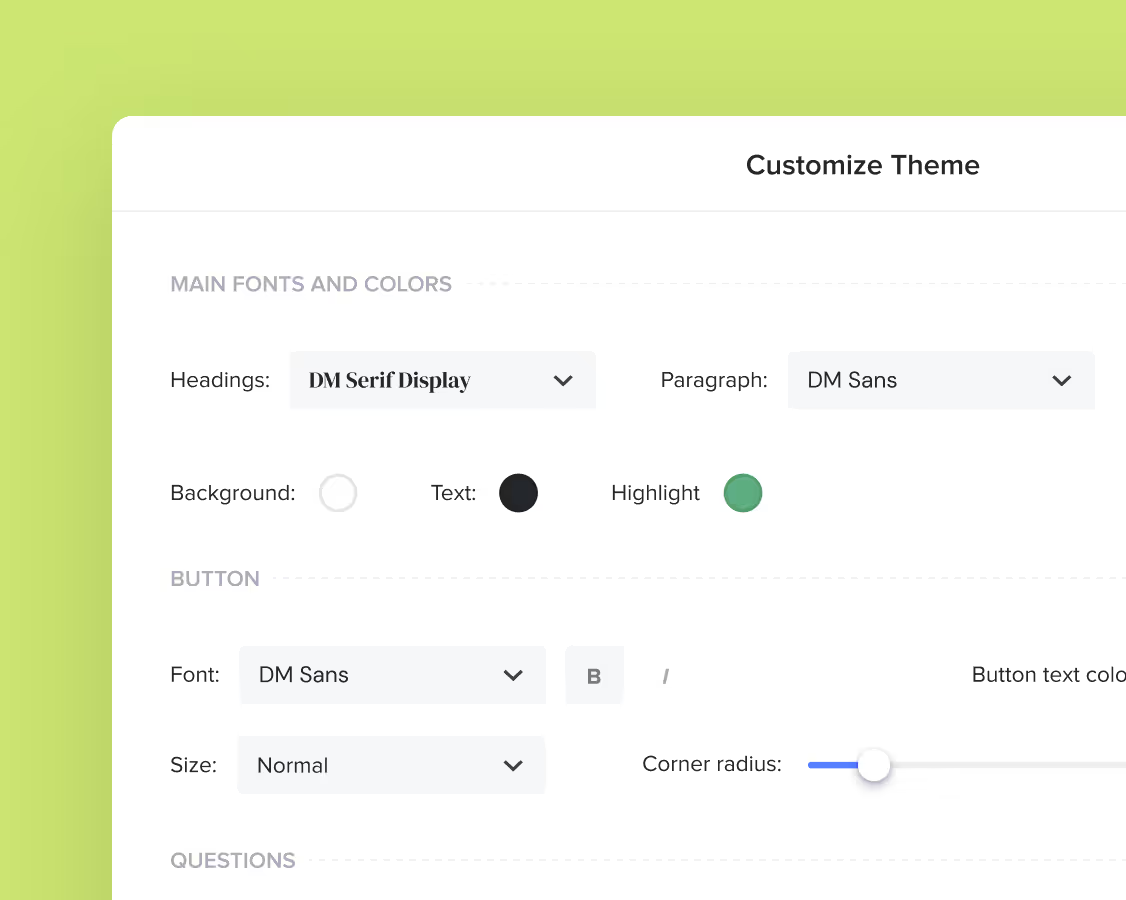
Make it your own
Fully customize the template to fit your needs. Quickly apply your company branding with just a few clicks.
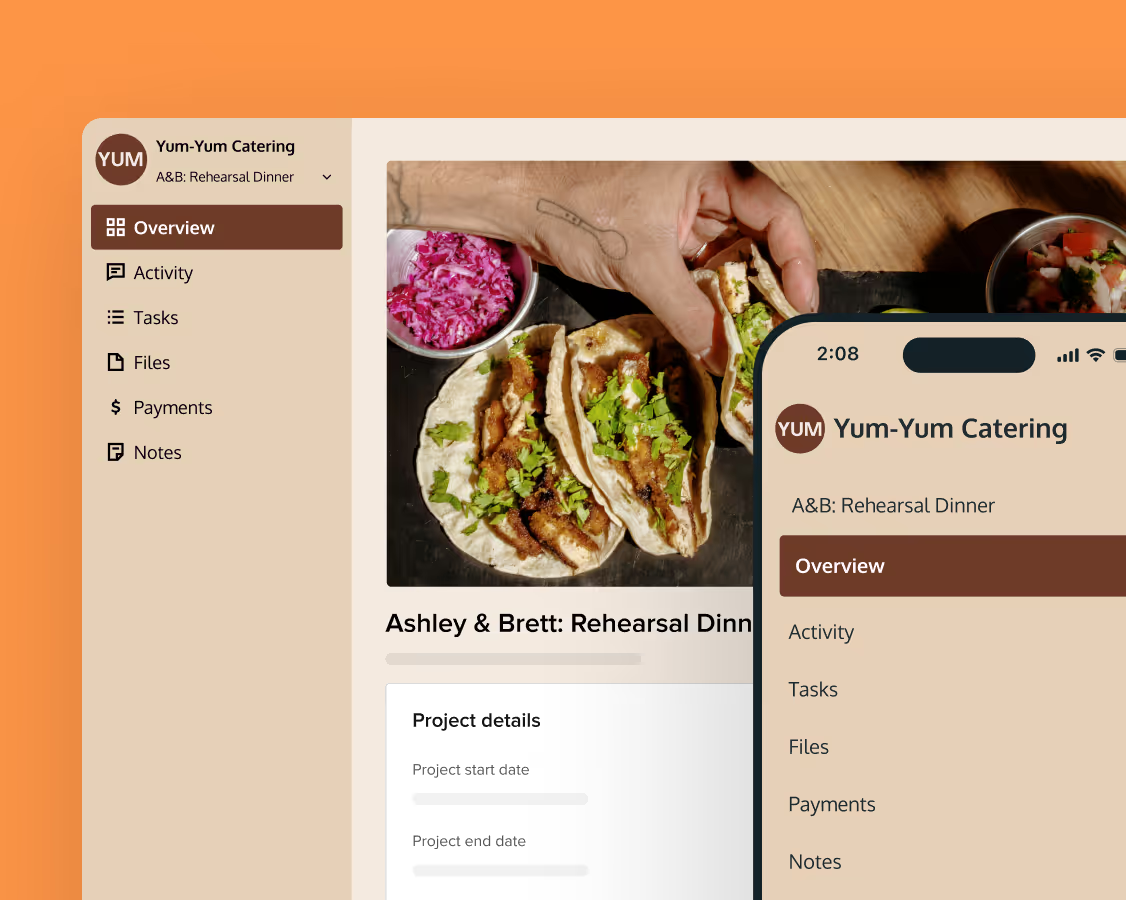
Share with clients
Create exceptional client experiences through HoneyBook’s dedicated client portal, allowing them to read, review, and take action from any device.
Reuse and scale
Use your customized files with different clients again and again to save time and make managing client interactions that much easier.
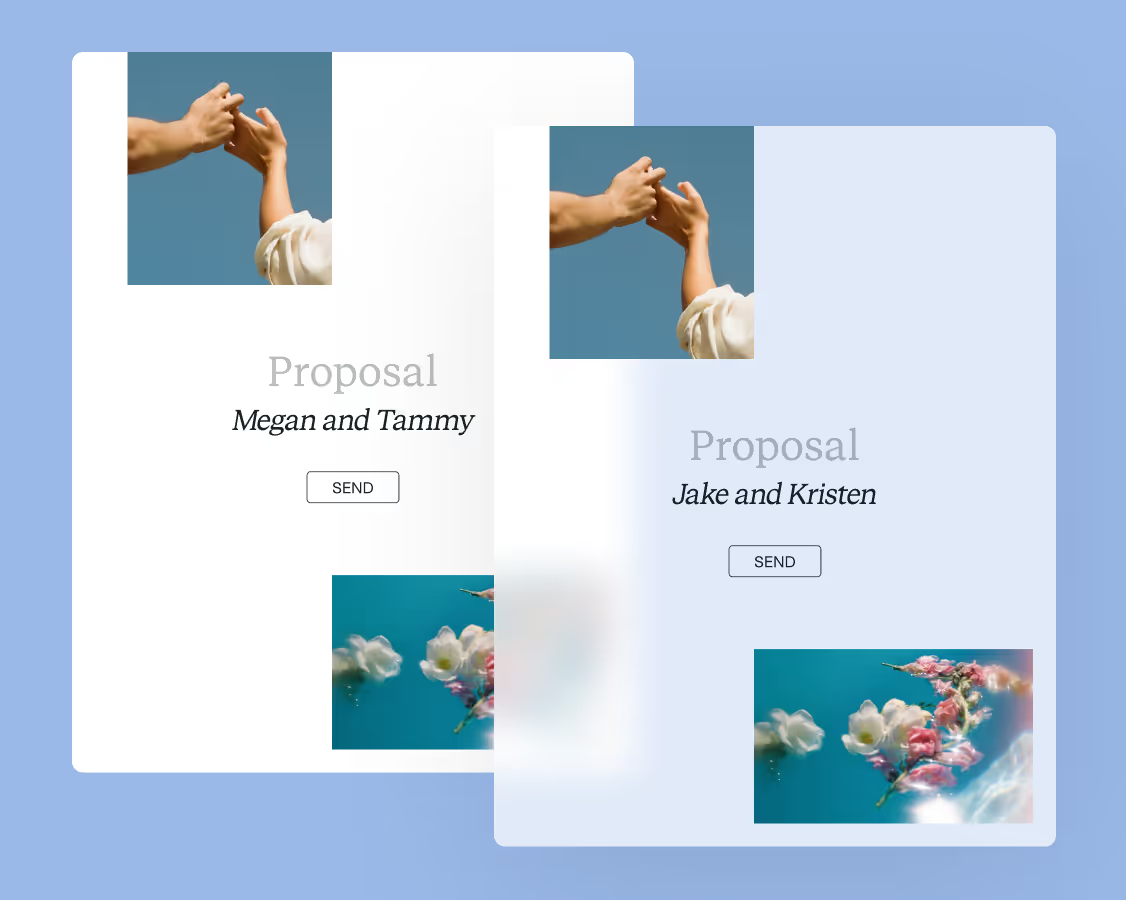
Join the 100,000+ businesses growing with HoneyBook.