












Questionnaire

Get client input, collect project details, and set expectations ahead of—or during—any project.


“
”

October 11, 2026

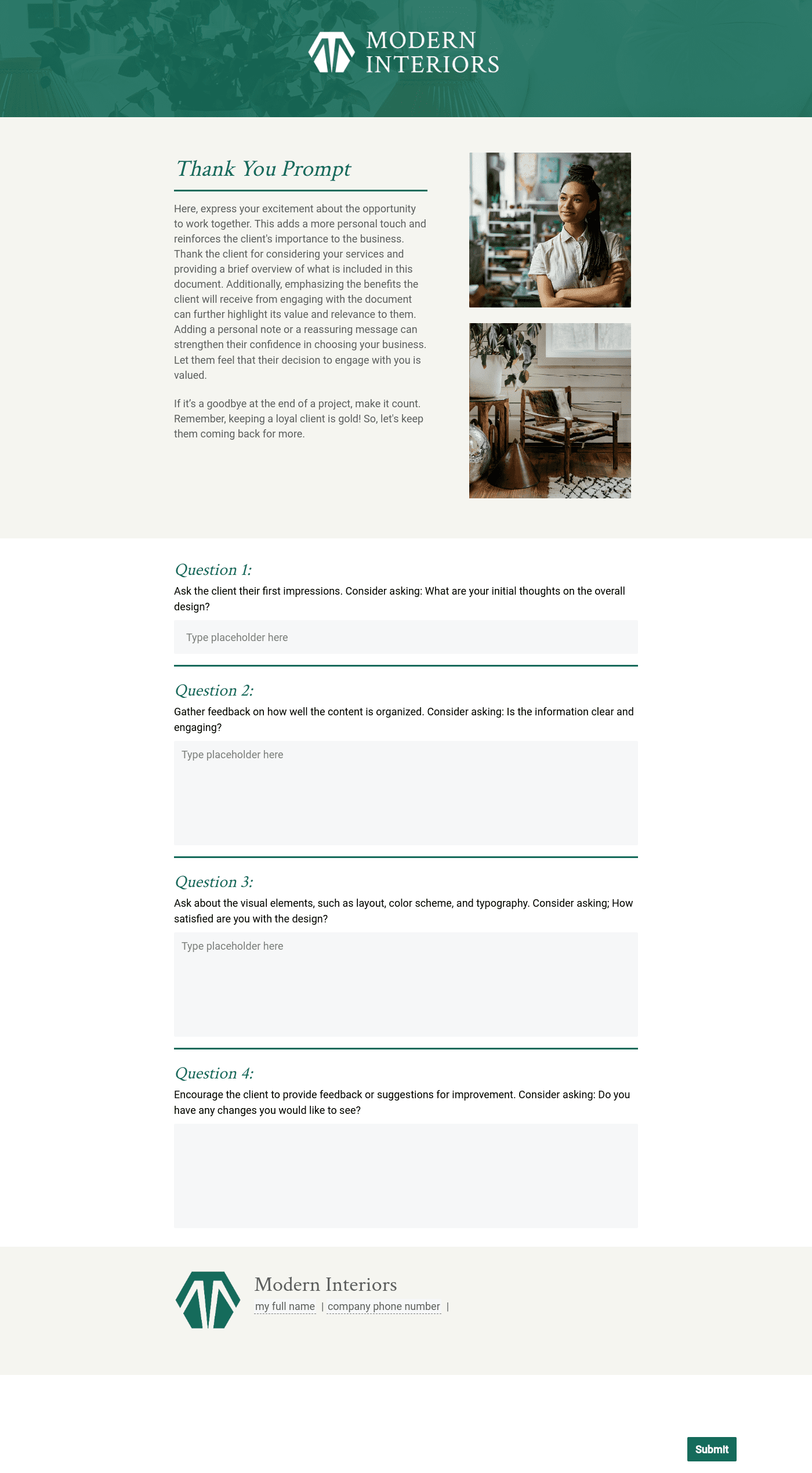
Reflection questionnaire template: how to customize it for top results
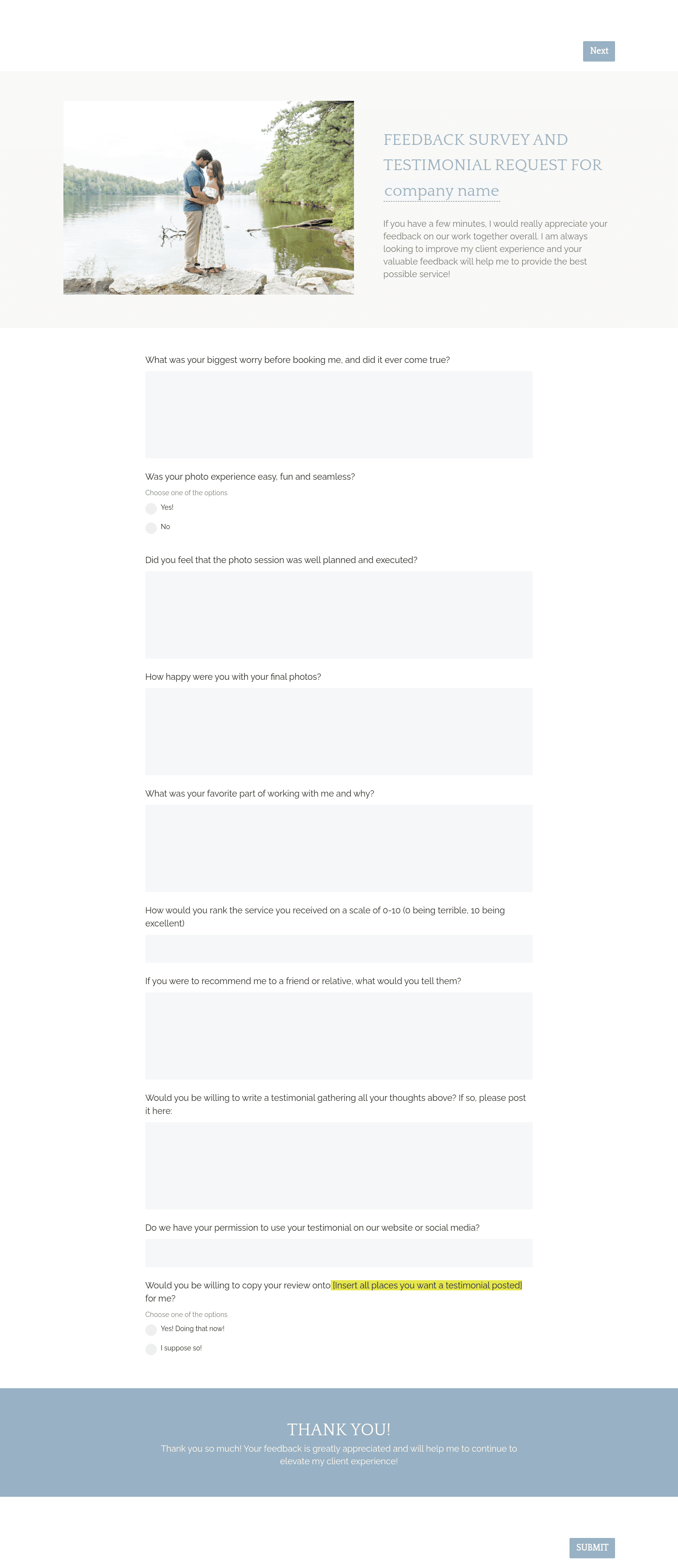
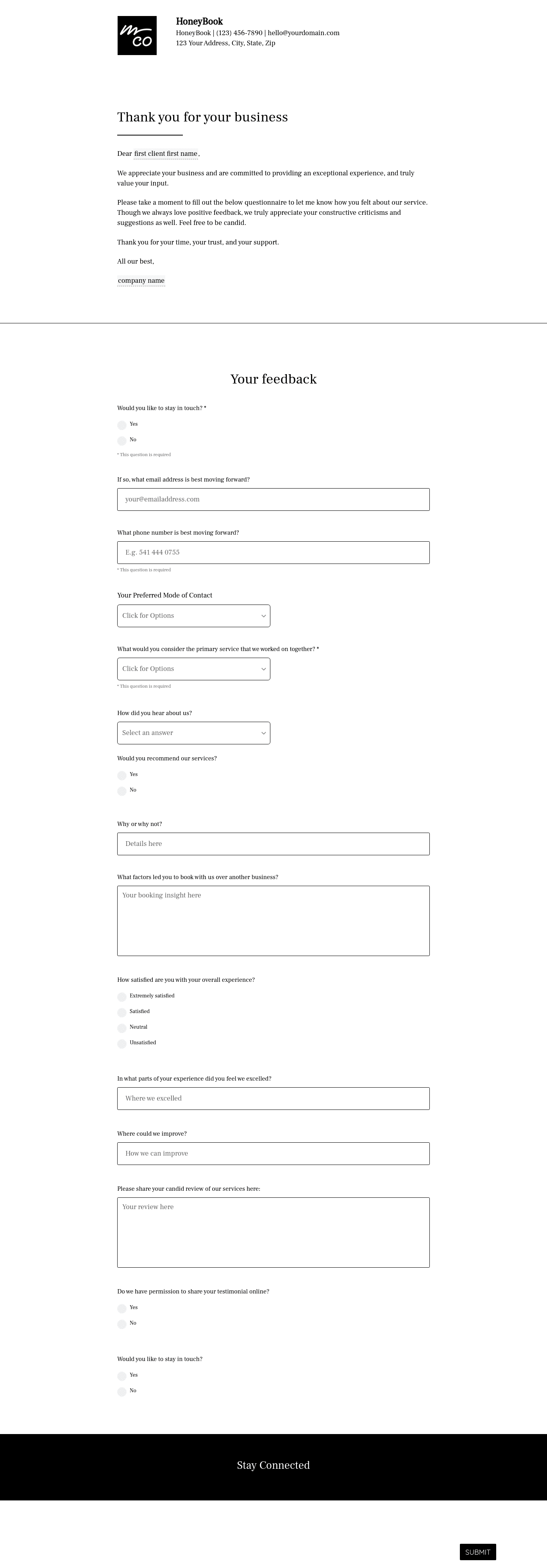
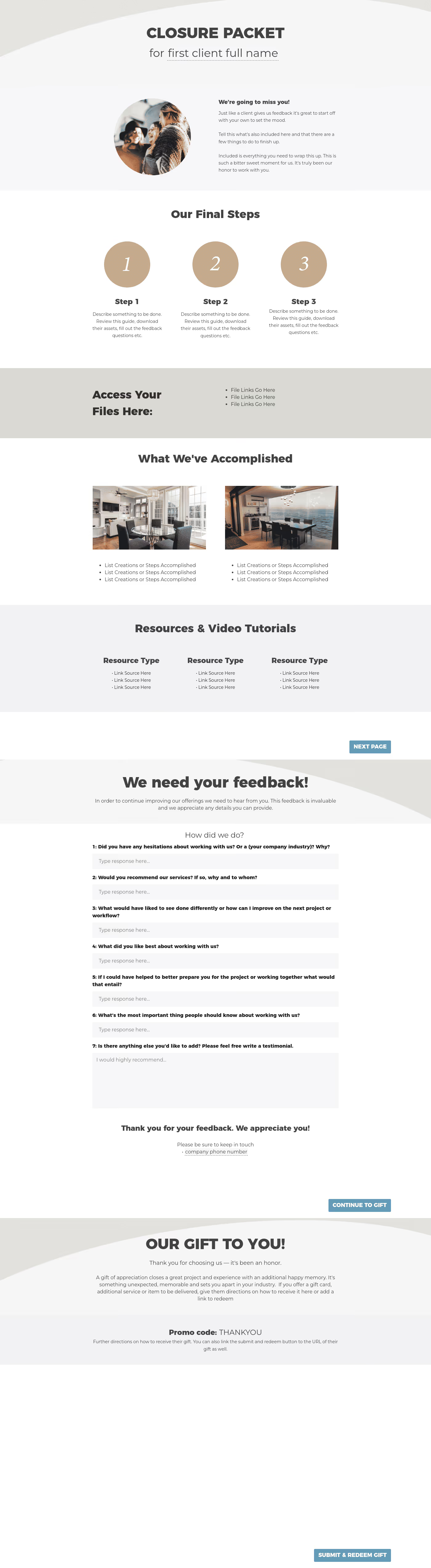
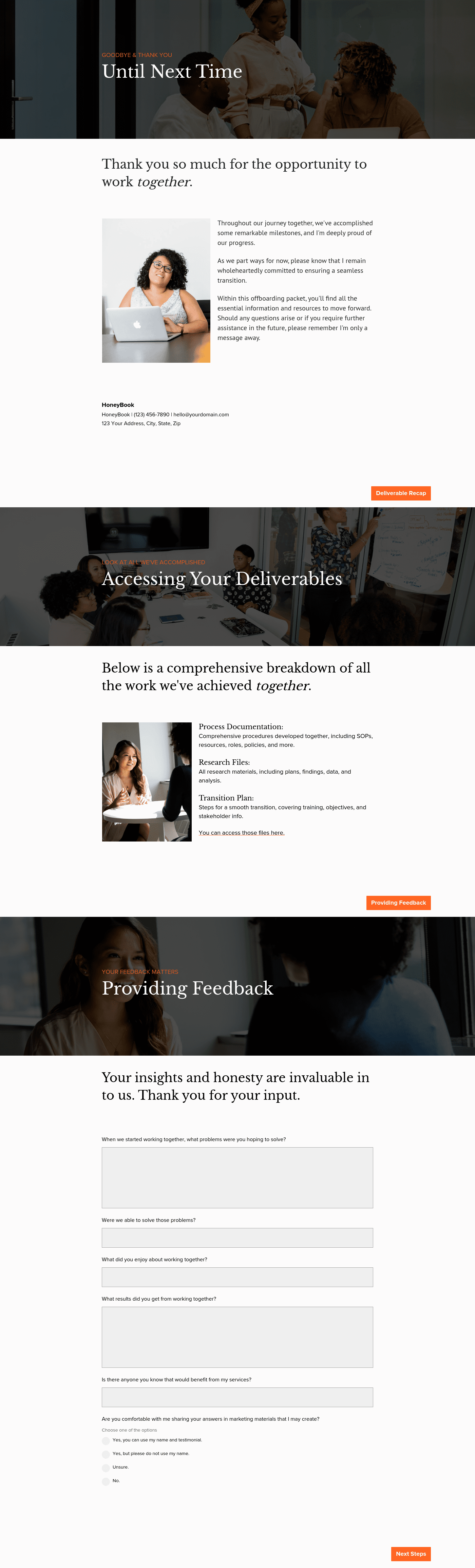
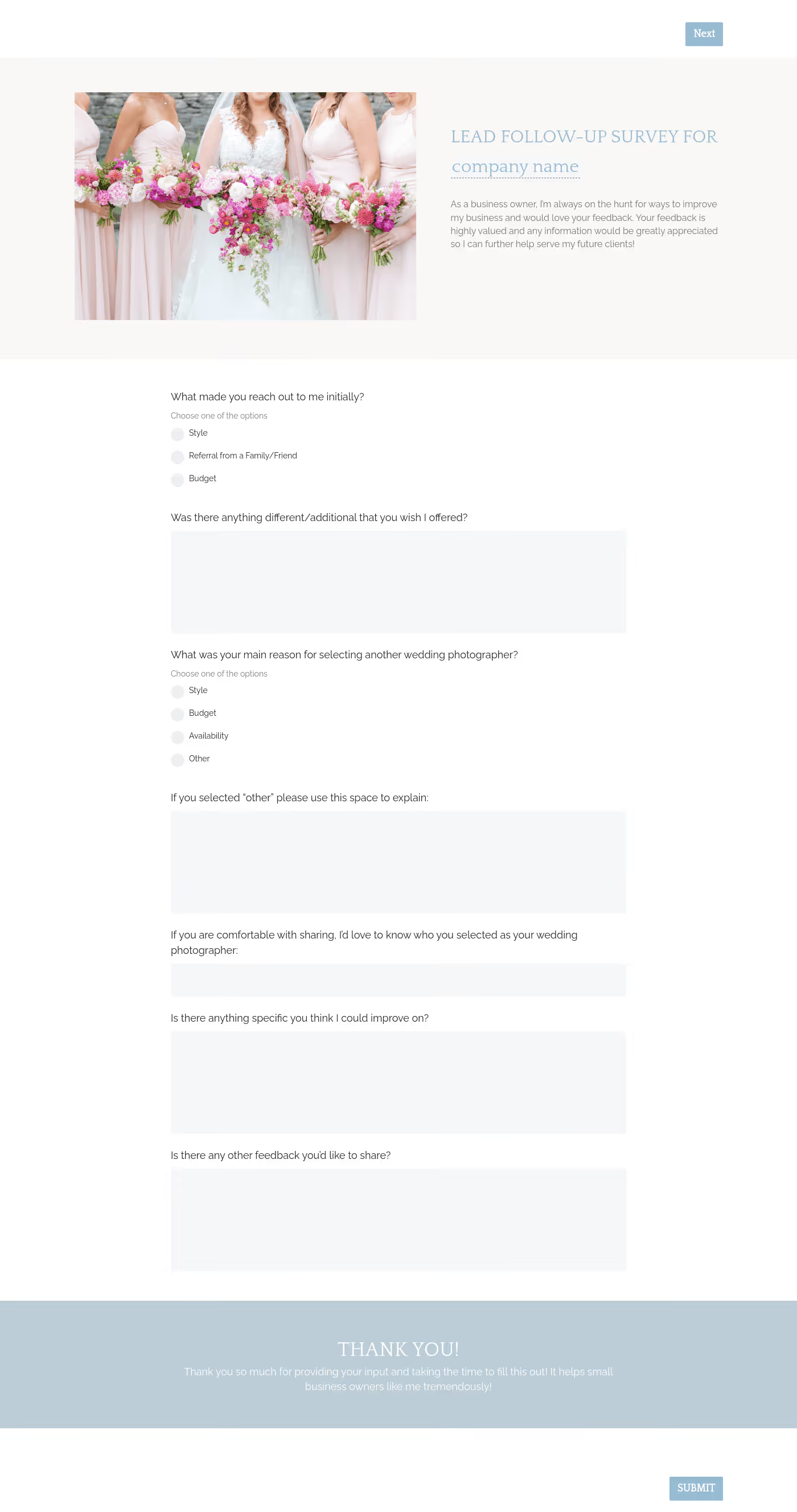
A reflection questionnaire is a great way to collect client feedback at the end of a creative or design project. Without sounding pushy or getting into lengthy discussions, it helps you gain valuable insights that can inform your future business strategies for improved client satisfaction.
Design and creative service businesses work on a lot of ad-hoc freelance projects. Gaining client feedback can help you unlock critical insights that can inform future project strategies. That’s exactly what a reflection questionnaire lets you achieve. It helps in three major ways:
- Project Quality: You uncover areas in your creative process where communication failed or technical bottlenecks occurred. Fixing those can elevate client experience on future projects.
- Client Insights: Provides a deep understanding of client satisfaction and whether their goals were met.
- Case Study and Testimonials: You can collect testimonials organically without having to nudge the clients specifically for them.
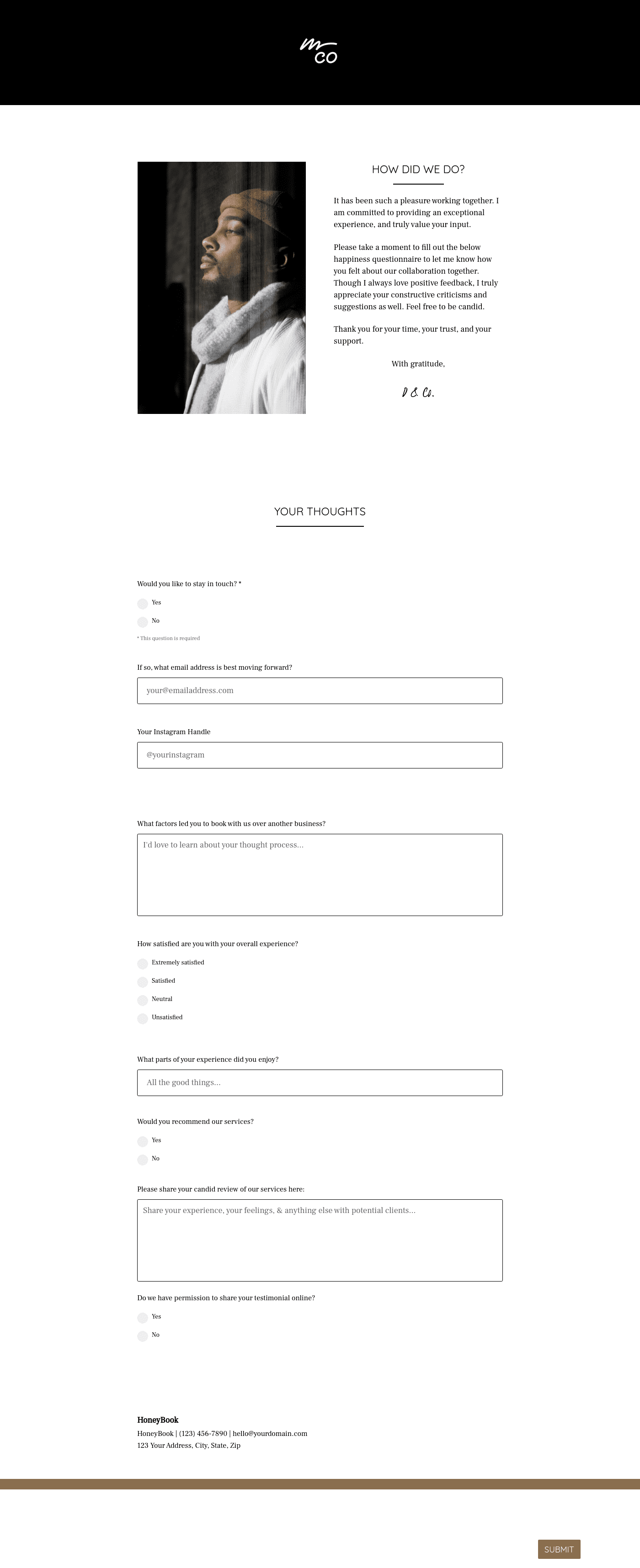
Every reflection questionnaire requires certain elements to become compelling enough for clients to fill it out. Here are the core components you should include:
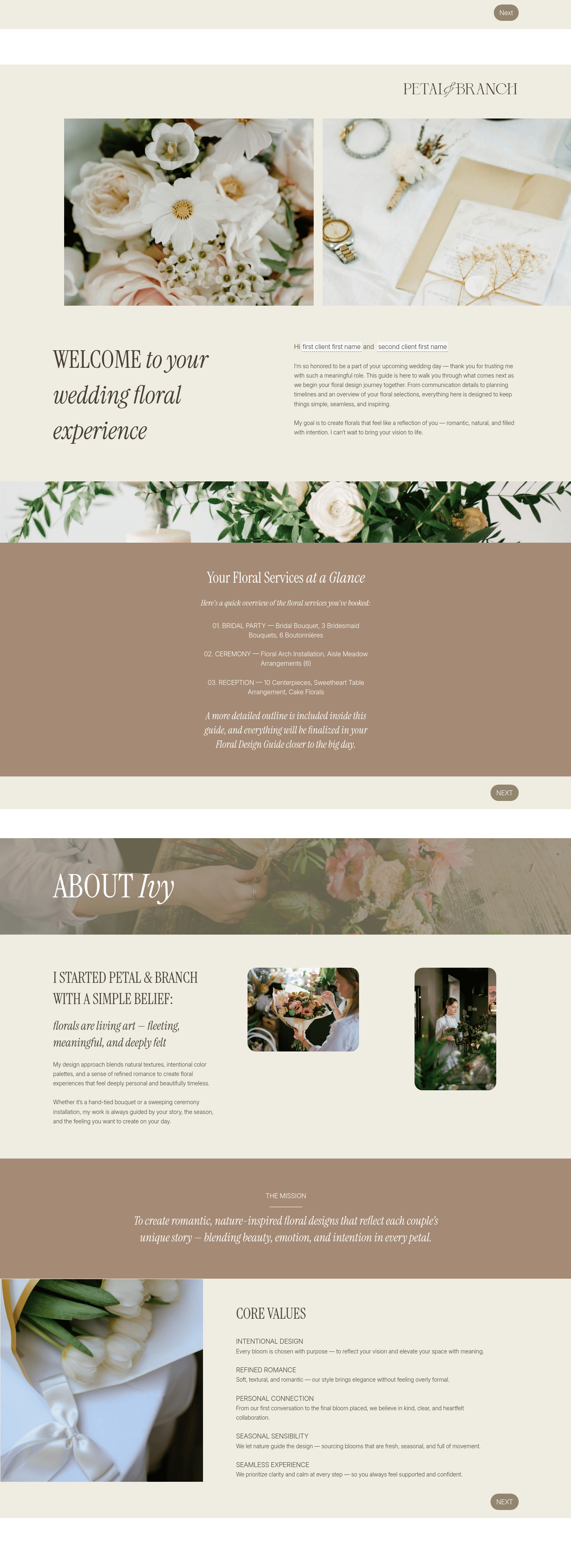
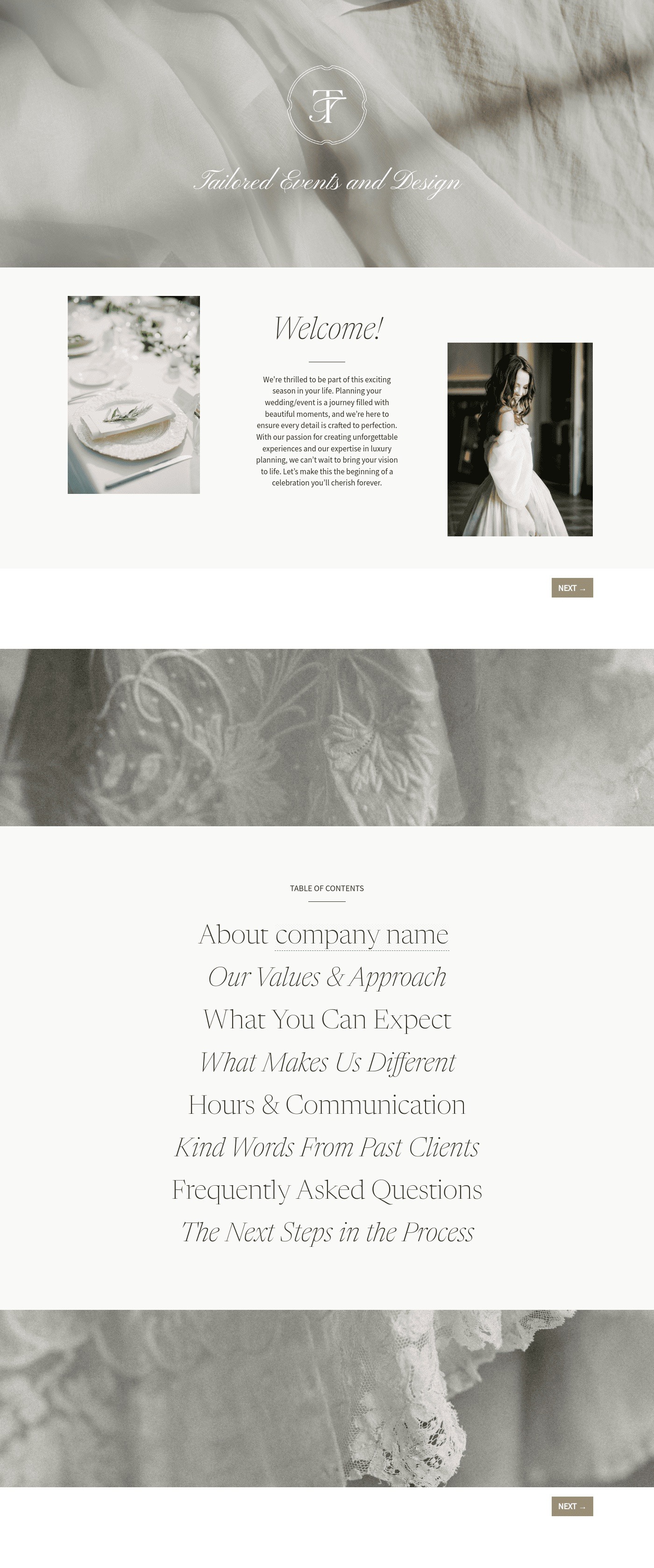
- Branding: The questionnaire should stick to your creative branding and must not be a plain document. It further reinforces your brand image.
- Personalized Note: A short note, preferably personalized, talking about your experience working with the client and why you want them to fill out the questionnaire.
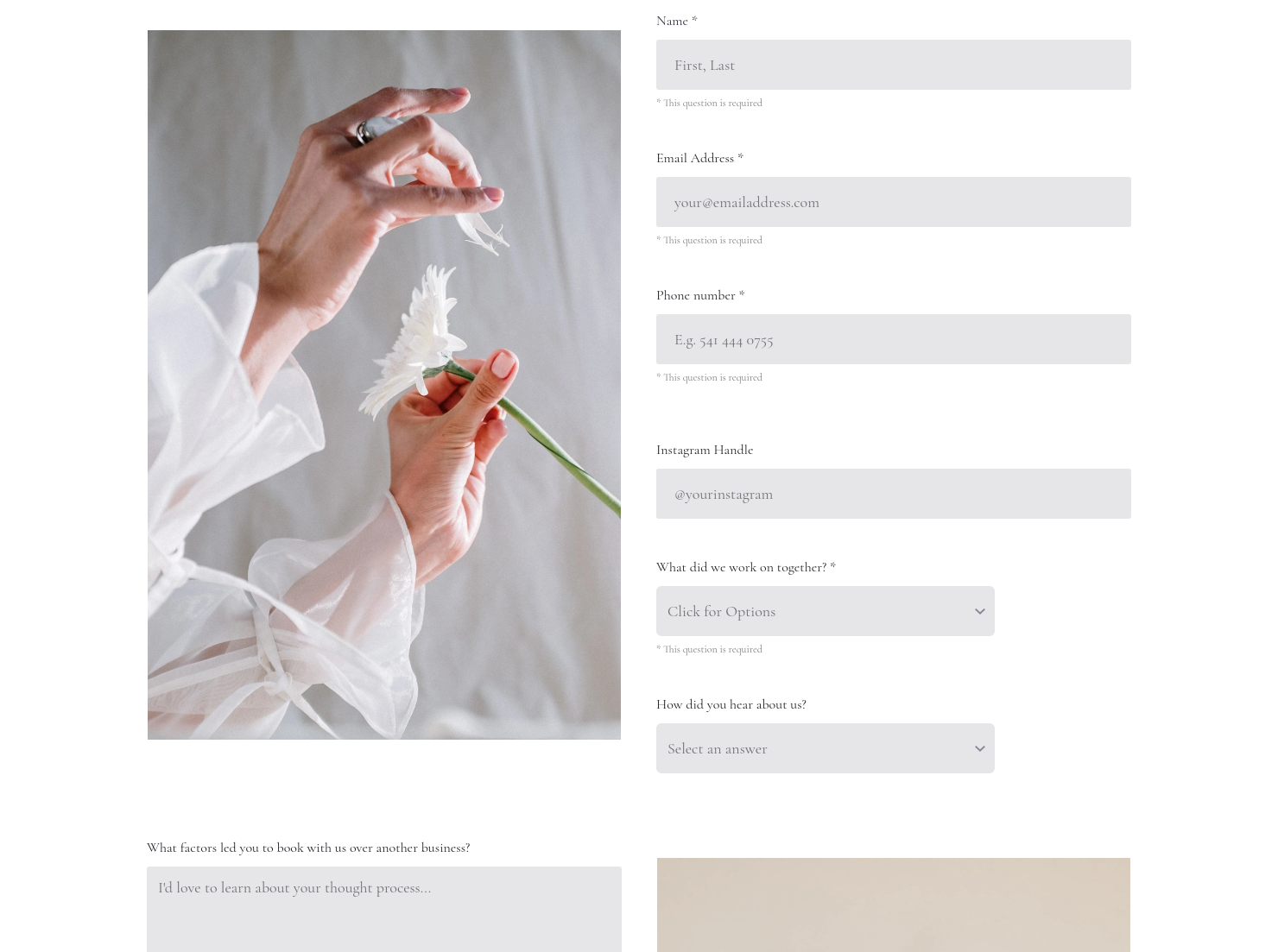
- Basic Information: Ask for details like the client’s name, Instagram account, and purpose of working together.
- Hard-Hitting Questions: Allow clients to provide in-depth answers on why they chose you, what they liked/disliked, and whether they’d recommend your services.
- Testimonial: Provide a text field where clients can write a detailed review of their experience working with you.
As a creative professional, you should focus on bridging the gap between aesthetic preference and project success. The reflection questionnaire must prioritize uncovering whether your client feels the final work actually solves their business problem, rather than just "looking good."
Use a tone that’s professional yet collaborative, mirroring the partnership you built during the project duration. One thing to keep in mind while designing the questionnaire is its length.
Make sure you don’t make it excessively long. Nobody likes filling out lengthy forms. Instead, include just enough fields that help you collect feedback while making the form-filling experience a breeze for clients.
To further elevate the experience, avoid the mistake of sending a cold, generic form. Instead, brand the questionnaire to match the project’s visual identity, reinforcing your attention to detail.
You should also consider including an optional "Future Vision" section. By asking where they see their brand in six months, you shift your role from a one-time vendor to a long-term strategic partner who’s invested in their ongoing growth.
This reflection questionnaire template is best used after you complete a project. It’s a crucial part of the formal handover process, where you move a project from your active workplace to the client's long-term portfolio.
Here are some situations where using it creates the greatest impact:
- At the end of one-off or custom projects
- Meeting high-value milestones
- Event-based work
- Transition to recurring retainer
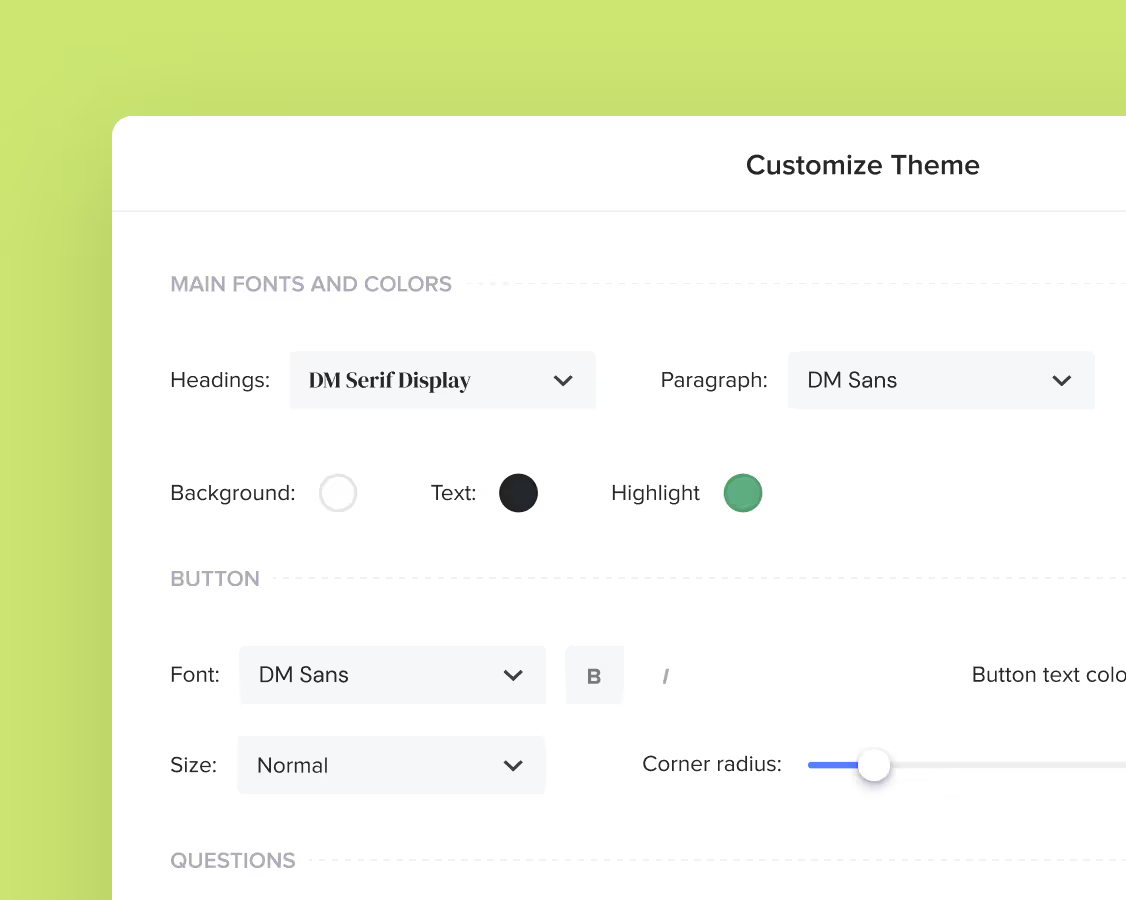
1. Make it your own
Fully customize the template to fit your needs. Quickly apply your company branding with just a few clicks.
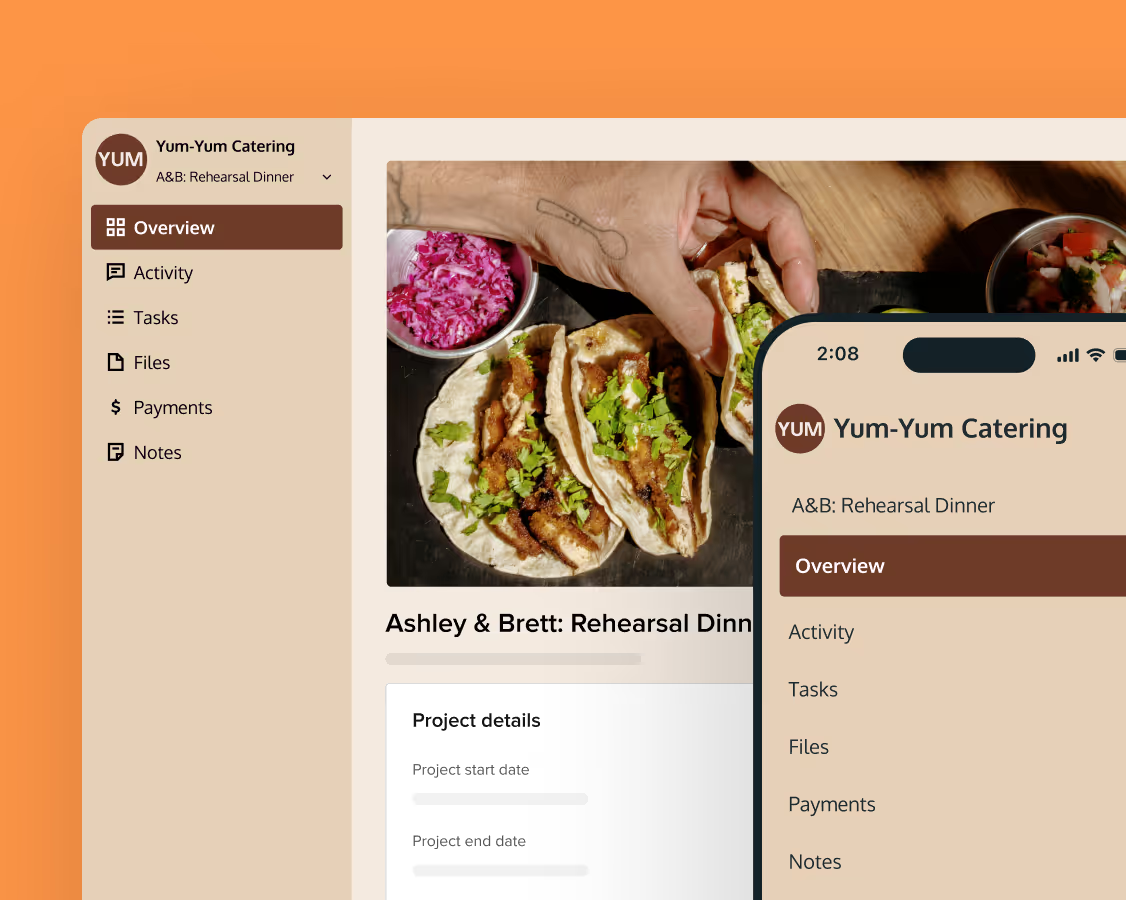
2. Share with clients
Create exceptional client experiences through HoneyBook's dedicated client portal, allowing them to read, review, and take action from any device.
3. Reuse and scale
Use your customized files with different clients again and again to save time and make managing client interactions that much easier.
Catering has a lot of moving parts, and the menu sits in the center. If your catering menu is scattered across emails, texts, and screenshots, mistakes show up at the worst time.
A structured menu template helps in practical ways.
- Builds client trust and a professional first impression.
- Speeds approvals by making choices simple.
- Reduces payment disputes by documenting totals and terms.
- Saves time by cutting back and forth.
That means fewer surprises for clients and fewer fire drills for you.
Get started with a reflection questionnaire
A reflection questionnaire can provide social proof through testimonials and deep insights into client satisfaction. Both play a crucial role in helping you scale your creative and design business. And with our customizable template, you can start collecting client feedback at scale with just a few clicks. Start working on it now.
FAQs
Below are quick answers to common questions from caterers building a catering menu that clients can approve with confidence.
A short note serves as a great way to introduce the reflection questionnaire and why you want the clients to fill it. It’s also a place where you can thank them for trusting you with their brand.
Your questionnaire should include these fields:
- Name
- Phone number
- Instagram handle
- Project type
- Detailed review and permission to share it
- Reasons why the client chose you
HoneyBook offers a range of professional templates that can help you speed up your entire workflow, from client booking to feedback collection.
Absolutely! All HoneyBook templates can be shared easily with both members and non-members. You can generate a direct link from the platform and send it over. It’s also possible to deactivate this link at any time.
Related templates




Related Templates


Make it your own
Fully customize the template to fit your needs. Quickly apply your company branding with just a few clicks.
Share with clients
Create exceptional client experiences through HoneyBook’s dedicated client portal, allowing them to read, review, and take action from any device.
Reuse and scale
Use your customized files with different clients again and again to save time and make managing client interactions that much easier.
Join the 100,000+ businesses growing with HoneyBook.