











Questionnaire

Get client input, collect project details, and set expectations ahead of—or during—any project.

Ready-to-use copy
Templates come filled with prewritten copy you can use as is or edit to match your brand and business.


“
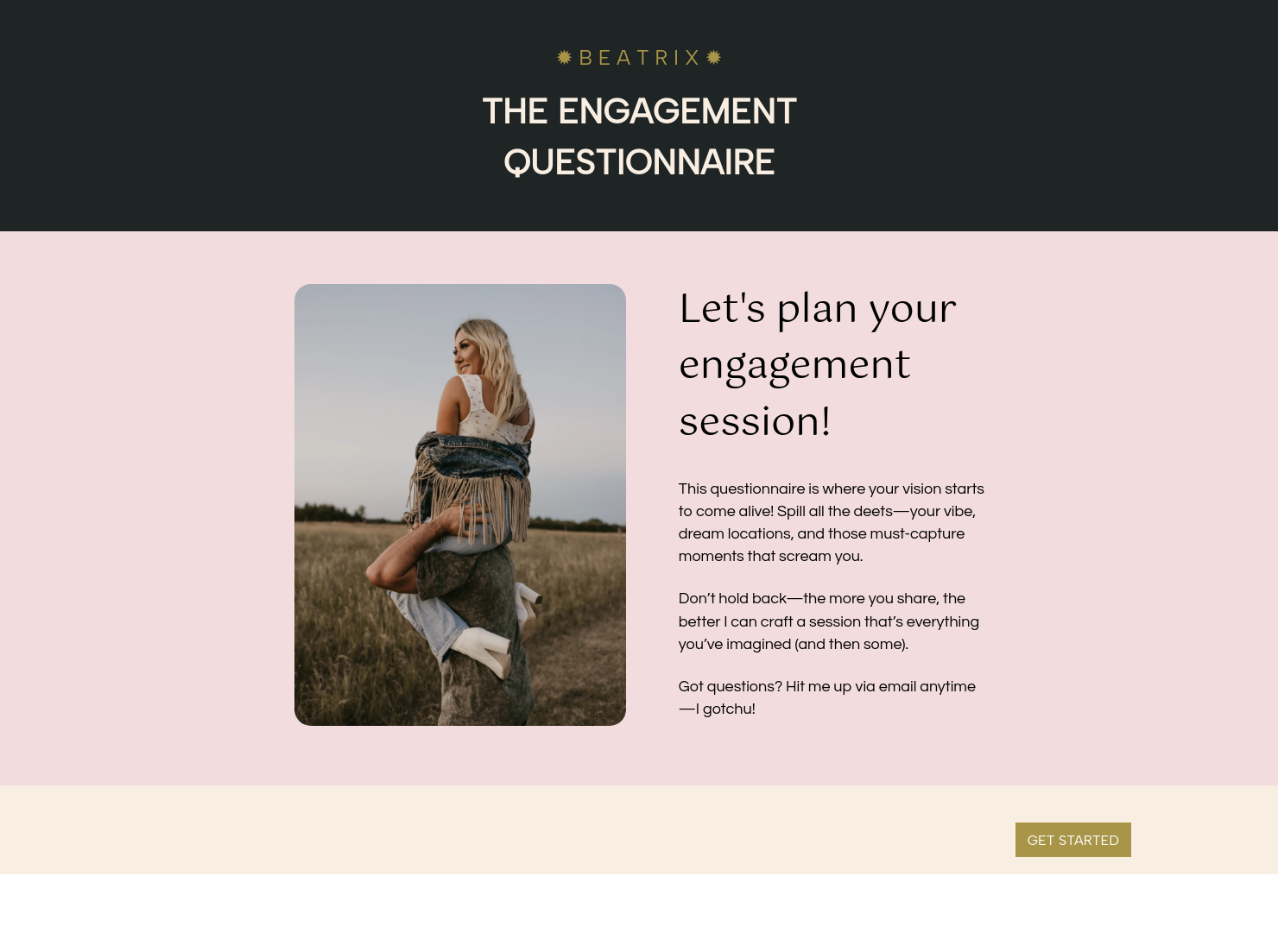
Use this template to connect with your couple, understand their vision, and plan an engagement session that captures their unique story!
”

October 18, 2026

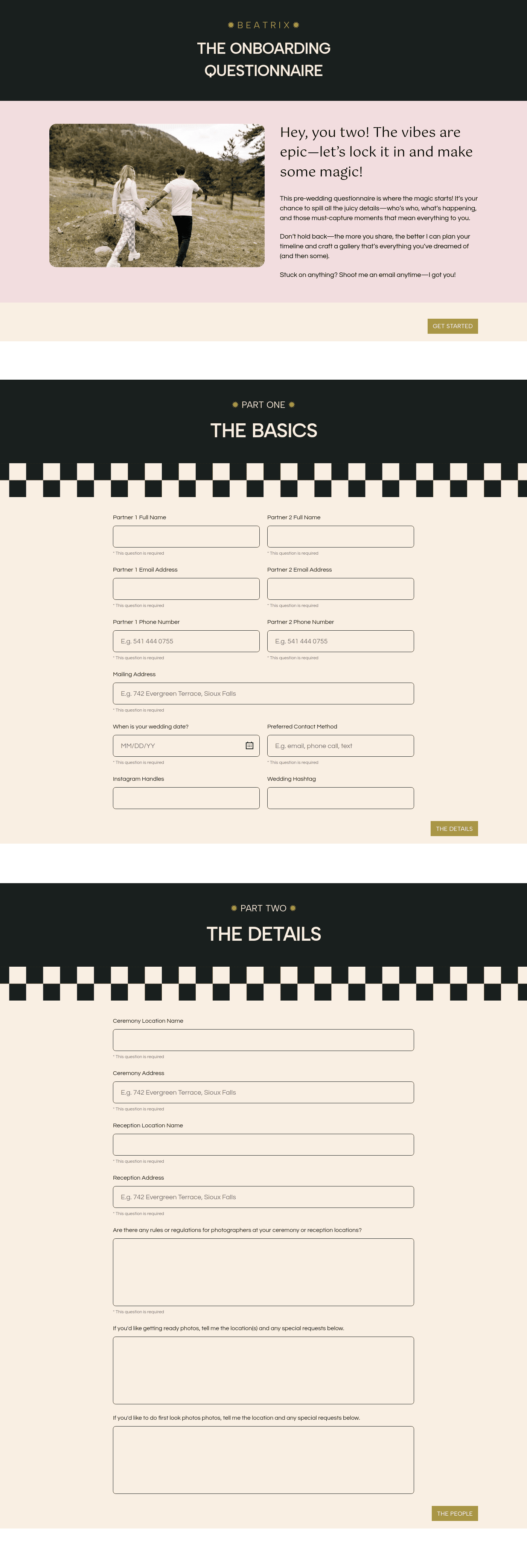
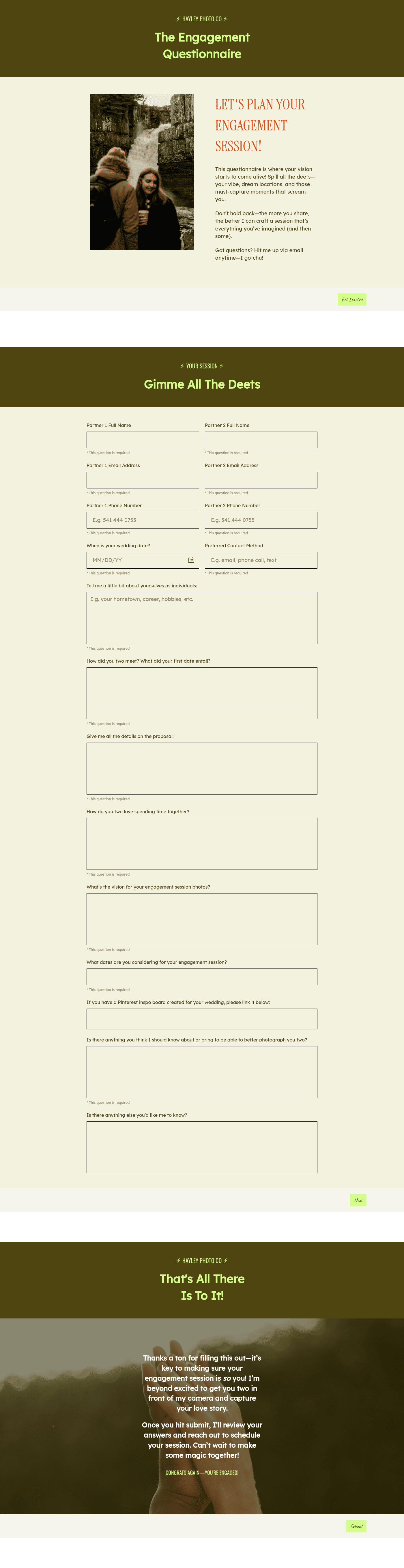
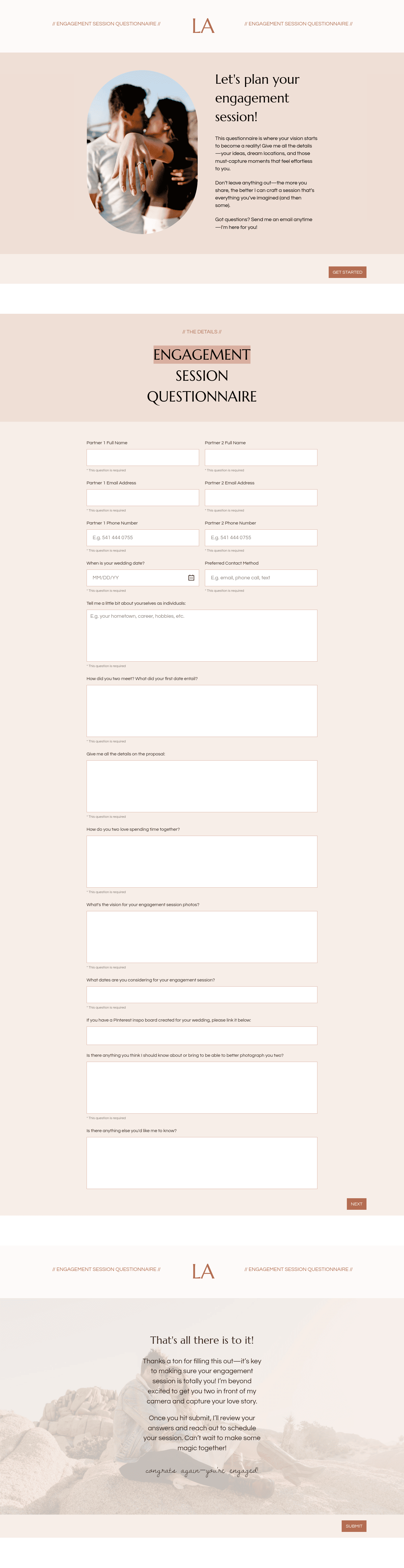
Beatrix engagement questionnaire for wedding photographers template: how to customize it for top results
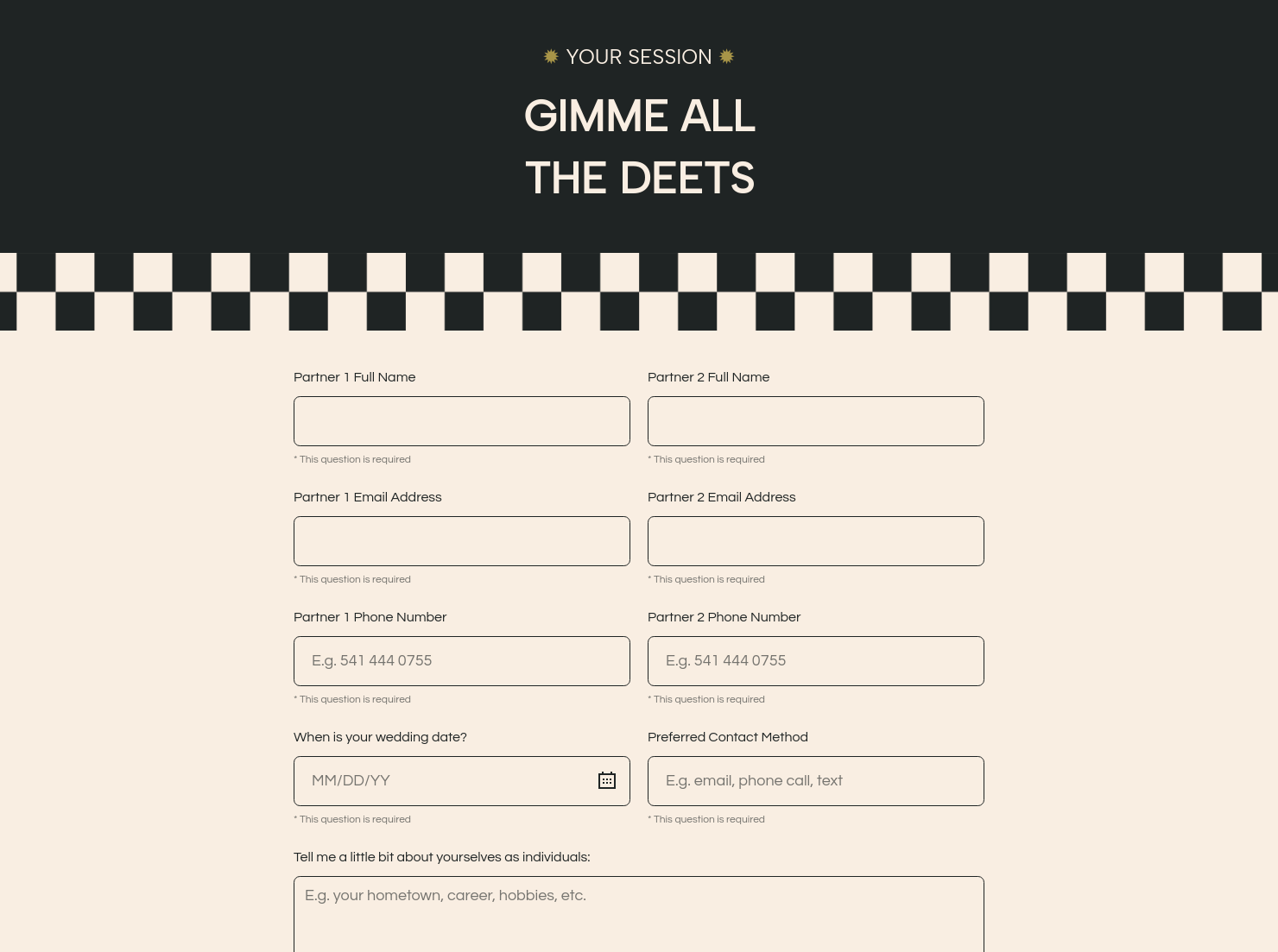
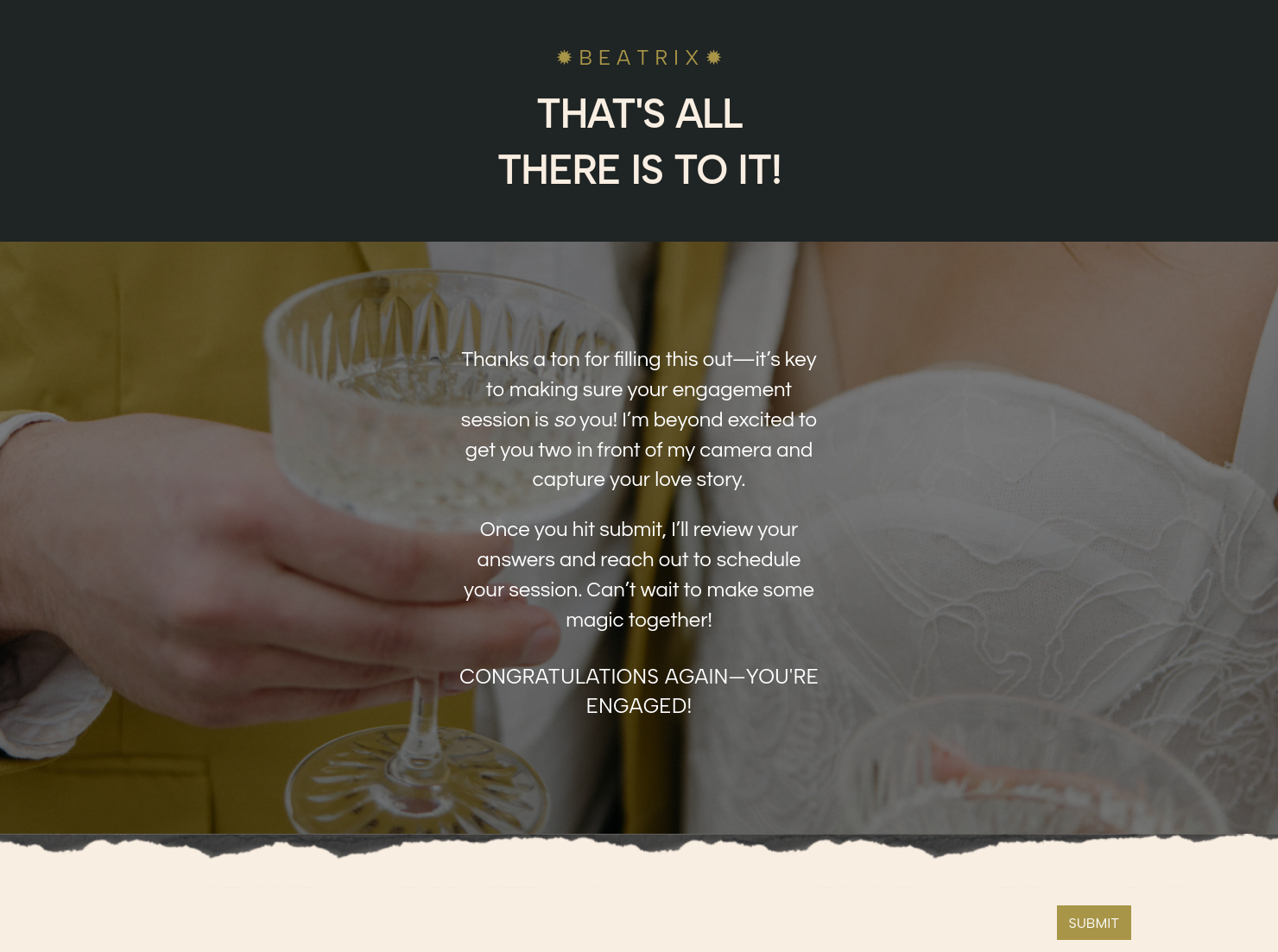
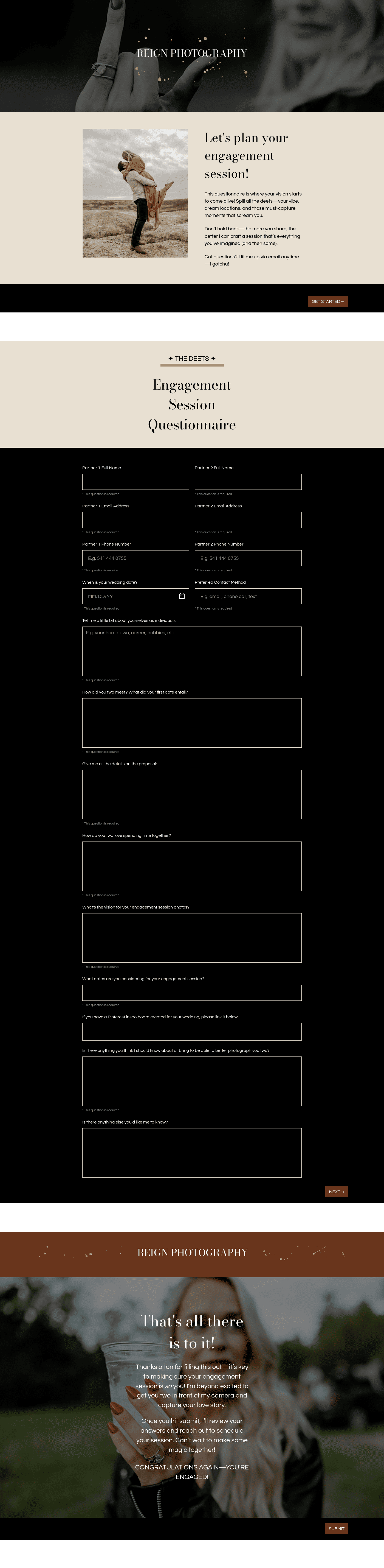
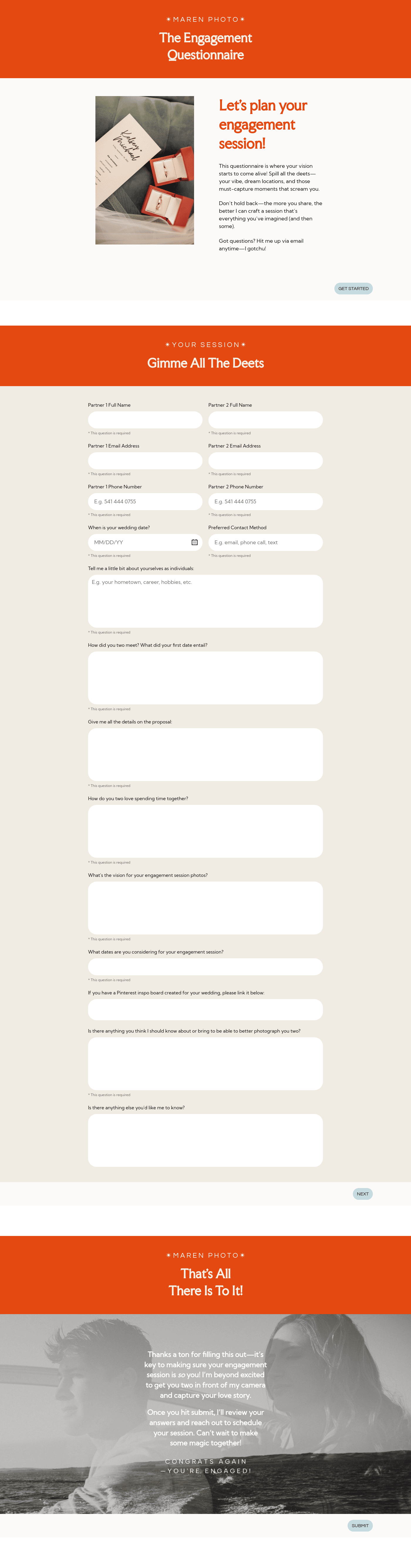
The Beatrix engagement questionnaire for wedding photographers is a three-part document designed to prepare couples before their engagement session. It includes a questionnaire, a “your session” section that explains what to expect, and a brief closing titled “that’s all.” The structure is simple, and that’s intentional. Engagement sessions may appear relaxed, but they involve a surprising number of small decisions. Location. Wardrobe. Timing. Even comfort in front of the camera. When those details are discussed ahead of time, the session usually flows more naturally. Without that preparation, photographers often end up solving problems during the shoot. This questionnaire moves those conversations earlier. Couples have space to consider their preferences, and photographers arrive with useful context. The difference may seem small, but it often shapes how smoothly the session begins.
Engagement sessions sit in an interesting space. They’re informal compared with the wedding day, yet they still carry expectations. Many couples see them as a rehearsal for the wedding photos. For others, it’s simply the first time they’ve been professionally photographed together.
Uncertainty can show up quietly. A couple pauses when asked to try a pose. Someone mentions they weren’t sure what to wear. Occasionally the chosen location looks different than expected. None of these moments ruins a shoot. But they can interrupt the rhythm.
A thoughtful engagement questionnaire helps you:
- Align on aesthetic direction
- Understand how the couple interacts naturally
- Clarify logistics before arrival
- Reduce unnecessary email exchanges
Preparation rarely gets noticed in the final gallery. Still, it often determines how smoothly the session begins.
An engagement questionnaire doesn’t need to be long to be useful. What matters is asking the right questions.
Core components include:
- Confirmed client and session details
- Location preferences and flexibility
- Style references or inspiration
- Wardrobe considerations
- Comfort level with posing and direction
- Personal details that inform storytelling
- Delivery timeline expectations
- A clear confirmation section
The order of these questions matters. Start with practical details so the logistics are clear. From there, move into creative direction. Finish with confirmation so the process feels complete. That simple structure helps couples answer thoughtfully instead of rushing through the form.
Tone plays a bigger role than many photographers expect. If a questionnaire feels stiff or overly formal, clients tend to skim it. When the language feels direct and thoughtful, responses are usually better.
The questionnaire section opens the conversation. It gives couples space to share details about their relationship and what they imagine for the session.
The your session section shifts toward preparation. Photographers can outline how the shoot typically unfolds—how long it might take, what to bring, and how the experience usually works.
Clear expectations make people more comfortable. The final section, that’s all, is brief by design. It signals that everything important has been covered and the process is complete.
Questionnaires often lose effectiveness when they try to do too much — repeating contract information, asking unfocused questions, or using overly technical language. The strongest ones stay clear of that.
This template works best after the contract is signed but before creative decisions are finalized. At that point there’s still time to adjust location, timing, or styling based on the couple’s responses.
It’s especially useful for:
- Engagement sessions included in wedding packages
- Standalone engagement bookings
- Destination shoots requiring added coordination
- New client onboarding
Sent at the right moment, the questionnaire becomes part of the workflow rather than an extra step.
Catering has a lot of moving parts, and the menu sits in the center. If your catering menu is scattered across emails, texts, and screenshots, mistakes show up at the worst time.
A structured menu template helps in practical ways.
- Builds client trust and a professional first impression.
- Speeds approvals by making choices simple.
- Reduces payment disputes by documenting totals and terms.
- Saves time by cutting back and forth.
That means fewer surprises for clients and fewer fire drills for you.
FAQs
Below are quick answers to common questions from caterers building a catering menu that clients can approve with confidence.
It helps photographers gather useful information before the engagement session begins so they can prepare intentionally rather than adjusting details during the shoot.
The three sections guide couples through preparation step by step: first gathering insight, then explaining how the session works, and finally closing the document clearly.
Yes. Photographers can edit the wording, tone, and branding elements so the questionnaire reflects their own workflow and visual style.
HoneyBook templates help simplify the steps between inquiry and booking by providing repeatable document structures that can be reused across projects.
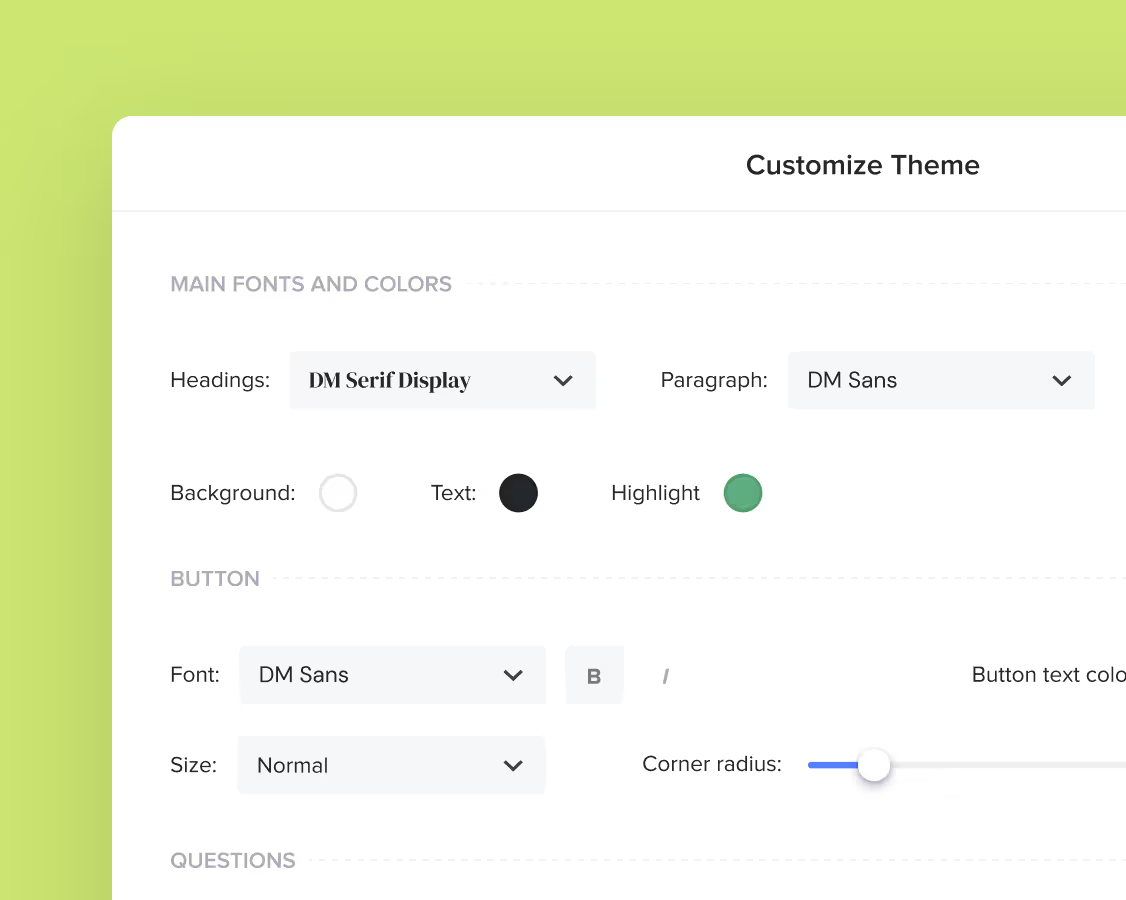
Yes. Users can adjust fonts, colors, images, pricing tables, and messaging to reflect their brand identity and client experience.
Yes. The HoneyBook mobile app allows users to create, customize, send, and manage templates and Smart Files from their phone.
Related templates




Related Templates

.png)

Make it your own
Fully customize the template to fit your needs. Quickly apply your company branding with just a few clicks.
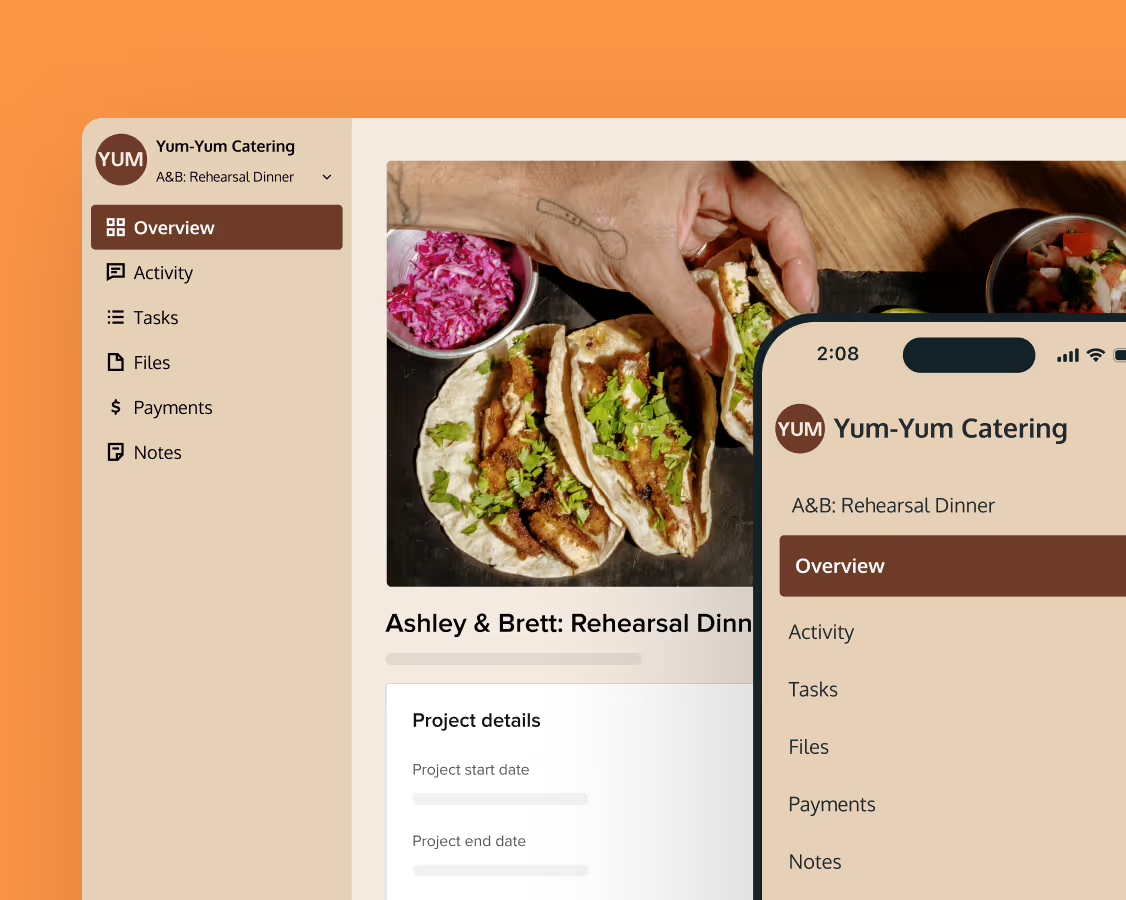
Share with clients
Create exceptional client experiences through HoneyBook’s dedicated client portal, allowing them to read, review, and take action from any device.
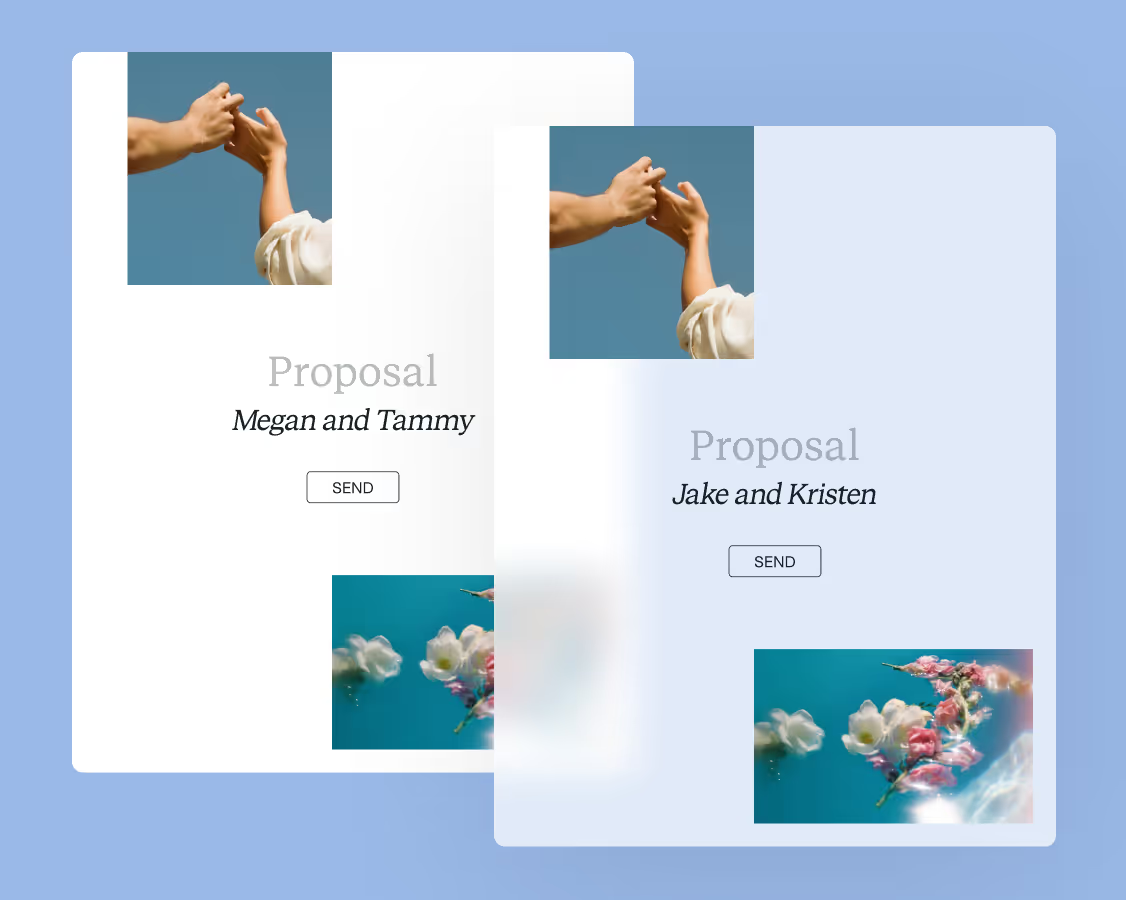
Reuse and scale
Use your customized files with different clients again and again to save time and make managing client interactions that much easier.
Join the 100,000+ businesses growing with HoneyBook.