








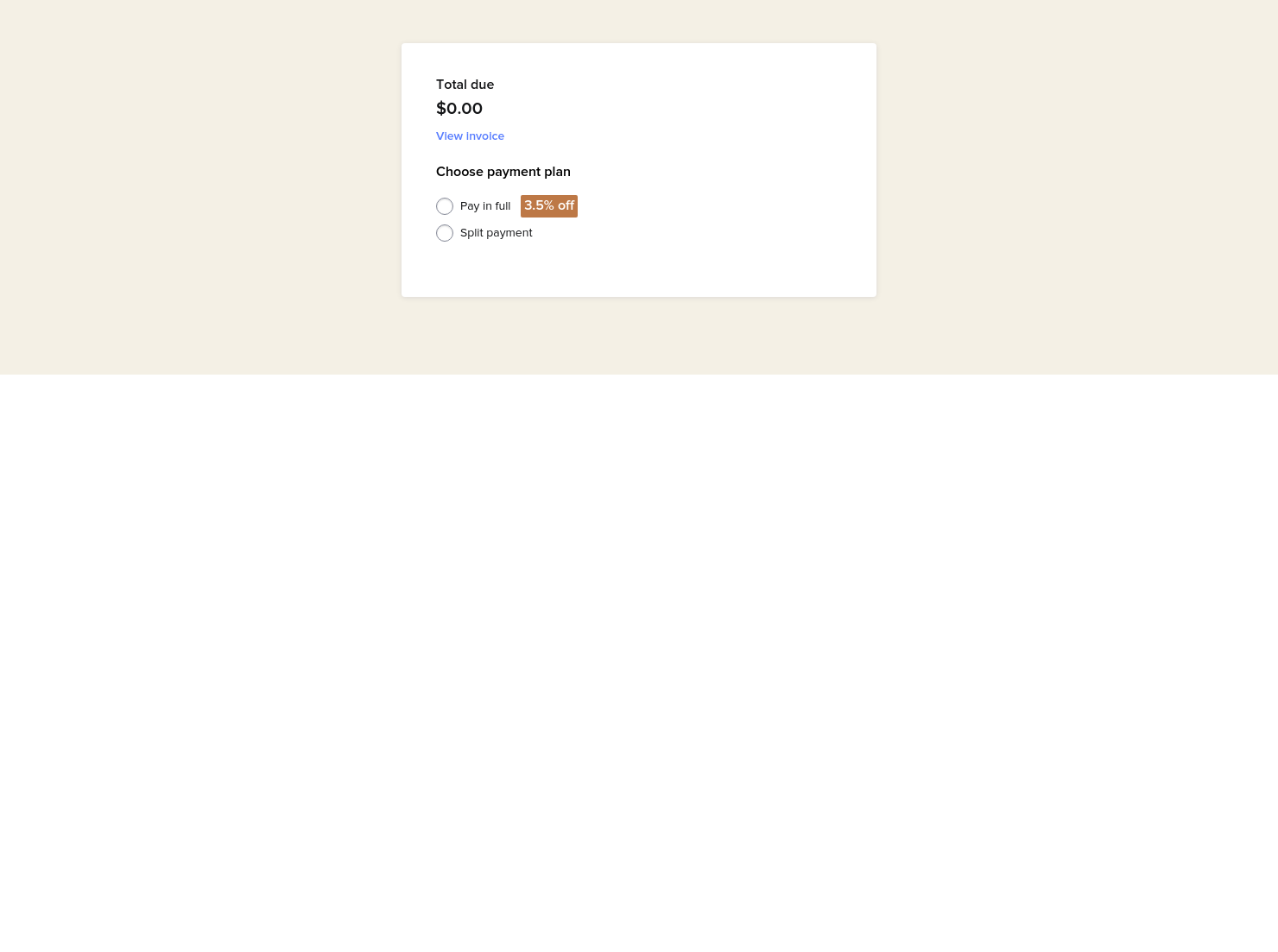

Invoice & online payments

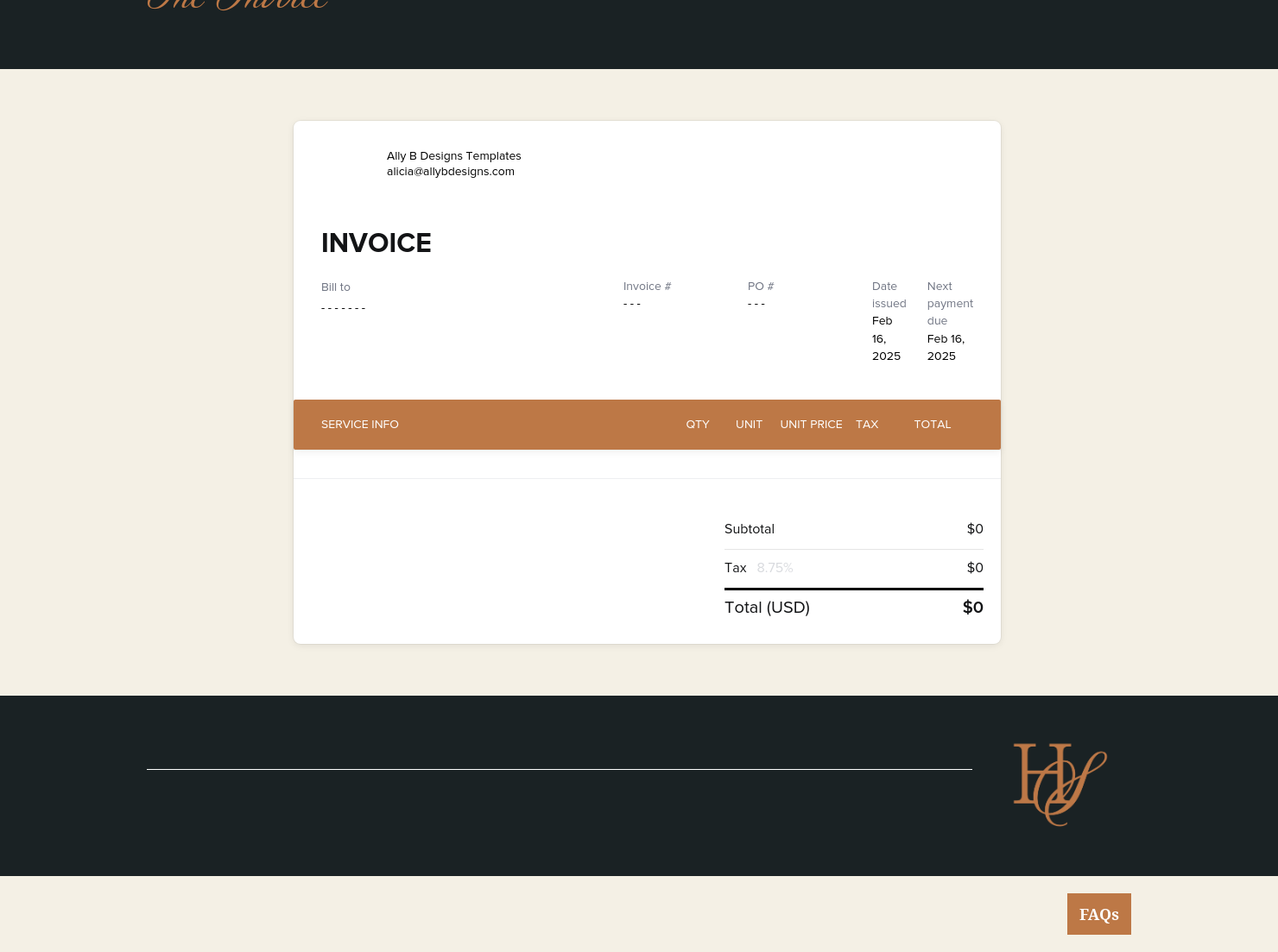
Make it easy for clients to book and pay for your services–all in one file.

Ready-to-use copy
Templates come filled with prewritten copy you can use as is or edit to match your brand and business.

Services
Showcase your services for easier client booking.

Contract for eSigning
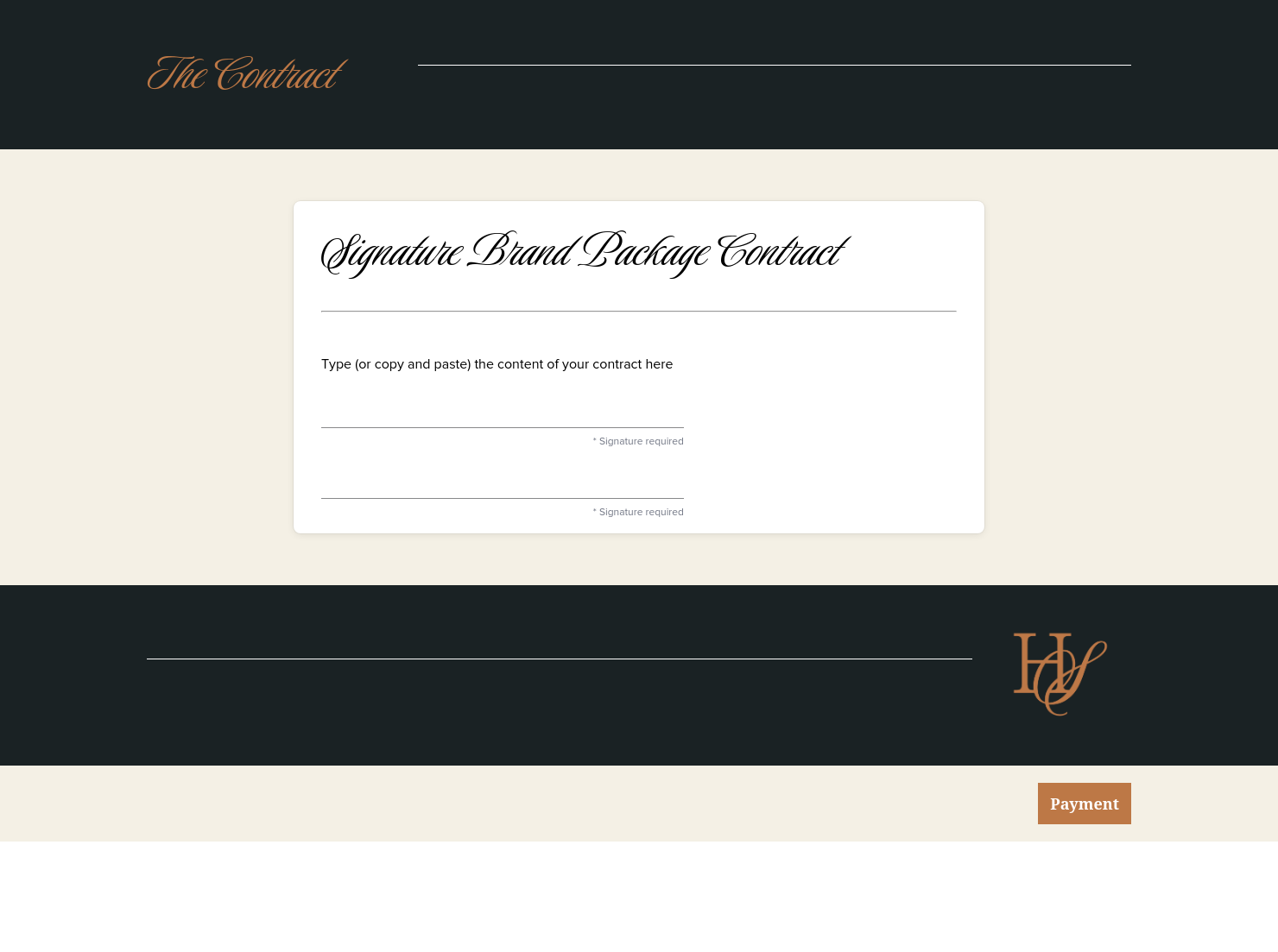
Sign clients easily on the go via eSign with your contracts, or use one of HoneyBook's lawyer-approved contracts


“
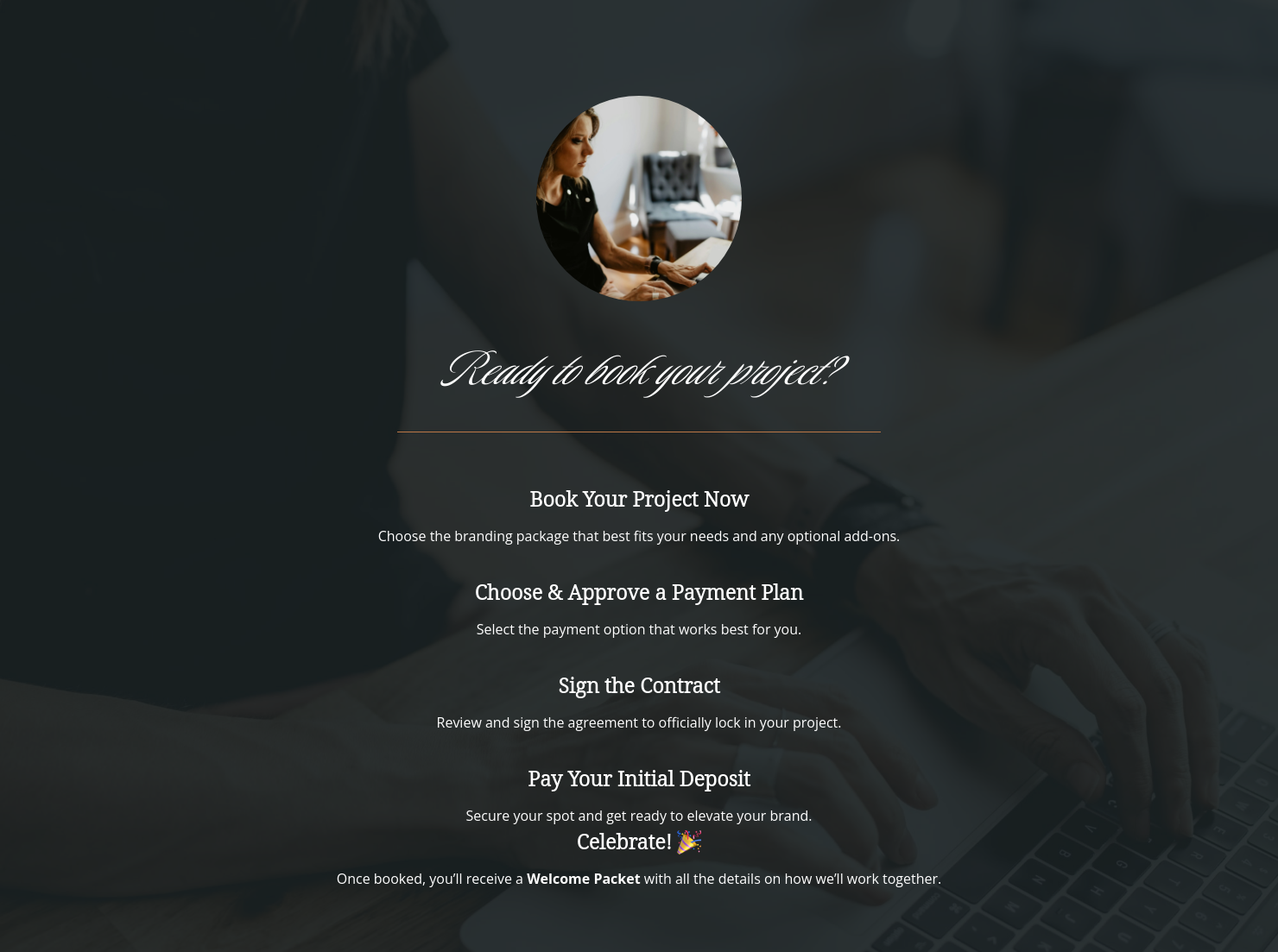
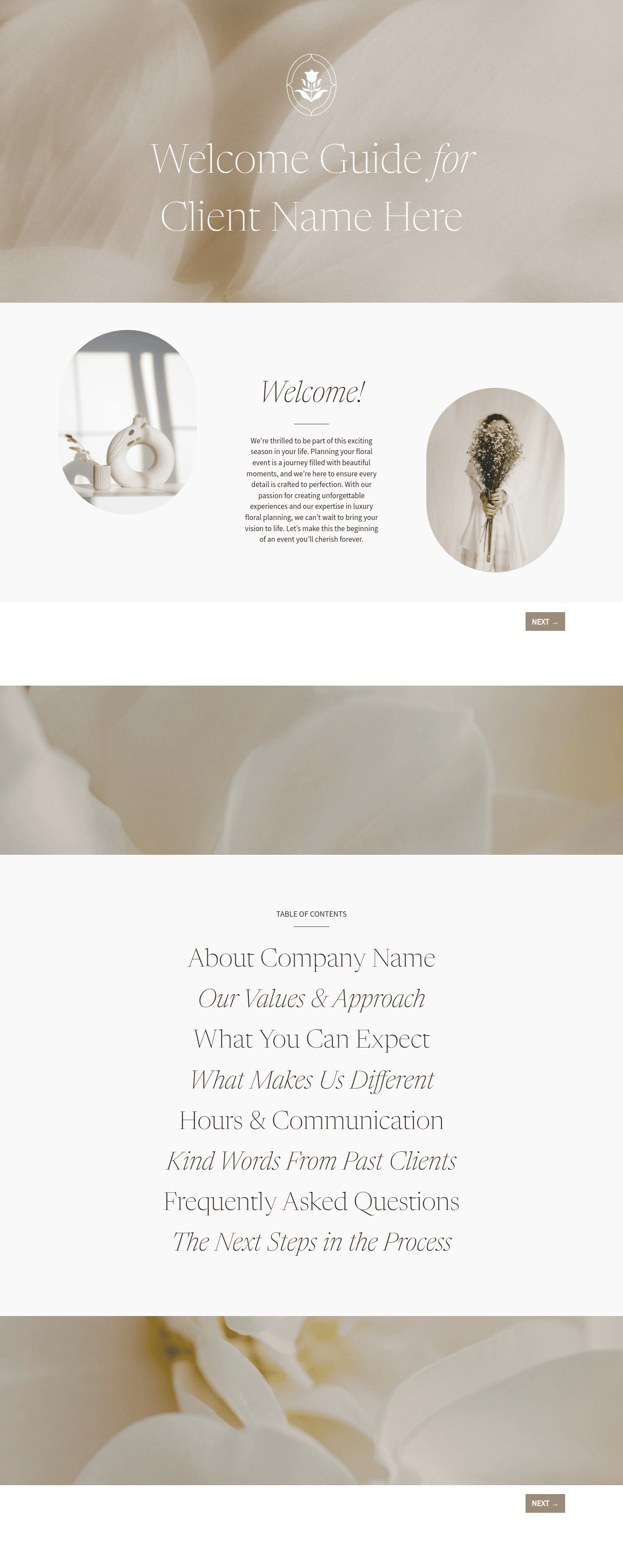
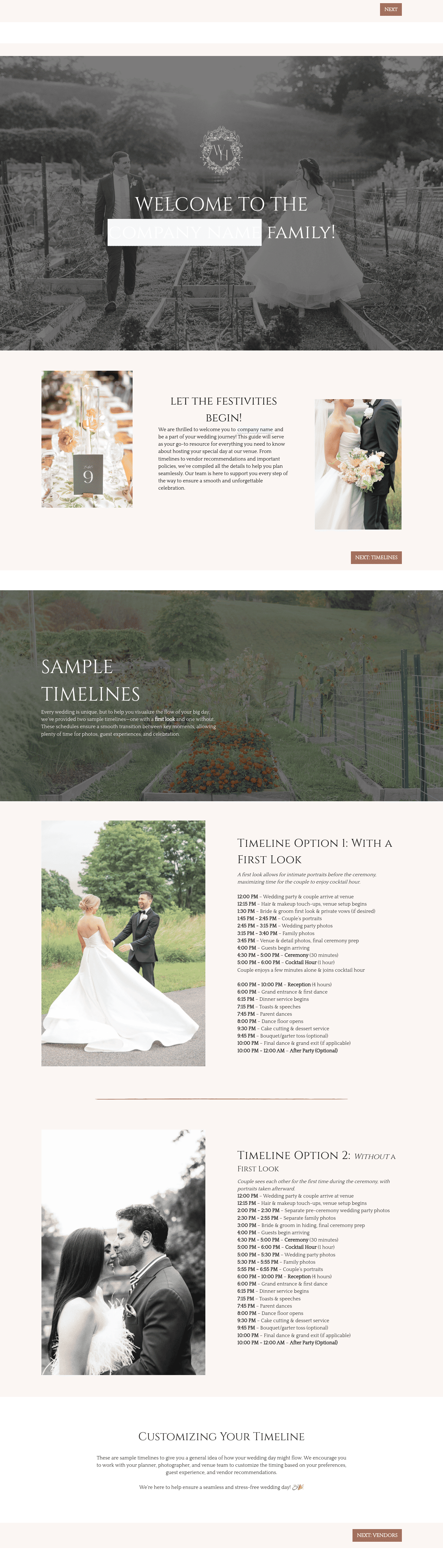
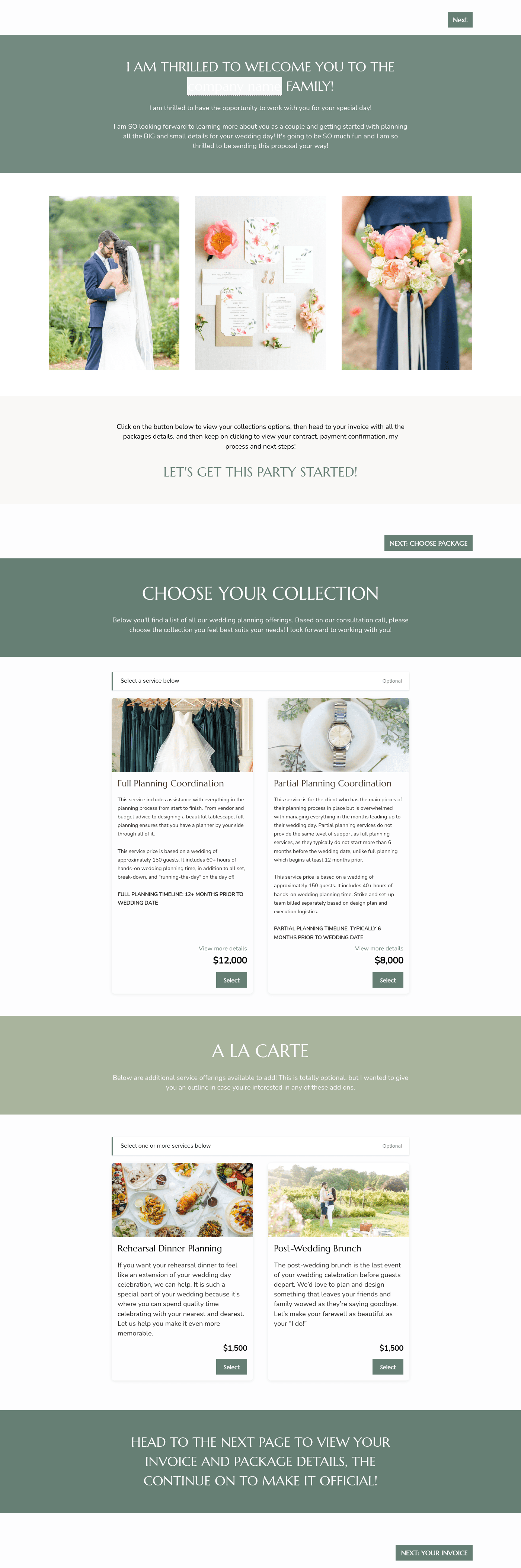
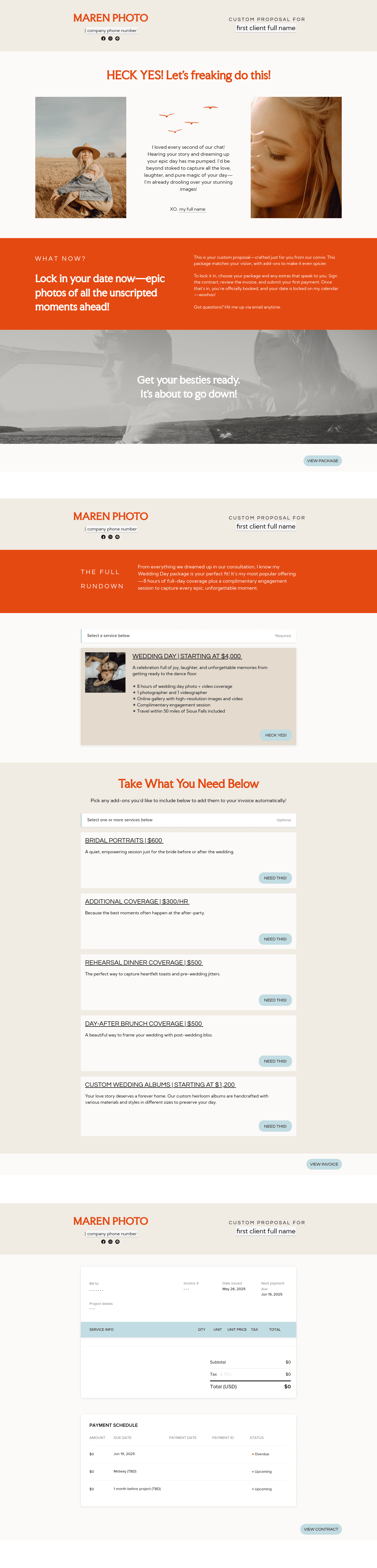
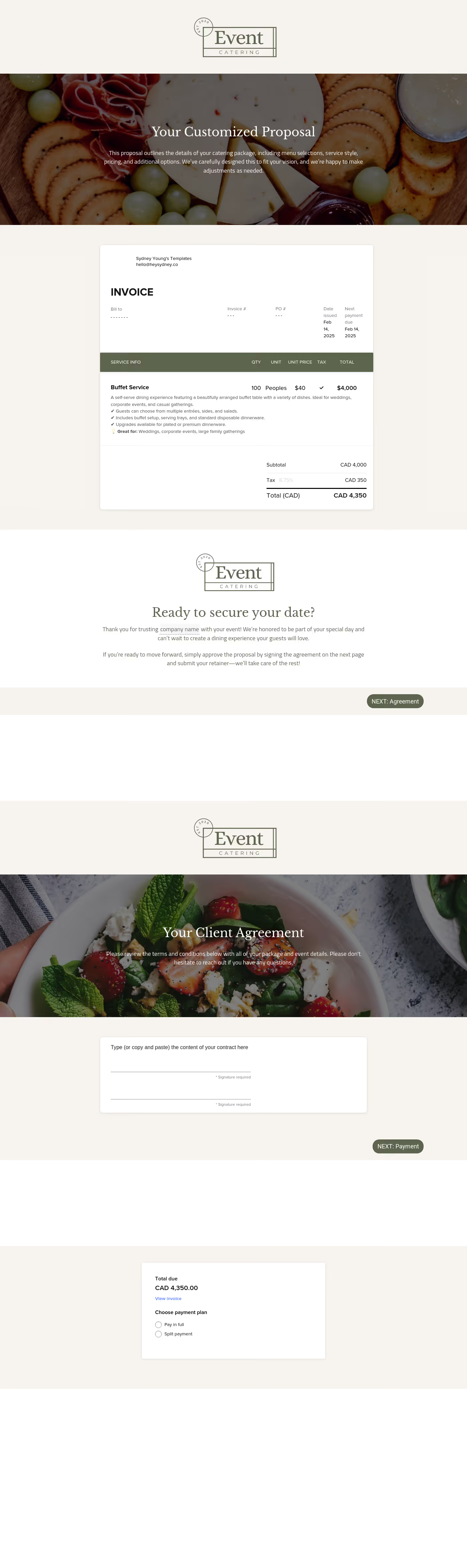
Make booking effortless with this beautifully designed proposal template, allowing clients to review services, sign contracts, and secure payments with ease.
”

October 18, 2026

How To Customize Your Proposal For Brand Designers To Win More Clients
A proposal for brand designers is more than a document. It’s the first real demonstration of your thinking, process, and positioning. It’s typically sent after an inquiry and shapes whether a client moves forward or keeps comparing options. When customized well, it doesn’t just explain your services. It shows clients exactly why your approach fits their brand.
Brand design is subjective. Clients aren’t only choosing based on price. They’re also choosing based on alignment and trust.
If your proposal feels generic, clients hesitate. If it feels tailored, they move faster.
A well-structured proposal helps you:
- build trust through clarity and positioning
- improve conversion rates
- reduce back-and-forth questions
- present pricing with context instead of resistance
When a client sees their brand reflected in your proposal language, they stop comparing and start deciding.
A strong branding proposal template should reflect your process while making it easy for clients to move forward. Here's what to include:
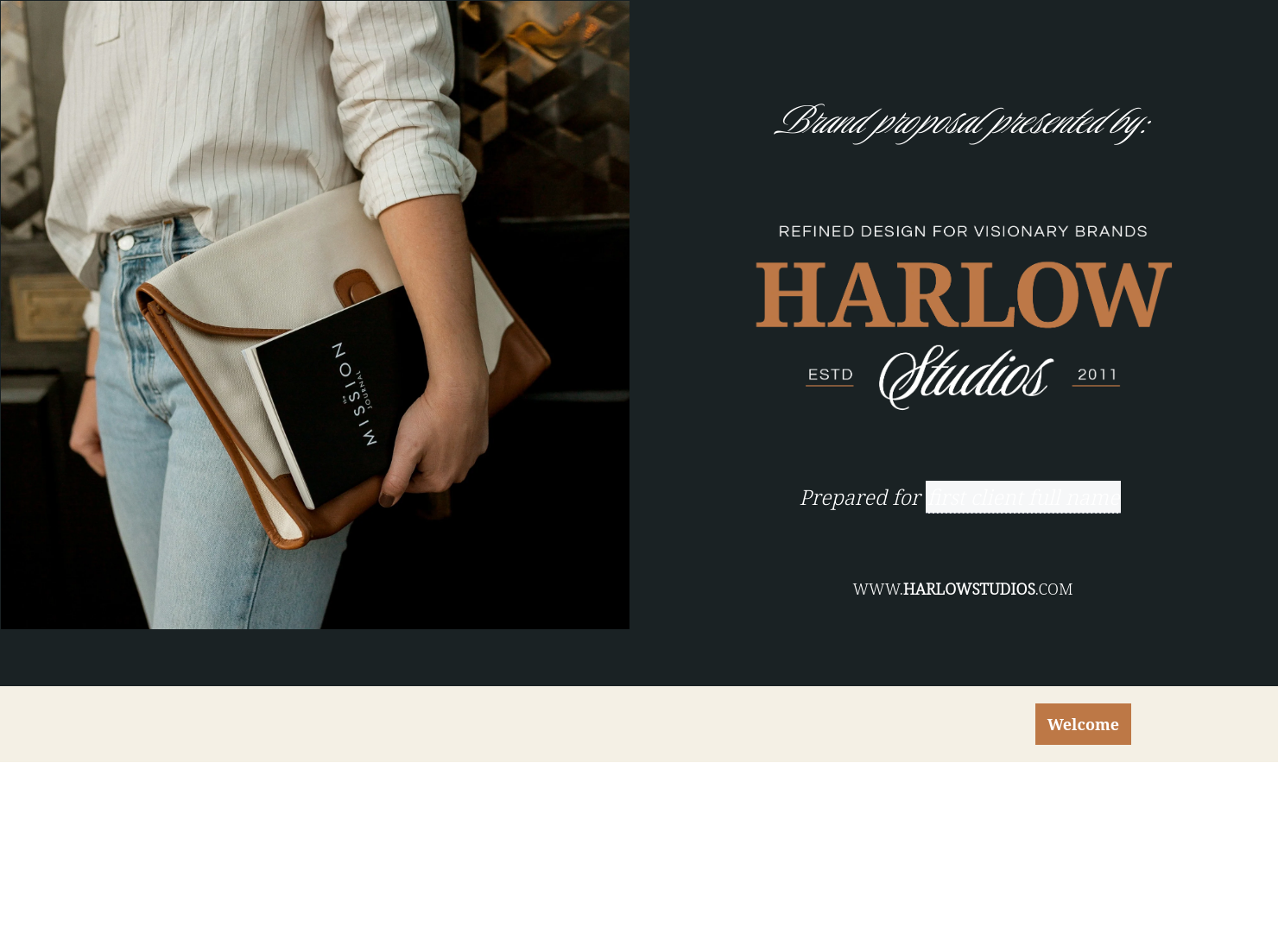
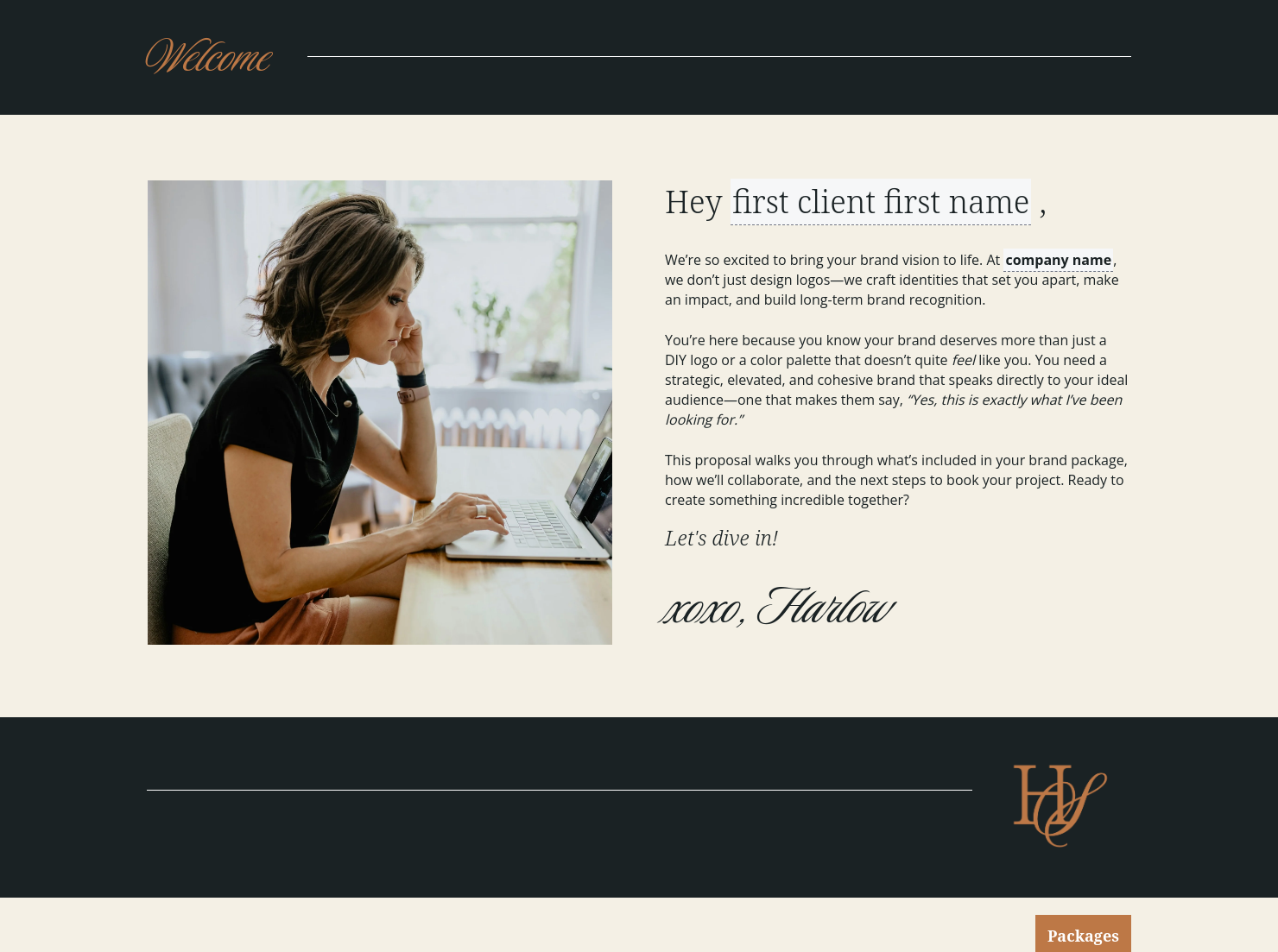
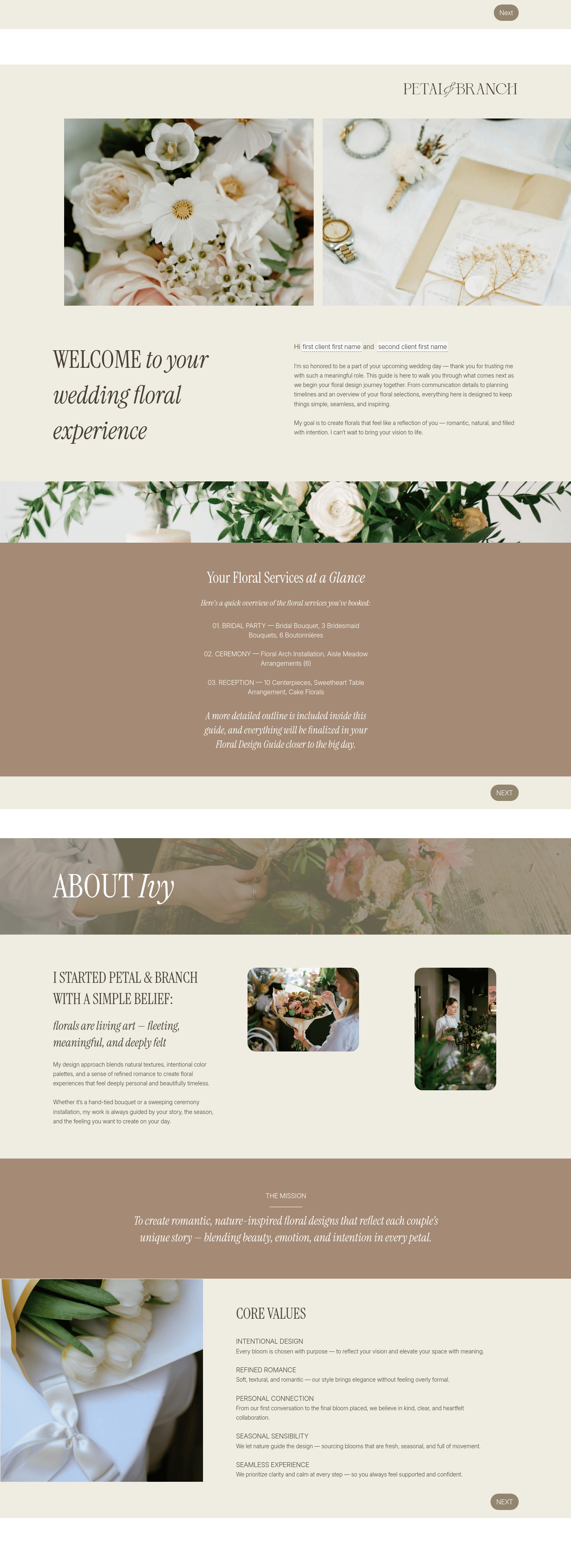
Introduction and brand positioning
Start with a welcome page that reflects your voice and perspective.
This is where your mantra or design philosophy sits. Instead of a generic intro, anchor it in how you approach branding.
For example, if you focus on strategic, story-driven brands, say that directly. A client reading this should immediately feel whether your approach fits their business.
This is often where decisions begin.
Signature package and services
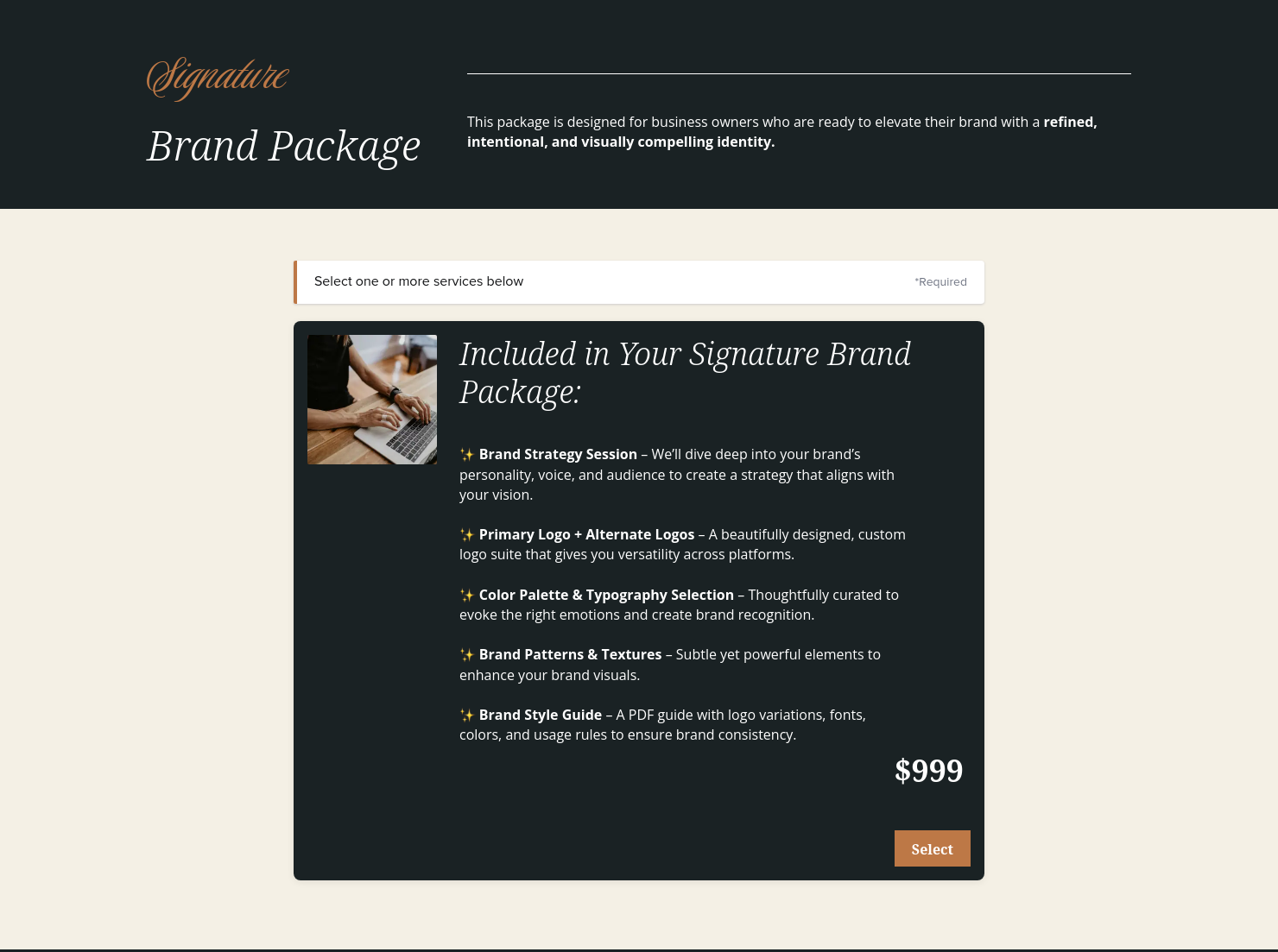
This section outlines what you offer and how it’s structured.
Instead of listing services broadly, define your packages clearly. A brand marketing proposal works best when each deliverable is visible— logo design, brand strategy, visual identity, and usage guidelines.
If a client is comparing a basic identity package to a full brand system, the difference should be obvious. When it’s not, they ask questions or delay. Clear structure therefore leads to faster decisions.
Process and timeline
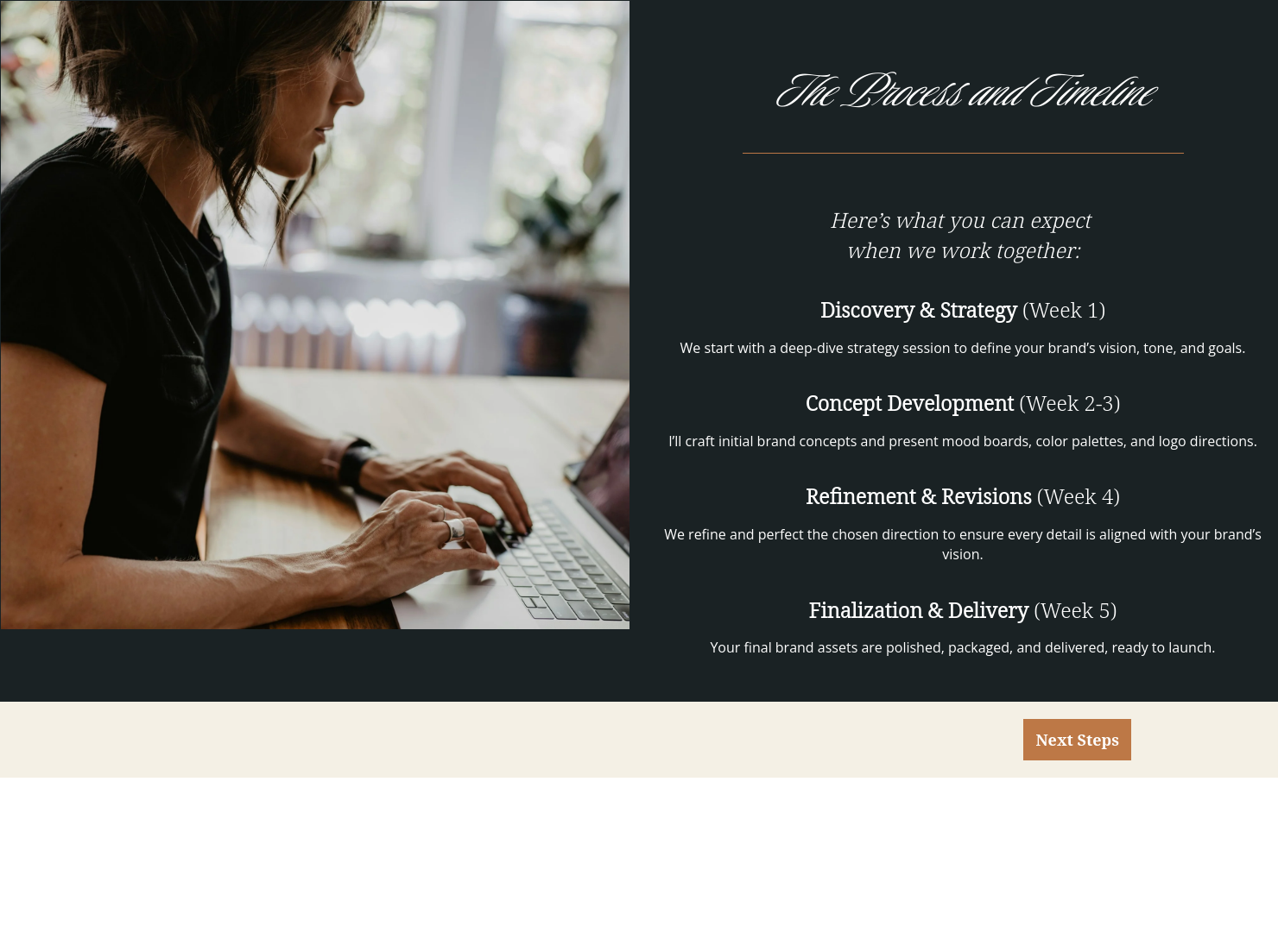
This is where customization becomes practical.
Clients want to know how the work will unfold. Break your process into stages like discovery, concept development, revisions, and final delivery.
If your timeline includes two concept directions followed by refinement, say so. Without this, clients often assume unlimited revisions, which leads to scope issues later.
A clear process reduces uncertainty before it starts.
Booking and next steps
This section moves the client from interest to action. When using HoneyBook meeting scheduler, you can guide clients to book a call or confirm their next step directly within the proposal.
Instead of ending with “let me know,” you can give them a clear path forward. That small shift improves conversion.
Invoice, contract, and payment
This is where your proposal becomes a working agreement.
- Use HoneyBook online contracts to define scope, ownership, and revisions
- Present pricing clearly within your proposal structure
- Connect payment through HoneyBook online invoices
If a client is ready to proceed but has to request an invoice separately, momentum drops. When everything is connected, they can review, sign, and pay in one flow.
You can also offer payment plans, which helps position higher-value packages without friction.
FAQs and reassurance
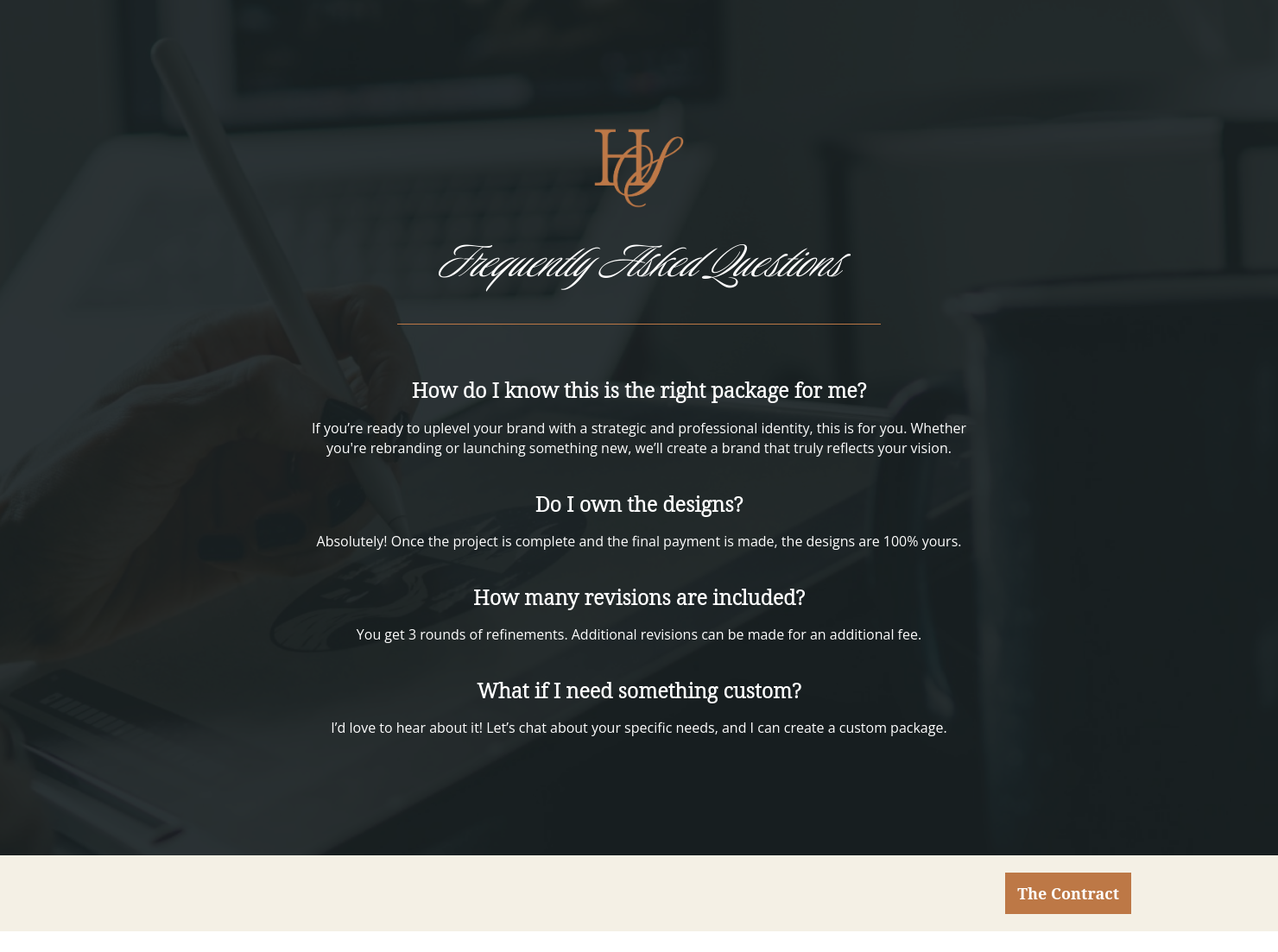
A strong sample branding proposal anticipates questions before they’re asked.
Include practical FAQs like:
- Do I own the final designs?
- How do I know which package is right?
If a client is unsure about package fit, answering that upfront removes hesitation and keeps the process moving.
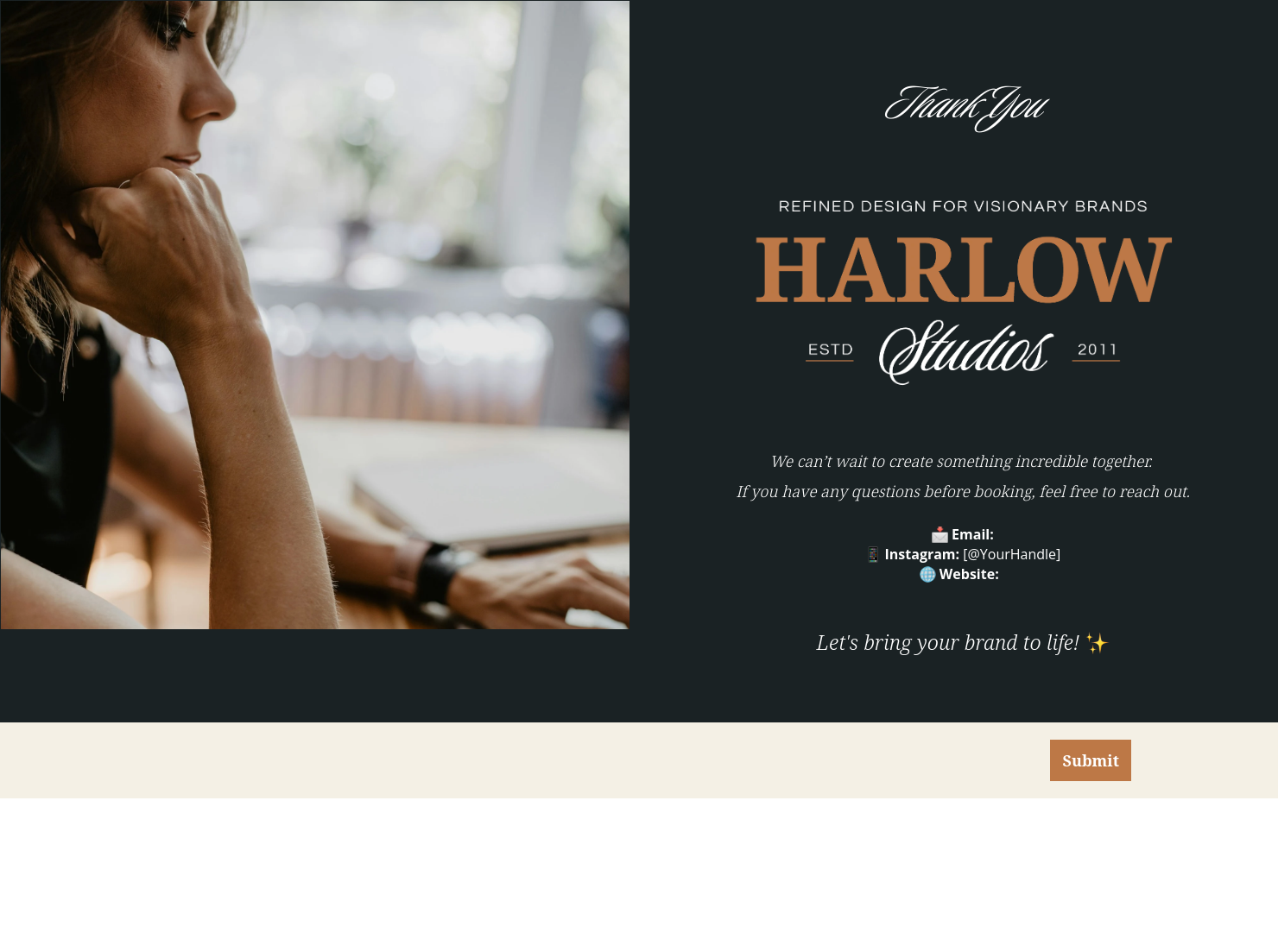
Thank you and confirmation
End with a simple, intentional close.
This isn’t just a courtesy — it reinforces your professionalism. A clear closing leaves the client with a sense of direction, not uncertainty.
Customization is what separates a good proposal from one that converts.
A generic proposal for brand designer services might explain what you do. A tailored one reflects the client’s brand, challenges, and goals.
For example, referencing a client’s industry or audience, even briefly, signals that you’ve thought about their project specifically. That builds trust quickly.
Effective brand proposals also don’t overwhelm. They guide. Each section leads naturally to the next, reducing friction at every step.
This template works best when you need to present structured brand design services clearly and professionally.
Use it when:
- onboarding new brand design clients
- presenting tiered packages and pricing
- pitching full branding projects
- formalizing project scope before starting
Catering has a lot of moving parts, and the menu sits in the center. If your catering menu is scattered across emails, texts, and screenshots, mistakes show up at the worst time.
A structured menu template helps in practical ways.
- Builds client trust and a professional first impression.
- Speeds approvals by making choices simple.
- Reduces payment disputes by documenting totals and terms.
- Saves time by cutting back and forth.
That means fewer surprises for clients and fewer fire drills for you.
FAQs
Below are quick answers to common questions from caterers building a catering menu that clients can approve with confidence.
Focus on relevance. Adjust your language, examples, and package structure so the proposal reflects the client’s brand and needs.
A strong branding proposal template includes services, process, pricing, timelines, and clear next steps so clients can move forward without confusion.
HoneyBook templates streamline your workflow by combining proposals, contracts, and payments in one place, reducing friction between inquiry and booking. Learn more in the Files and Templates Help Center.
Yes. You can adjust pricing, packages, and structure to match each project while keeping your process consistent. See how in this guide to customizing Smart File pages.
Related templates




Related Templates

.jpeg)




.png)
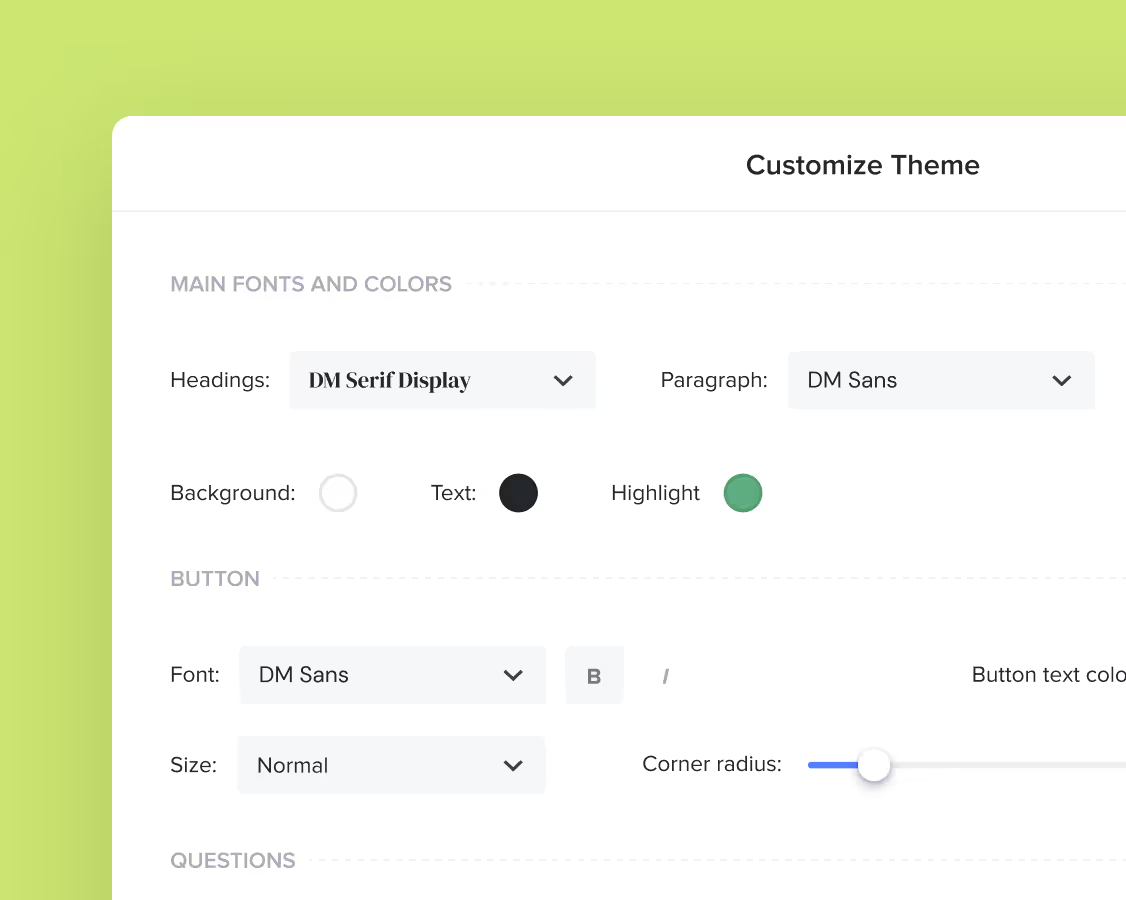
Make it your own
Fully customize the template to fit your needs. Quickly apply your company branding with just a few clicks.
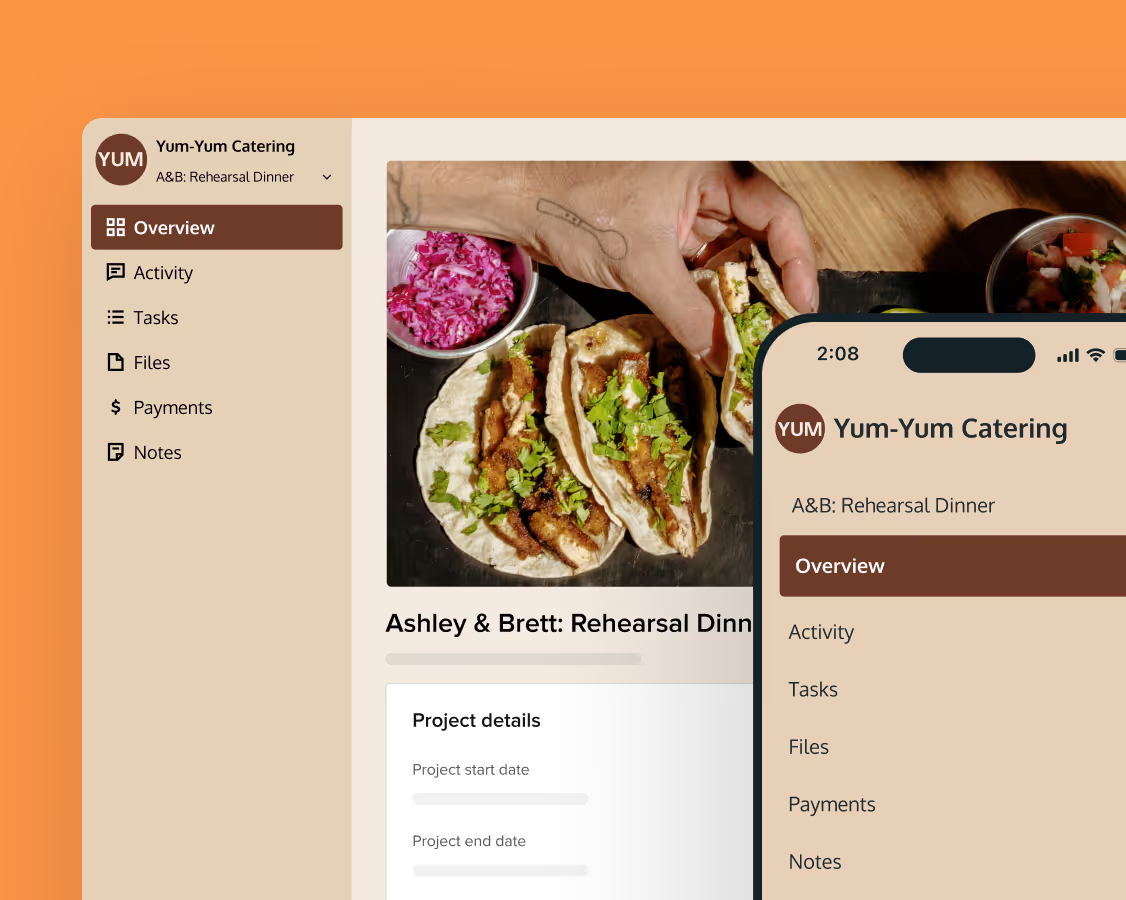
Share with clients
Create exceptional client experiences through HoneyBook’s dedicated client portal, allowing them to read, review, and take action from any device.
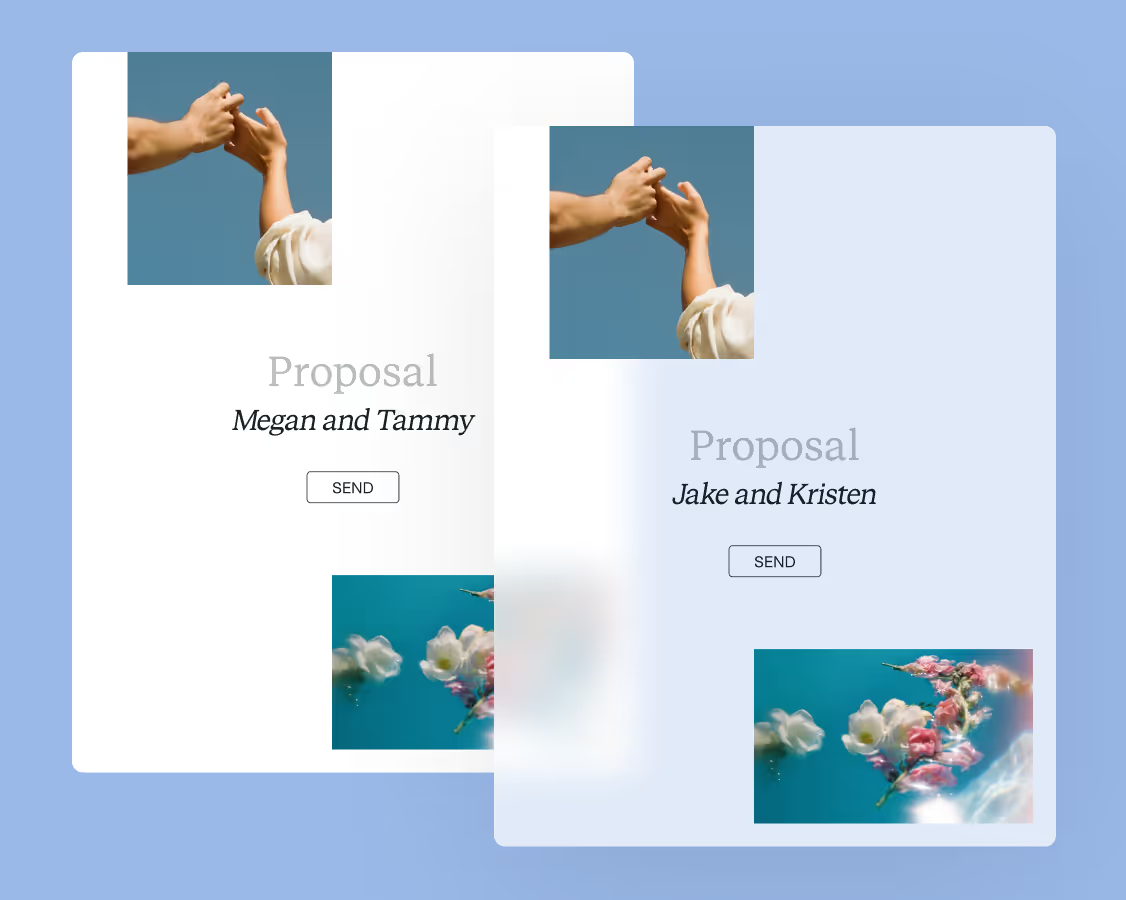
Reuse and scale
Use your customized files with different clients again and again to save time and make managing client interactions that much easier.
Join the 100,000+ businesses growing with HoneyBook.