












Questionnaire

Get client input, collect project details, and set expectations ahead of—or during—any project.

Ready-to-use copy
Templates come filled with prewritten copy you can use as is or edit to match your brand and business.


“
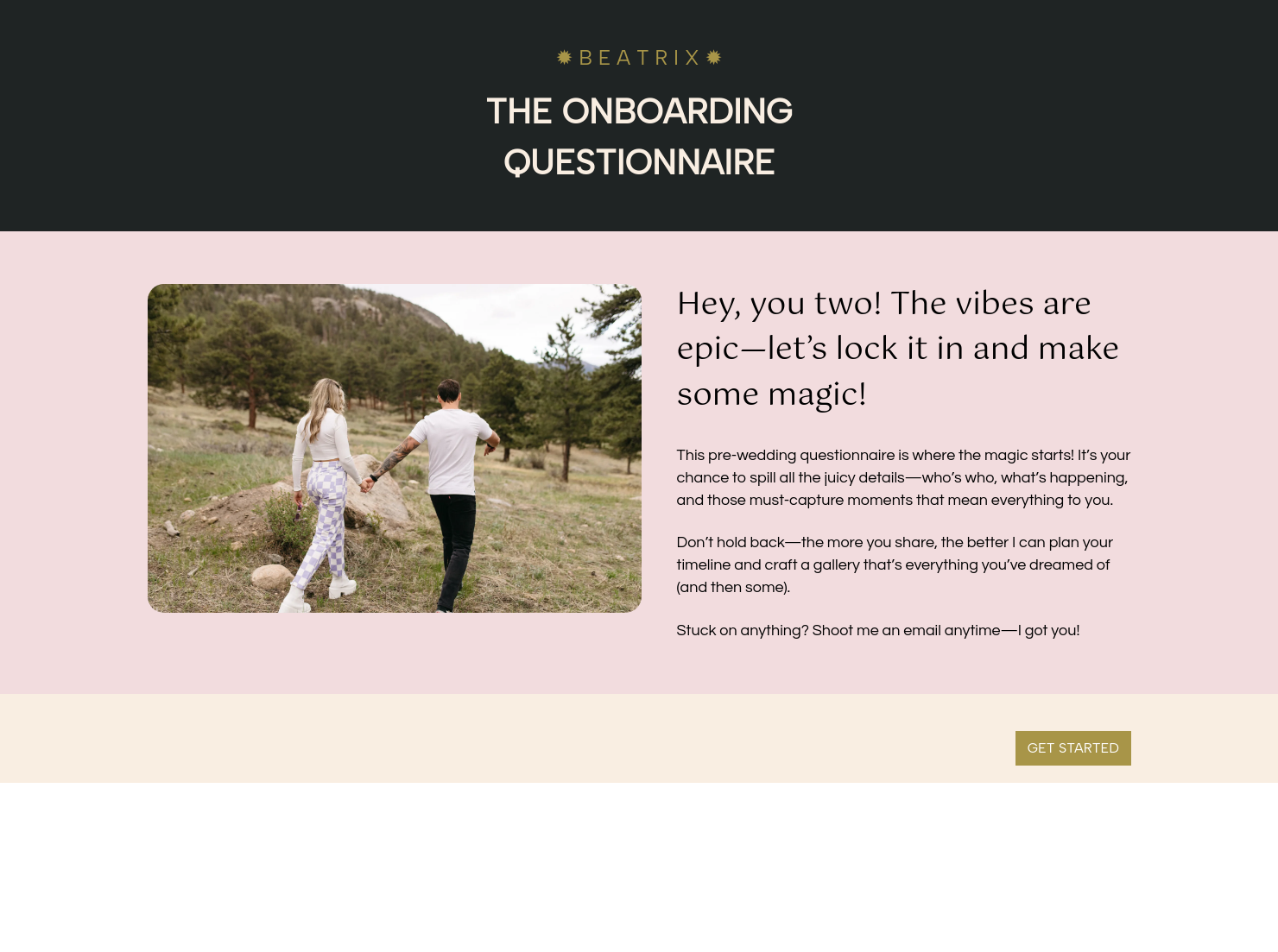
Use this template after booking to collect essential details, streamline your workflow, and ensure every important moment is captured exactly as your clients envision!
”

October 18, 2026

Beatrix onboarding questionnaire for wedding photographers template: how to customize it for top results
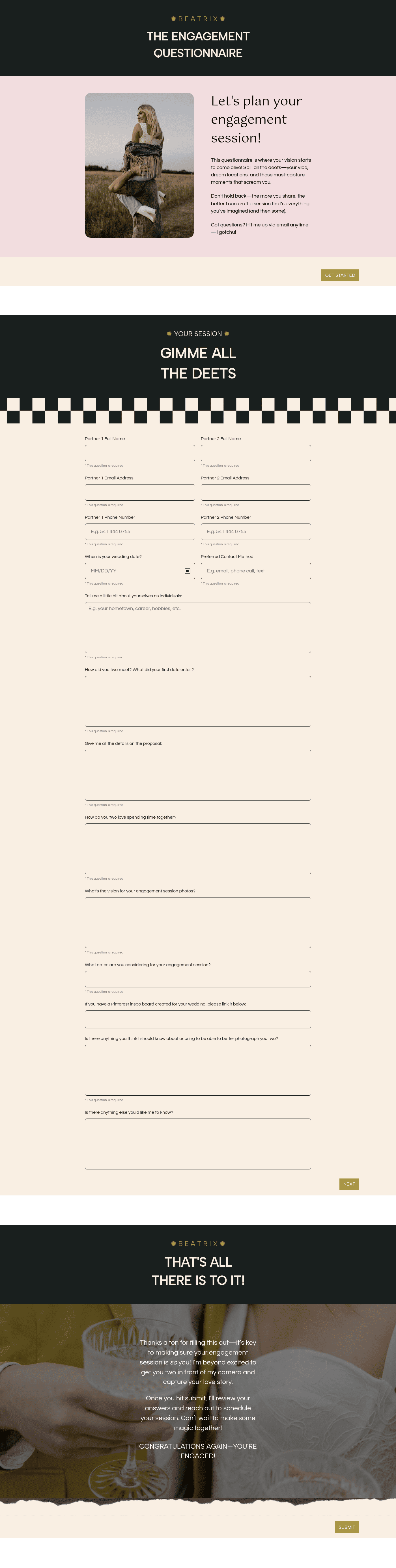
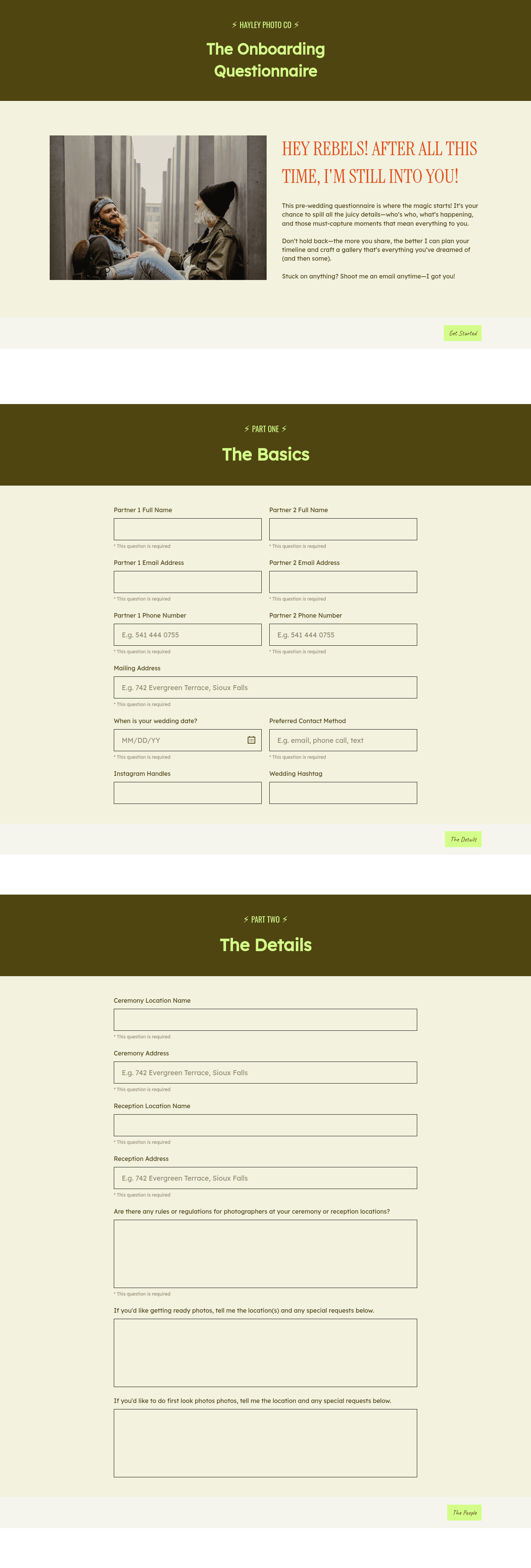
Most wedding photographers know this feeling. A couple books their date, the excitement is high, and planning begins almost immediately. But the real details come later. Who absolutely needs to be in family portraits? When does the couple want to start getting ready? Are there cultural traditions or meaningful moments planned for the day? The Beatrix onboarding questionnaire for wedding photographers helps surface those details early. Instead of piecing information together through email threads or scattered conversations, photographers receive the answers in one place. Couples work through a few thoughtful sections, sharing information about the day, the people involved, and the type of photographs they’re hoping to create.
Wedding days rarely unfold exactly as planned. Timelines shift. Family members wander off. Someone decides the schedule should change five minutes before the ceremony.
When the important information arrives ahead of time, the photographer walks into the day with context. They already know who matters most to the couple. That clarity removes a surprising amount of pressure. Instead of trying to figure things out on the fly, photographers can focus on the real work — observing, anticipating, and capturing the story of the day.
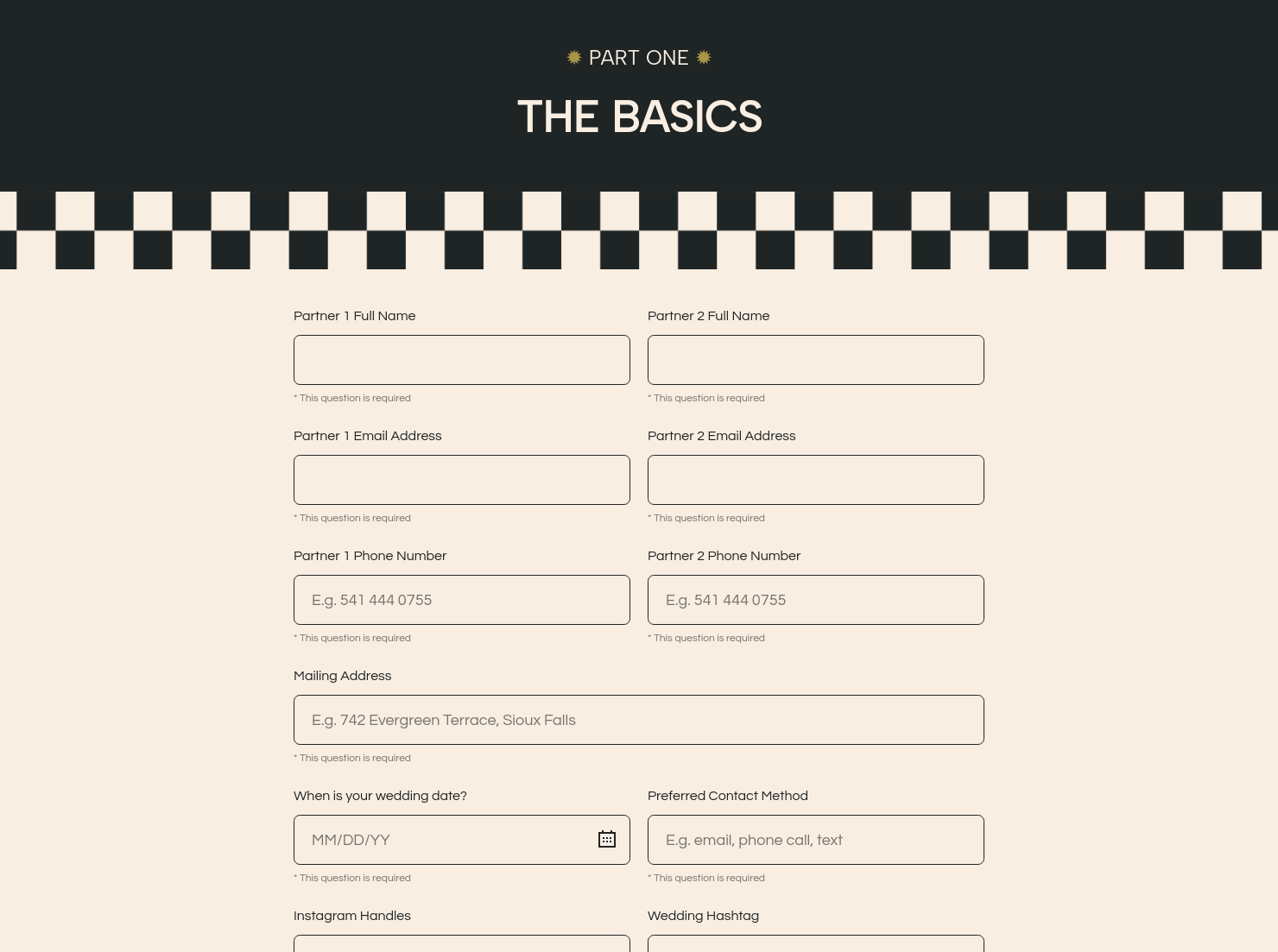
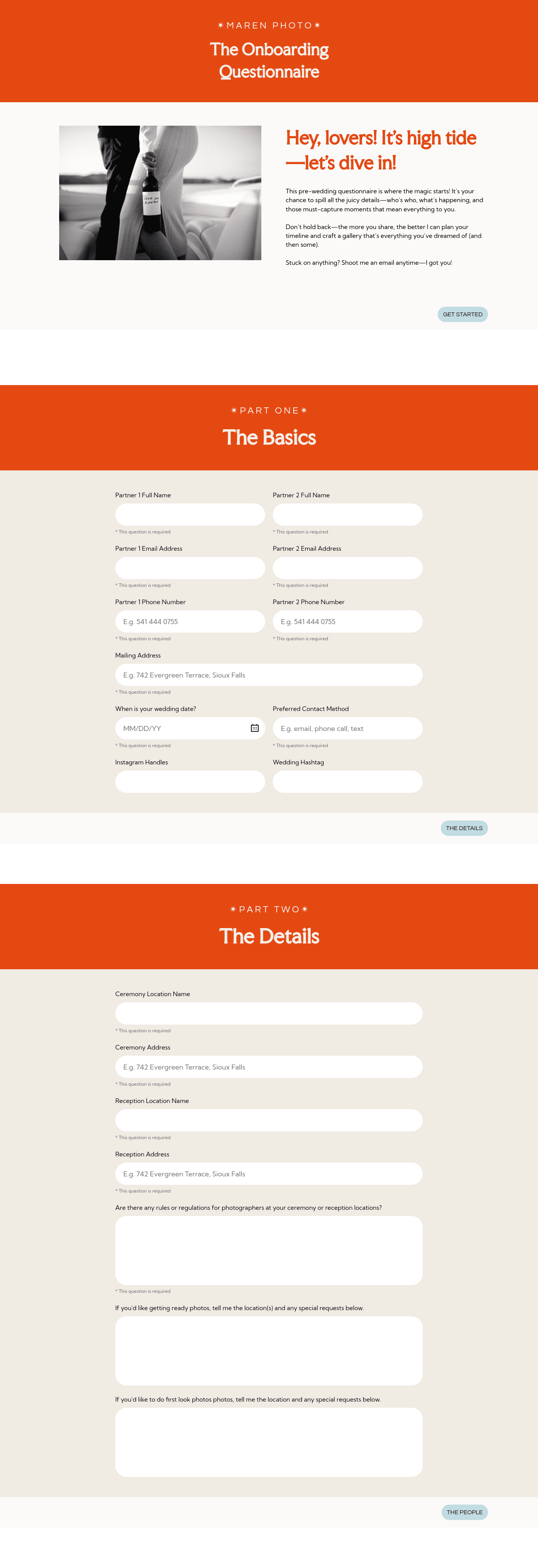
The Beatrix template approaches this in a straightforward way, starting with the basics. Here, couples provide contact information and simple details that make communication easier throughout the planning process.
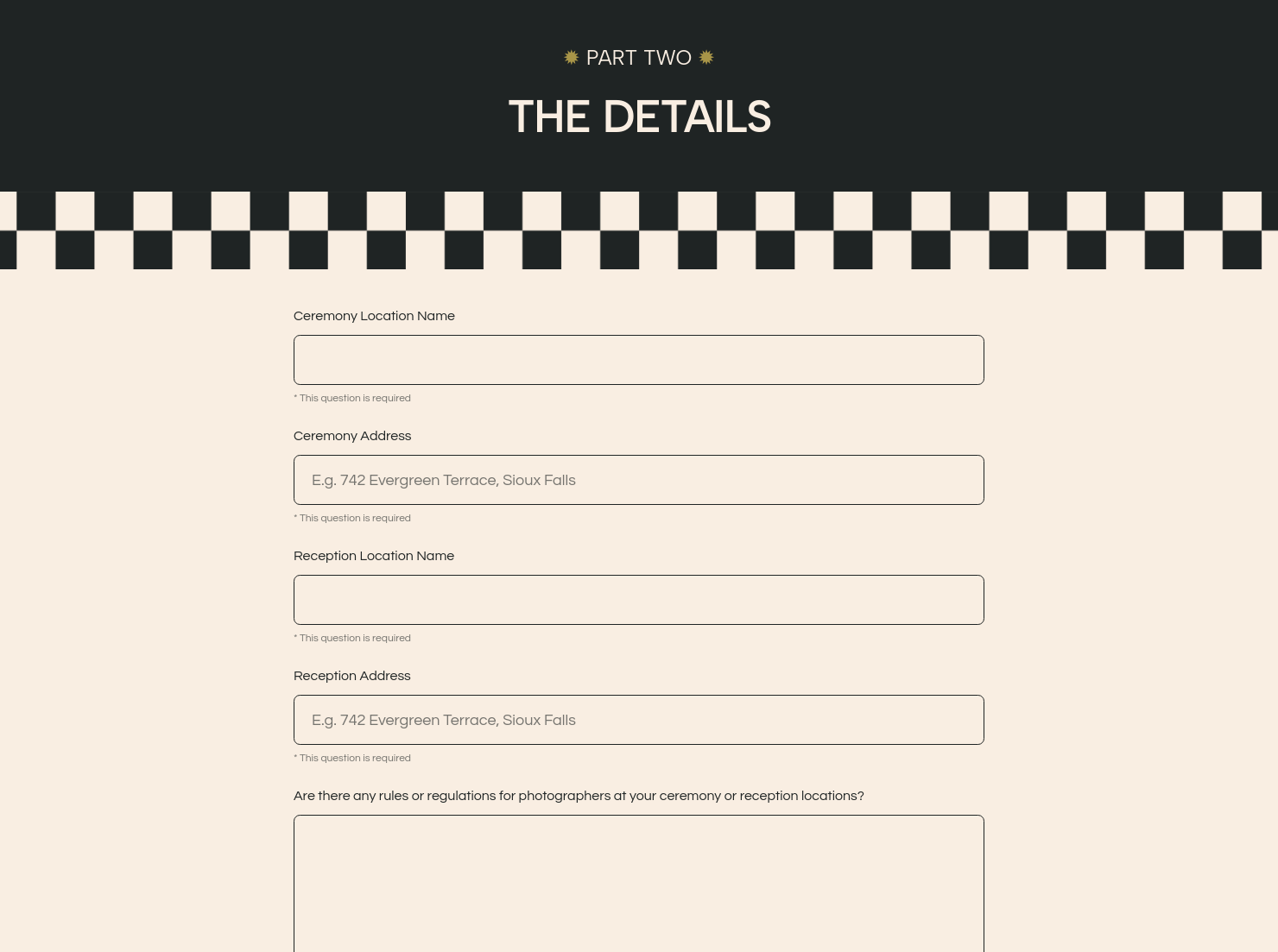
From there, the questionnaire moves into the details, which covers the wedding itself and confirms the essential facts about the event.
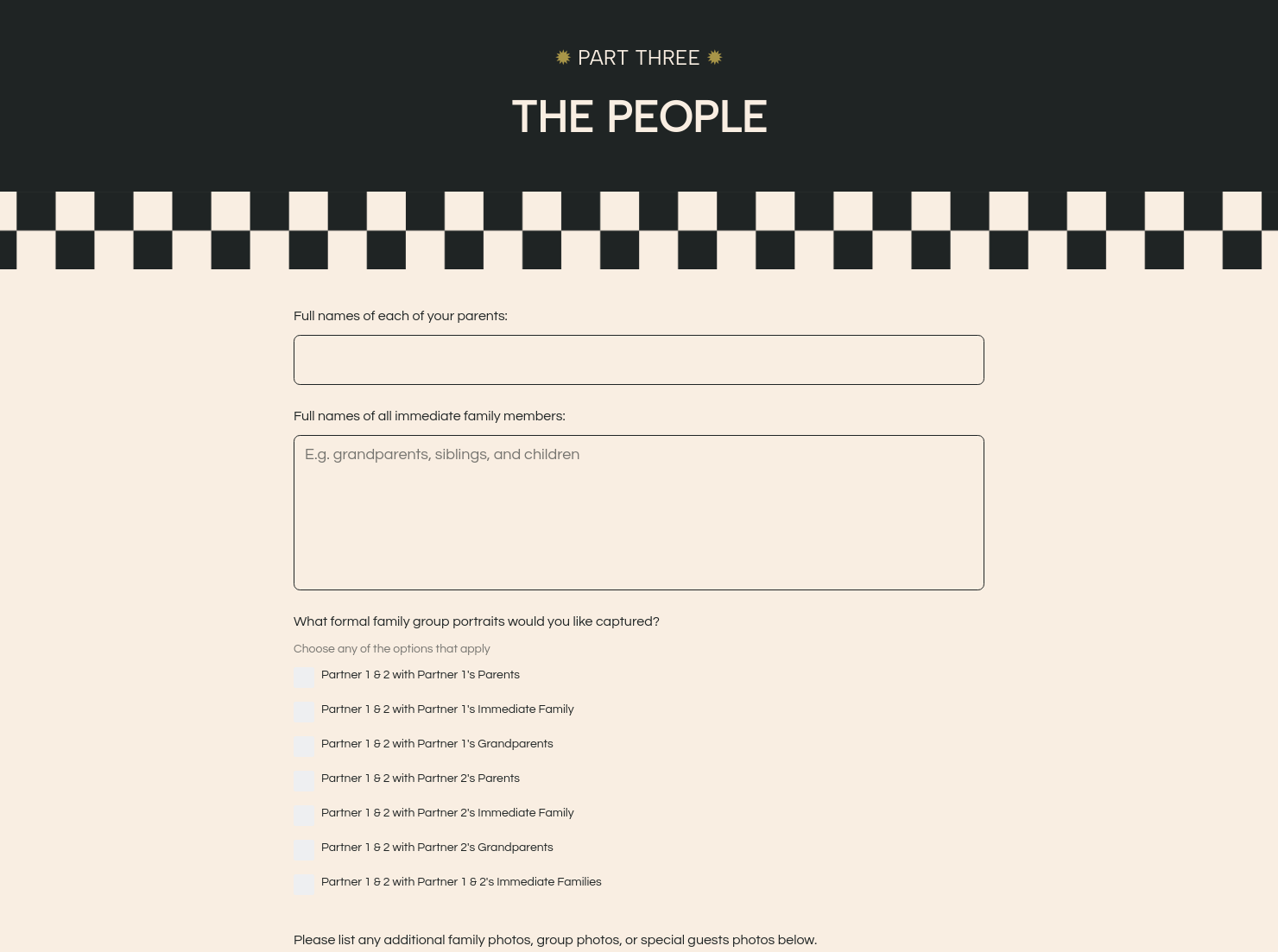
Then comes the people. Weddings revolve around relationships, and understanding those relationships ahead of time often makes portraits and group photos much smoother.
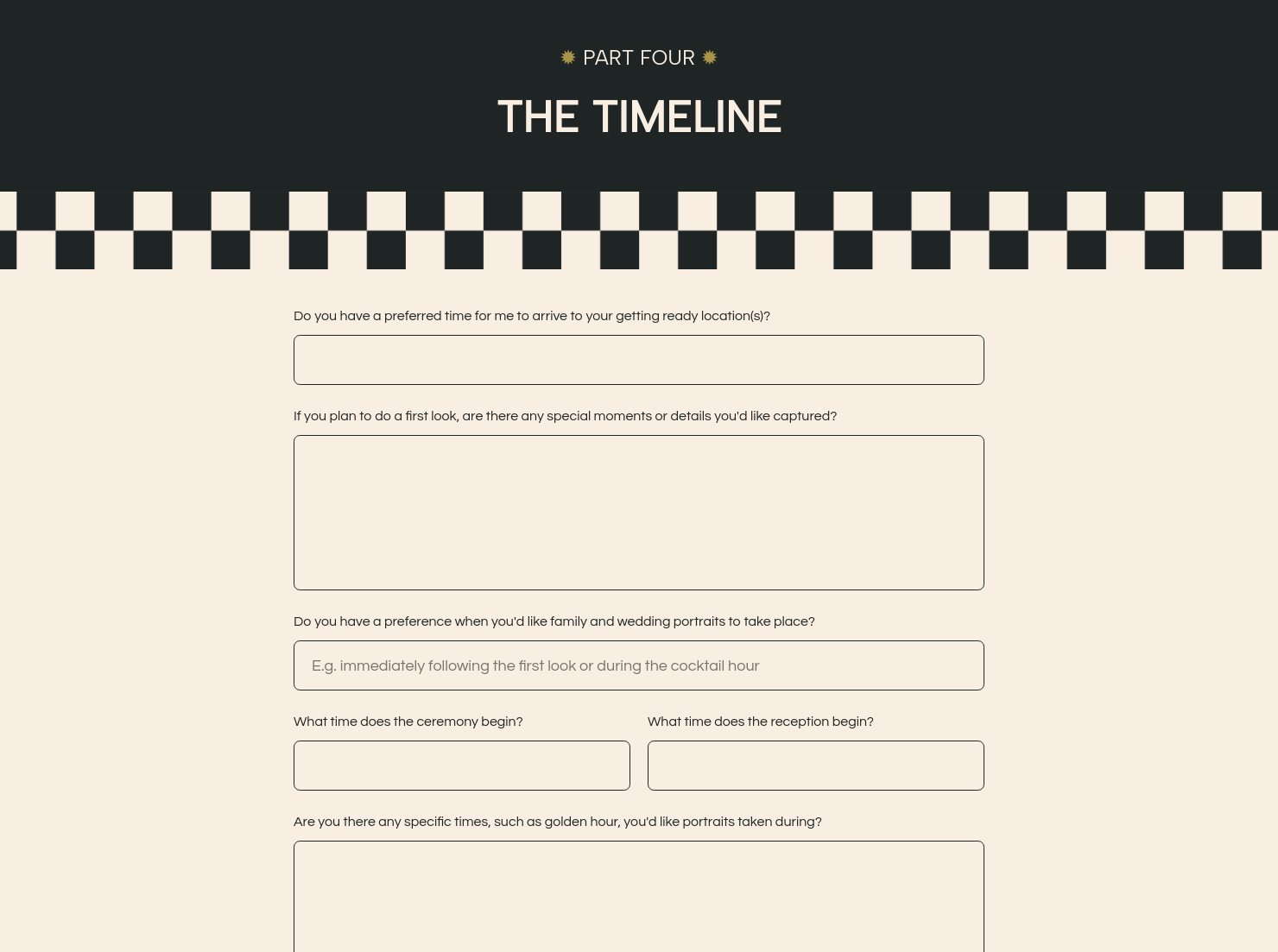
The questionnaire also includes the timeline, where couples outline the general flow of the day. When do preparations begin? When does the ceremony start? Knowing these moments in advance allows photographers to plan their coverage more carefully.
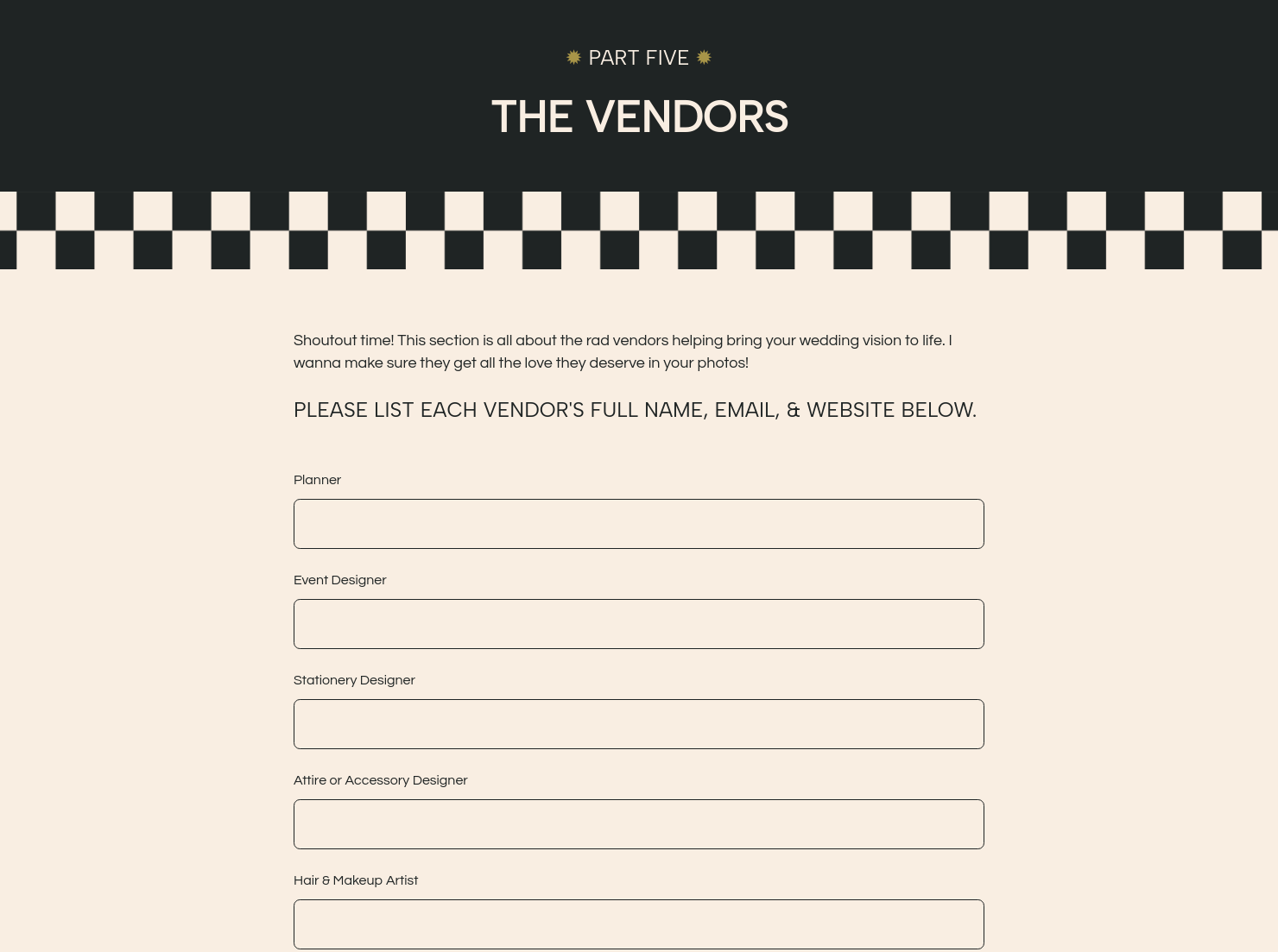
Another section focuses on the vendors, gathering information about planners, videographers, and other professionals involved in the wedding.
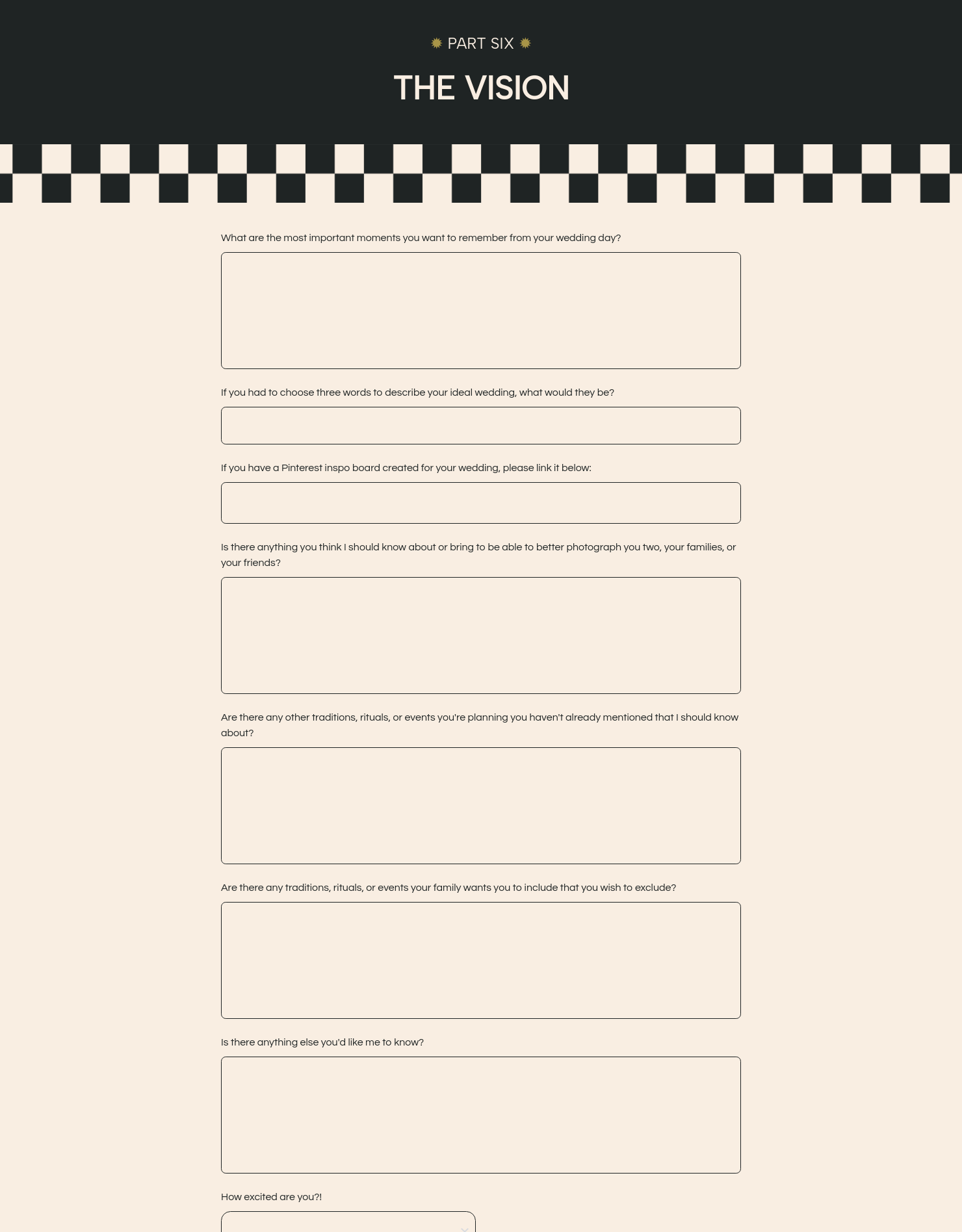
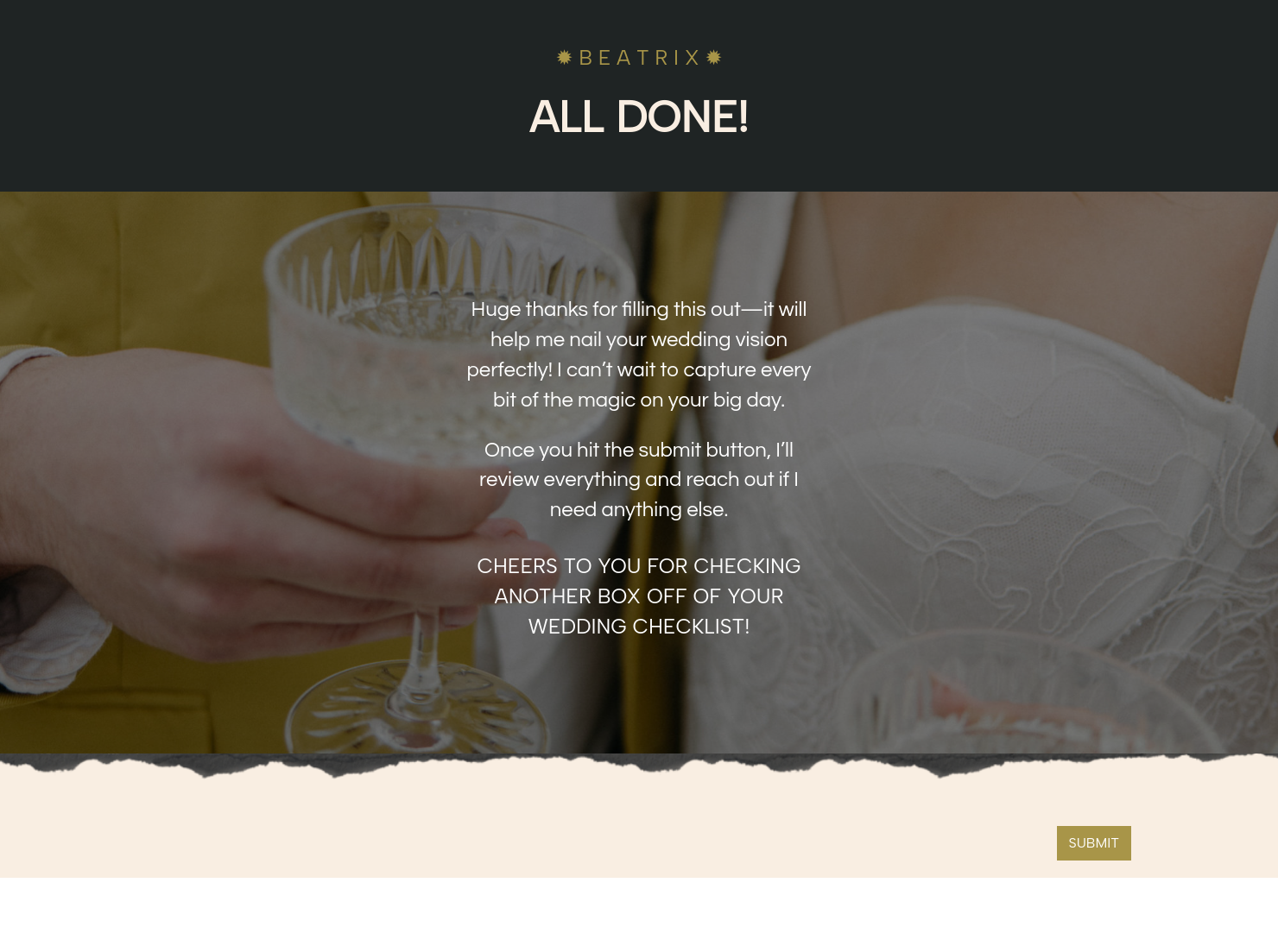
The vision invites couples to share the kind of photographs they imagine. Some couples lean toward documentary-style coverage. Others love traditional portraits. Many fall somewhere in between. And finally, an all done section confirms that everything has been finalised.
The most effective questionnaires feel natural to complete. Couples shouldn’t feel like they’re filling out paperwork. Instead, the questions guide them through the planning details.
Couples begin with basic information and gradually move toward more reflective questions about the day.
For photographers, answers in the people and timeline sections often become the most useful. These details shape how portraits are organized and how the photographer moves throughout the event.
Meanwhile, the vision section often reveals the emotional tone the couple hopes their photos will carry. That insight can influence everything from lighting choices to the moments a photographer decides to prioritize.
Most photographers send an onboarding questionnaire soon after a couple books their wedding date. At that stage, couples usually have enough information to answer questions, yet the schedule still allows room for adjustments.
The questionnaire often becomes part of the onboarding process for newly booked clients. It helps photographers prepare for planning conversations, organize family portrait lists, and gather vendor information before the wedding day arrives.
Catering has a lot of moving parts, and the menu sits in the center. If your catering menu is scattered across emails, texts, and screenshots, mistakes show up at the worst time.
A structured menu template helps in practical ways.
- Builds client trust and a professional first impression.
- Speeds approvals by making choices simple.
- Reduces payment disputes by documenting totals and terms.
- Saves time by cutting back and forth.
That means fewer surprises for clients and fewer fire drills for you.
FAQs
Below are quick answers to common questions from caterers building a catering menu that clients can approve with confidence.
It’s a document photographers send to couples after booking their wedding date. The goal is simple: gather the details that will help the photographer plan the day — timelines, family members, and the couple’s priorities for their photos.
The Beatrix questionnaire asks about the couple, the wedding plans, the key people involved, and the vendors working the event. It also invites couples to describe the style or feeling they hope their wedding photographs will capture.
Yes. HoneyBook proposals can include contracts with eSignatures, allowing couples to review the agreement and sign the document directly within the proposal.
HoneyBook templates simplify the steps between inquiry and booking so you can deliver a professional client experience while saving time on repeat tasks.
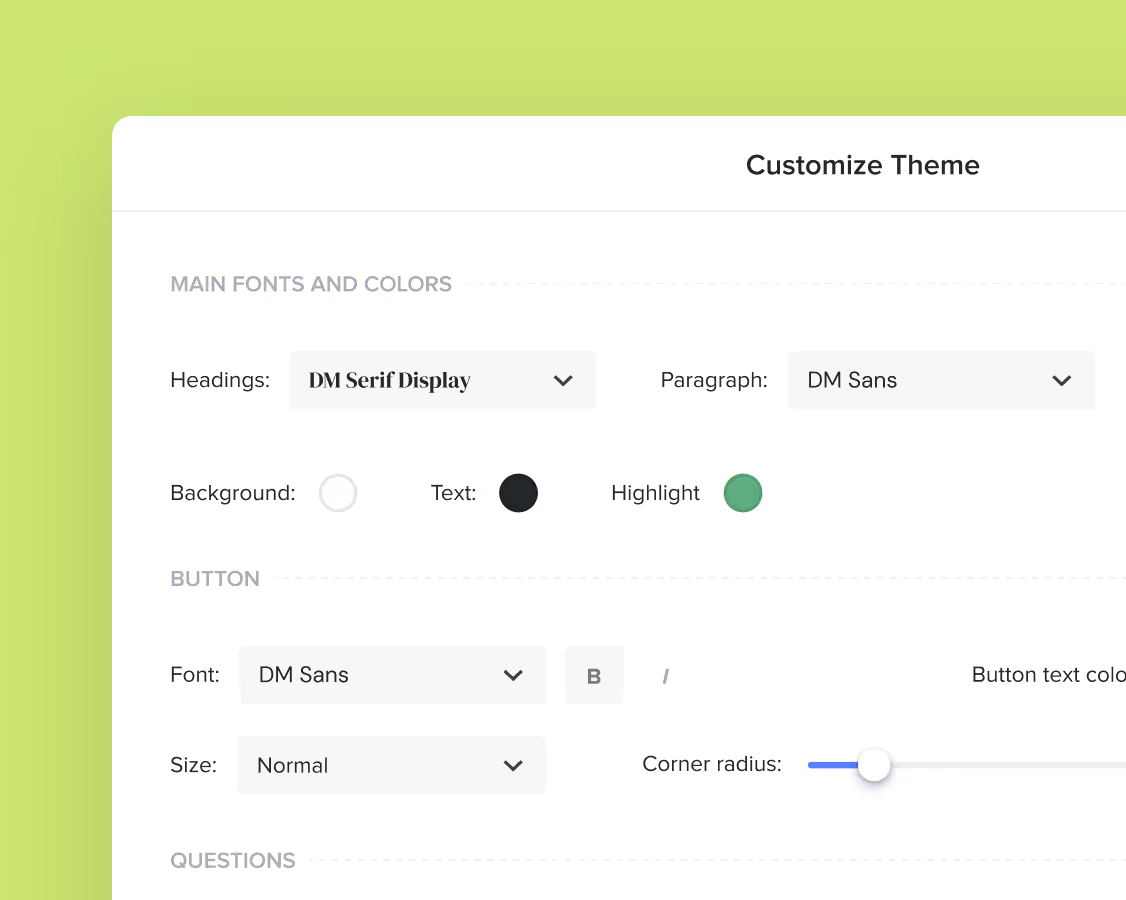
Yes. Templates can be customized with fonts, colors, images, and messaging so the document reflects your brand’s voice and visual identity.
Yes. The HoneyBook mobile app allows you to create, edit, send, and manage templates and Smart Files from anywhere.
Related templates

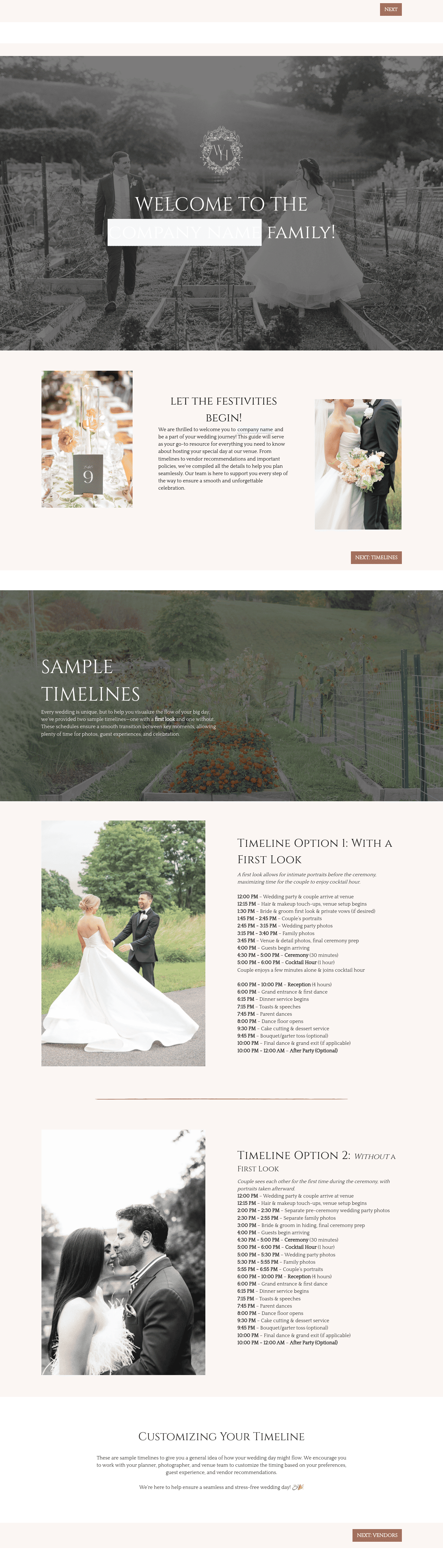


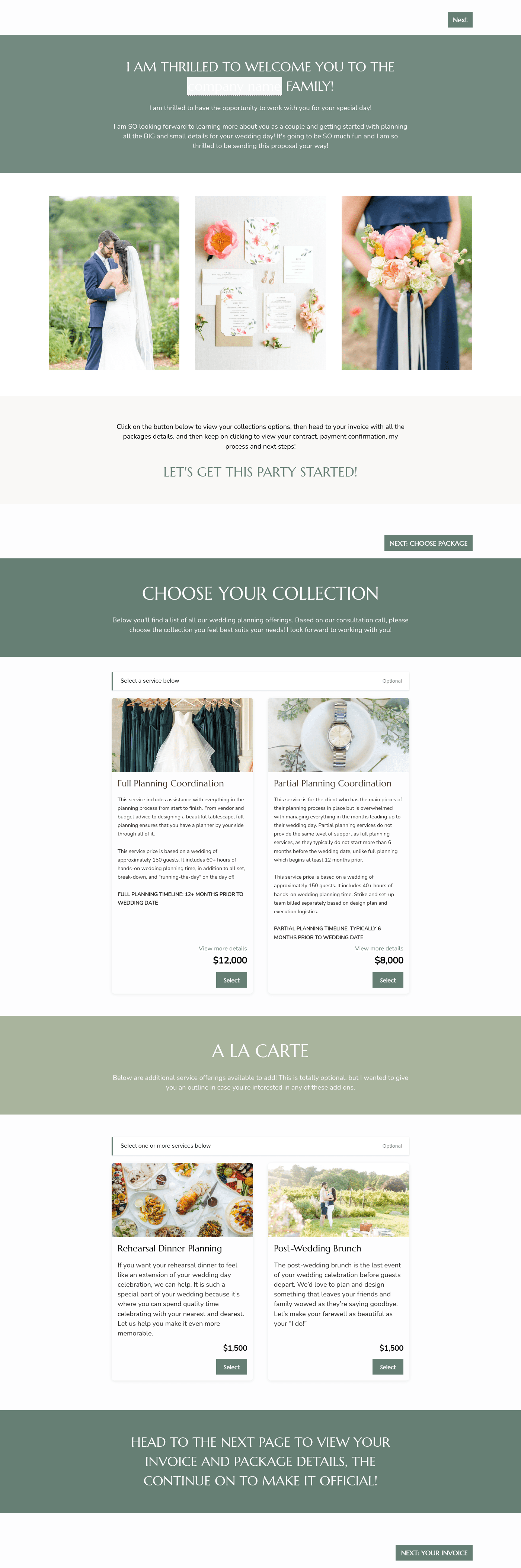

Related Templates
.png)


Make it your own
Fully customize the template to fit your needs. Quickly apply your company branding with just a few clicks.
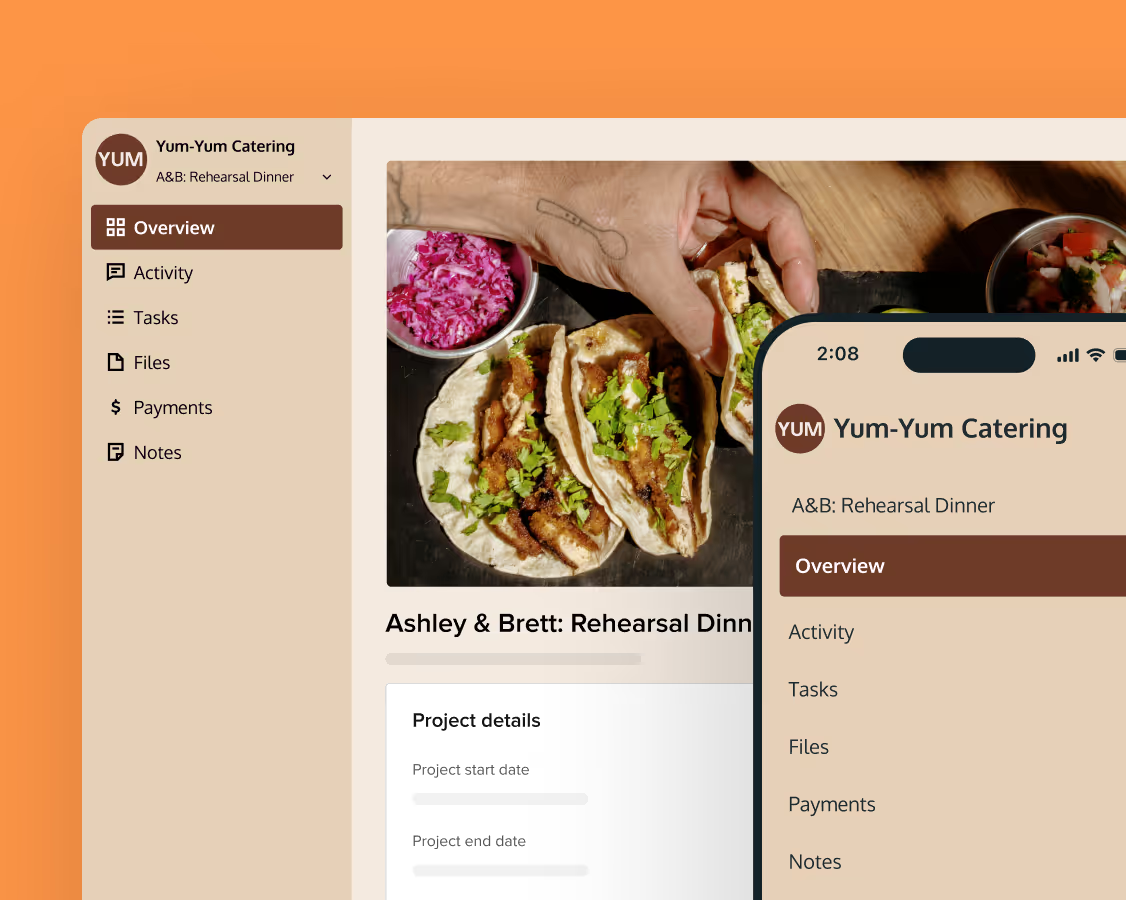
Share with clients
Create exceptional client experiences through HoneyBook’s dedicated client portal, allowing them to read, review, and take action from any device.
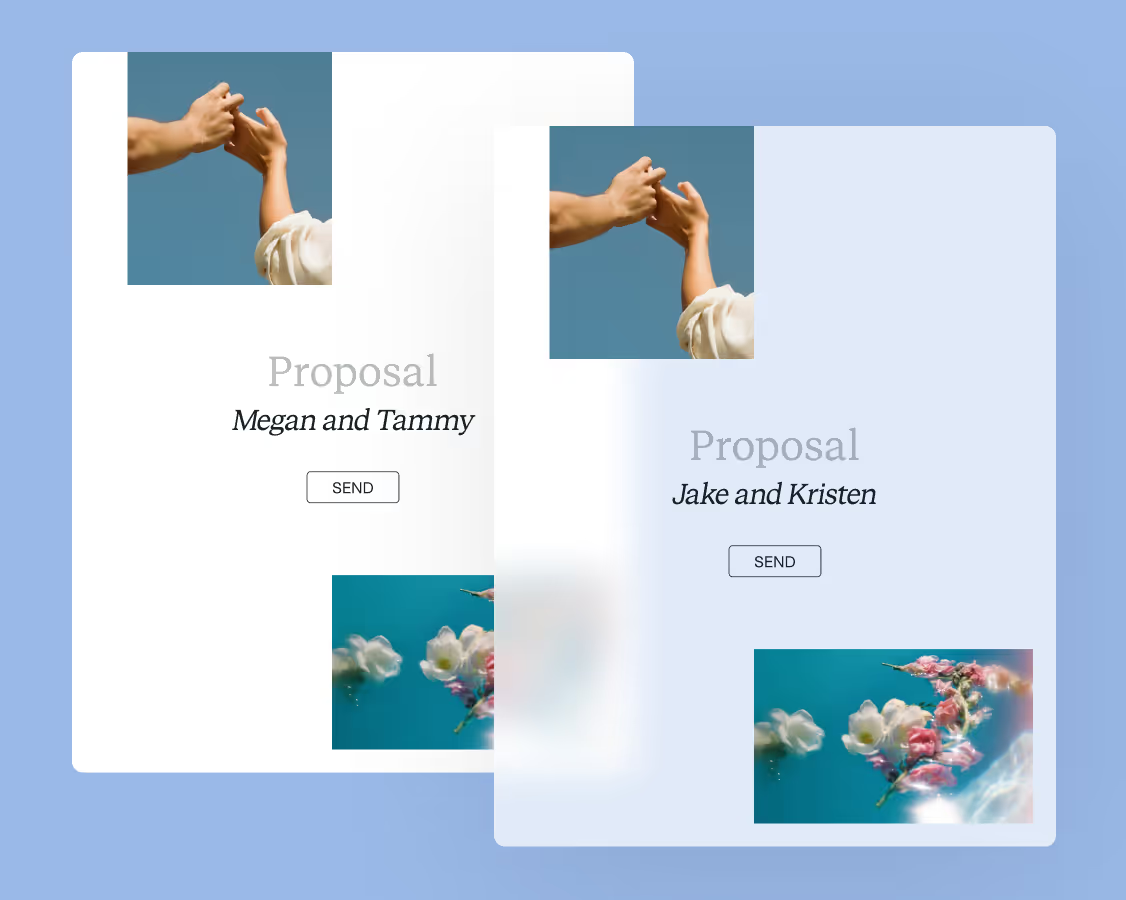
Reuse and scale
Use your customized files with different clients again and again to save time and make managing client interactions that much easier.
Join the 100,000+ businesses growing with HoneyBook.