










Questionnaire

Get client input, collect project details, and set expectations ahead of—or during—any project.

Ready-to-use copy
Templates come filled with prewritten copy you can use as is or edit to match your brand and business.


“
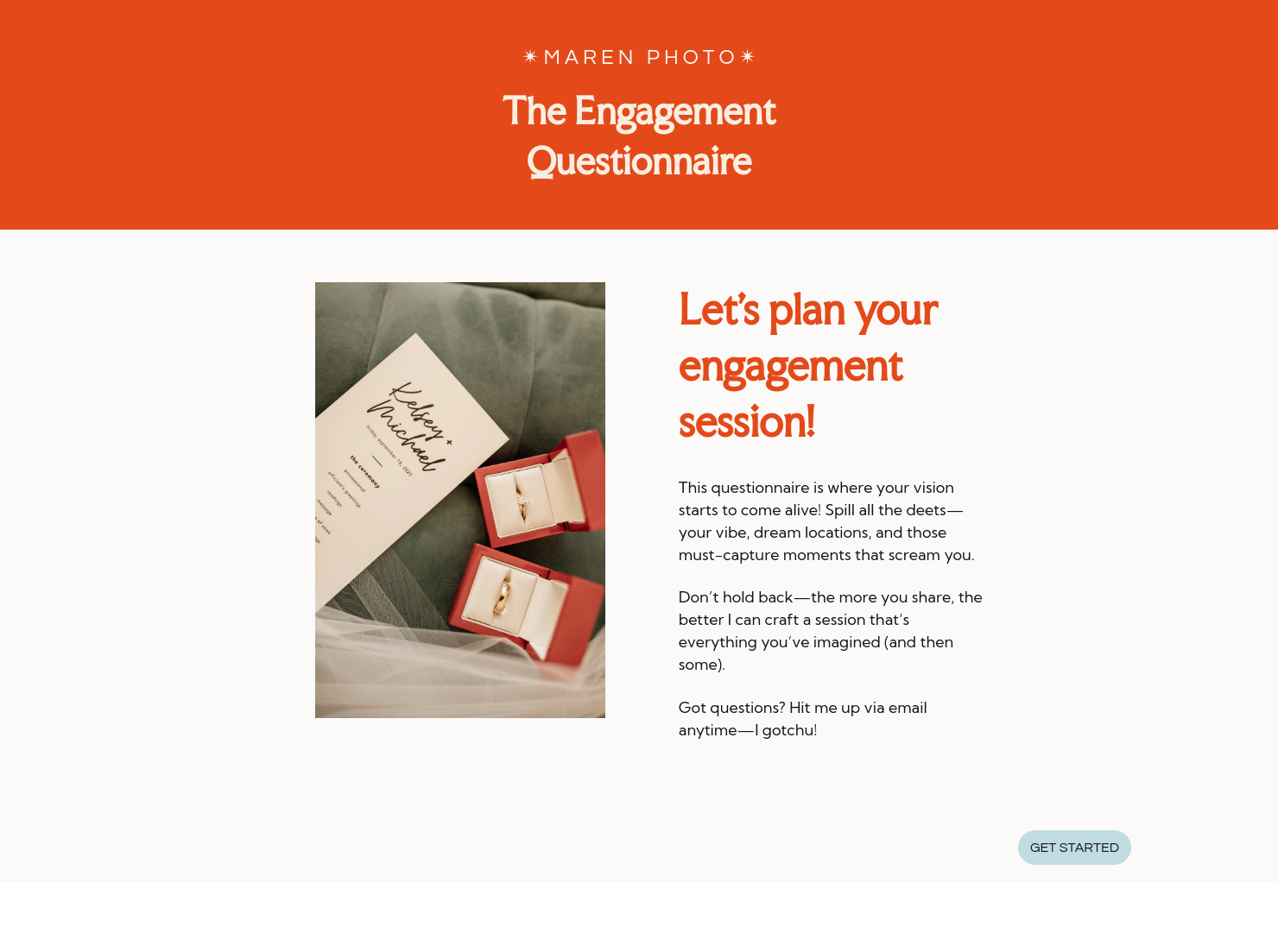
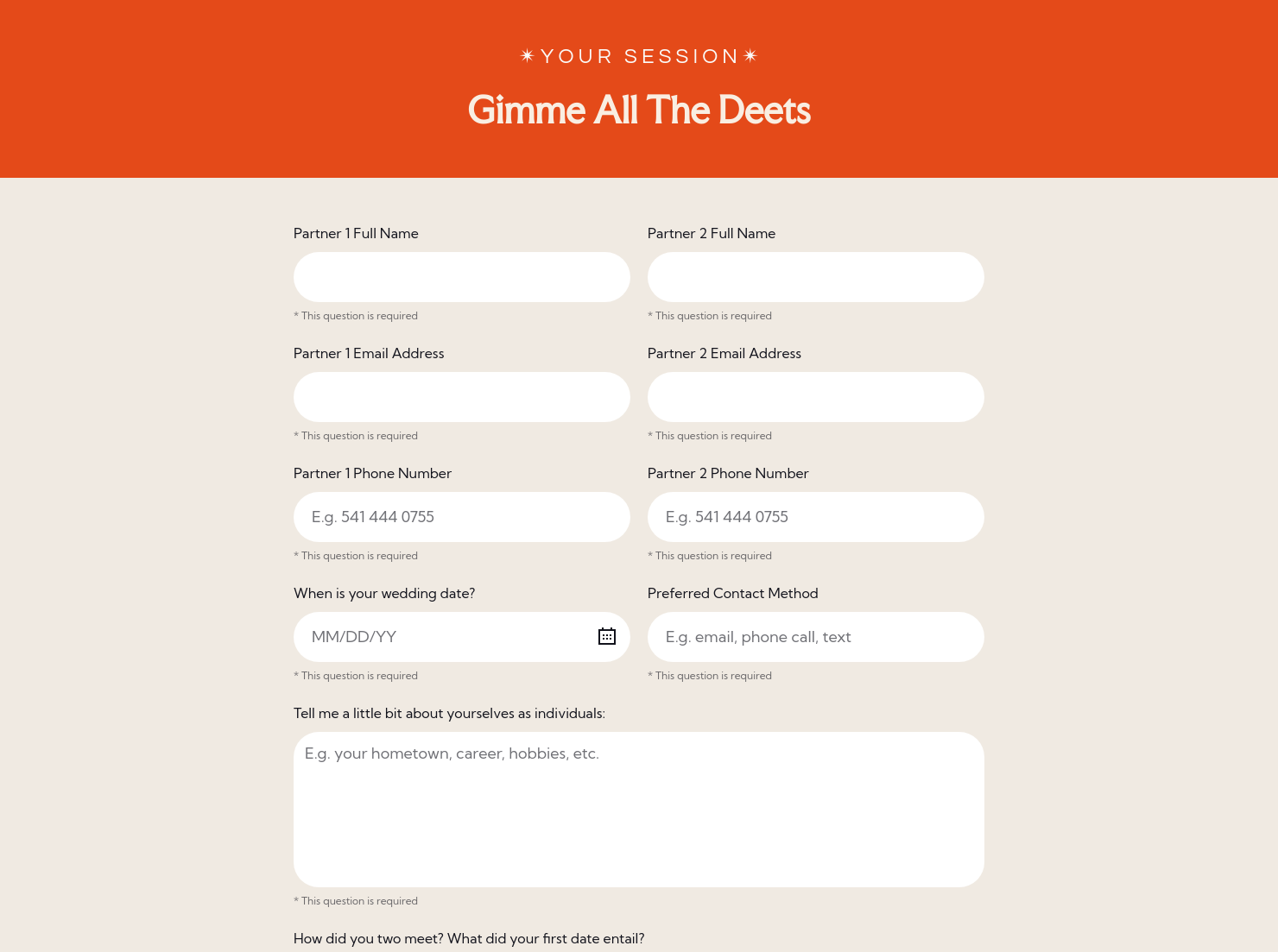
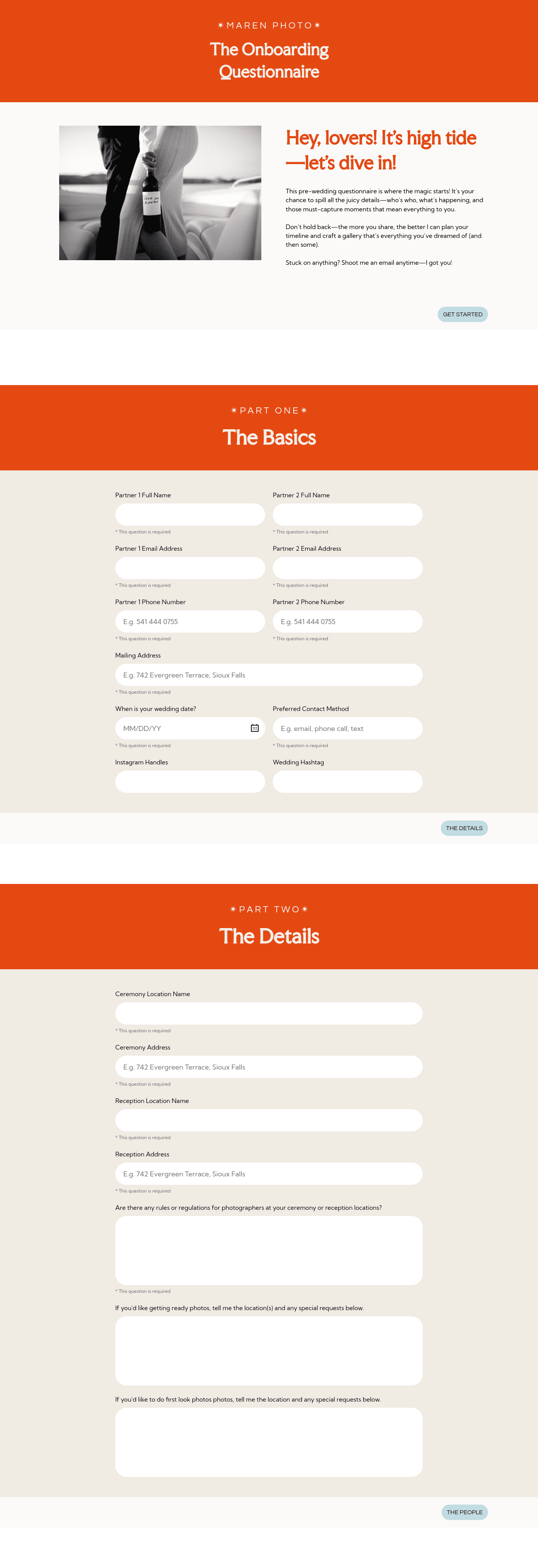
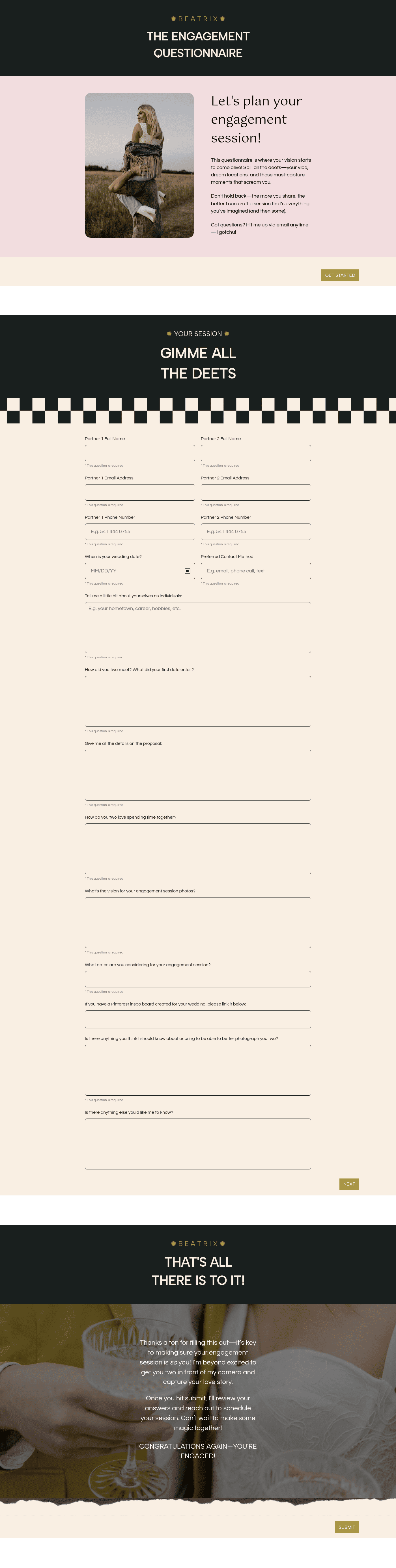
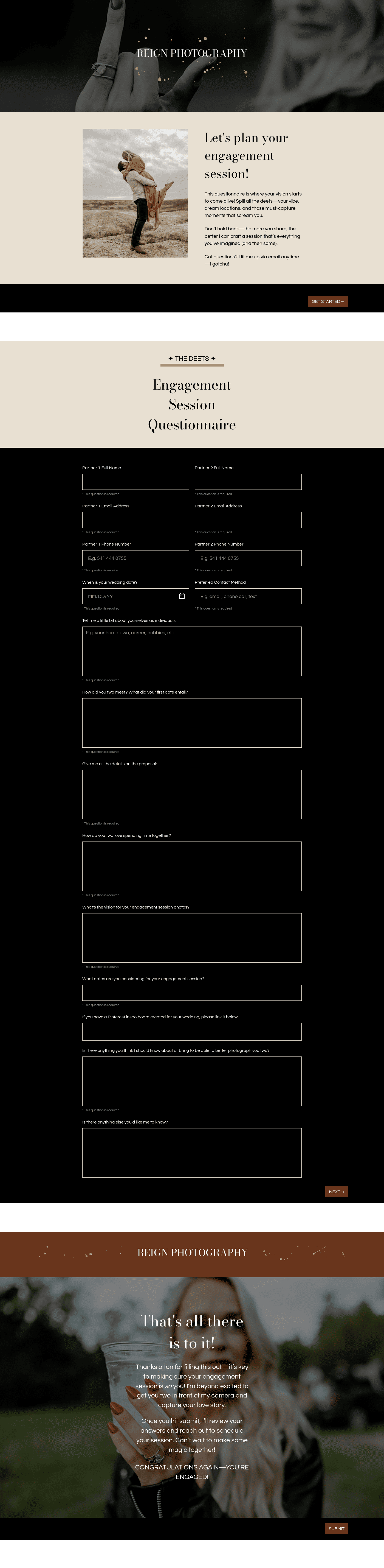
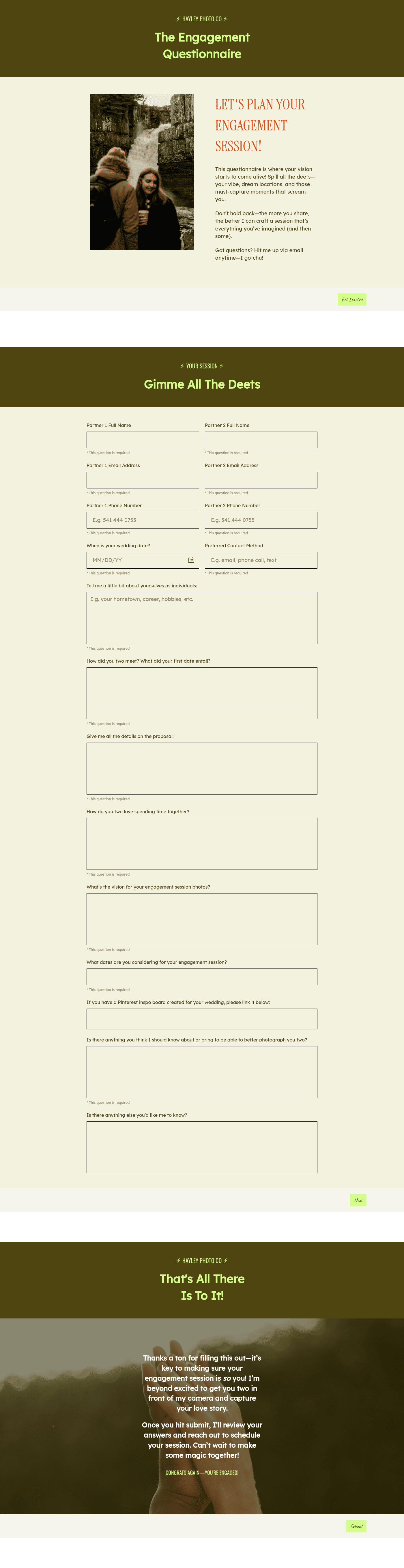
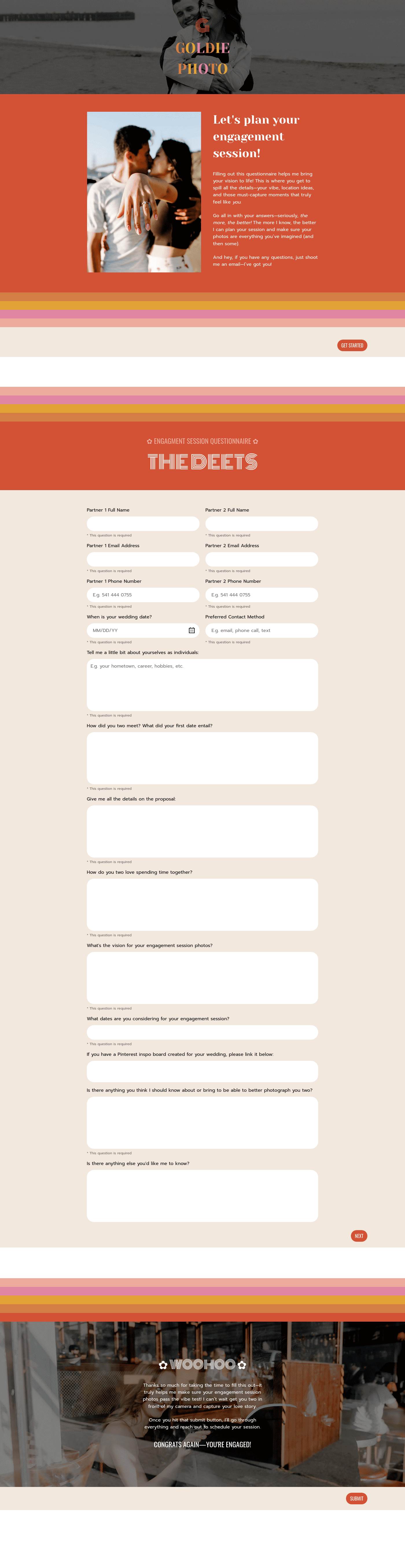
Use this template to connect with your couple, understand their vision, and plan an engagement session that captures their unique story!
”

October 18, 2026

How To Explain Your Maren Engagement Questionnaire For Wedding Photographers To Clients Who'Ve Never Seen One
An engagement questionnaire is usually sent after booking. It’s where things start to feel real. For wedding photographers, it’s how you move from “we’re excited to work together” to actually planning the session. The Maren engagement questionnaire for wedding photographers helps you gather the details you need while guiding the couple through what comes next. Most clients haven’t seen a wedding photographer questionnaire before. Without context, it can feel like paperwork. With the right framing, it feels like part of the experience. In simple terms, you’re not sending a form. You’re showing them how their session will be planned.
For couples who've never filled out a wedding questionnaire template before, when it lands in their inbox, they’re not always sure how to approach it. Some rush through it. Others overthink it. Some leave sections blank, assuming you’ll figure it out later. That’s where small issues start to build.
Explaining the purpose of your photographer wedding questionnaire helps you:
- get clearer responses
- avoid follow-up messages
- set expectations early
- keep your workflow organised
A short explanation upfront makes a difference.
If you want your Maren engagement questionnaire for wedding photographers to feel easy for clients to complete, each section should be explained in plain terms.
- A welcoming introduction page
Start by setting the tone. Instead of presenting it as a form, position it as part of the planning process. For example, a simple “Let’s plan your engagement session” helps clients understand what’s coming next and why it matters. - Basic session and wedding details
Include key information such as wedding date, session timing, and location preferences. When explaining this to clients, you can frame it simply: this helps you plan logistics properly, so nothing feels rushed or unclear on the day. Keeping these details organized within HoneyBook CRM means everything stays tied to the project. - Personal details about the couple
This is where the questionnaire becomes more than admin. Asking how they met, what they enjoy, or how they describe themselves gives you direction for posing and tone. Instead of leaving it open-ended, you might explain: “This helps me understand how you naturally interact, so I can guide you in a way that feels comfortable.” Clients often respond differently once they understand that. - Style and preference questions
Not everyone knows how to describe photography styles. If you ask, “What style do you prefer?” you’ll often get vague answers. Reframing it to something like, “Do you prefer natural moments or more guided direction?” gives you something useful. The wedding photographer questionnaire becomes easier to complete, and the answers become clearer. If needed, HoneyBook AI can help refine how these questions are phrased. - Logistics and expectations
This is where you prevent last-minute stress. Questions about timing, outfits, or travel often lead to last-minute messages if left unclear. You can connect these details to a follow-up call using HoneyBook meeting scheduler if something needs clarification. - A clear closing or thank-you page
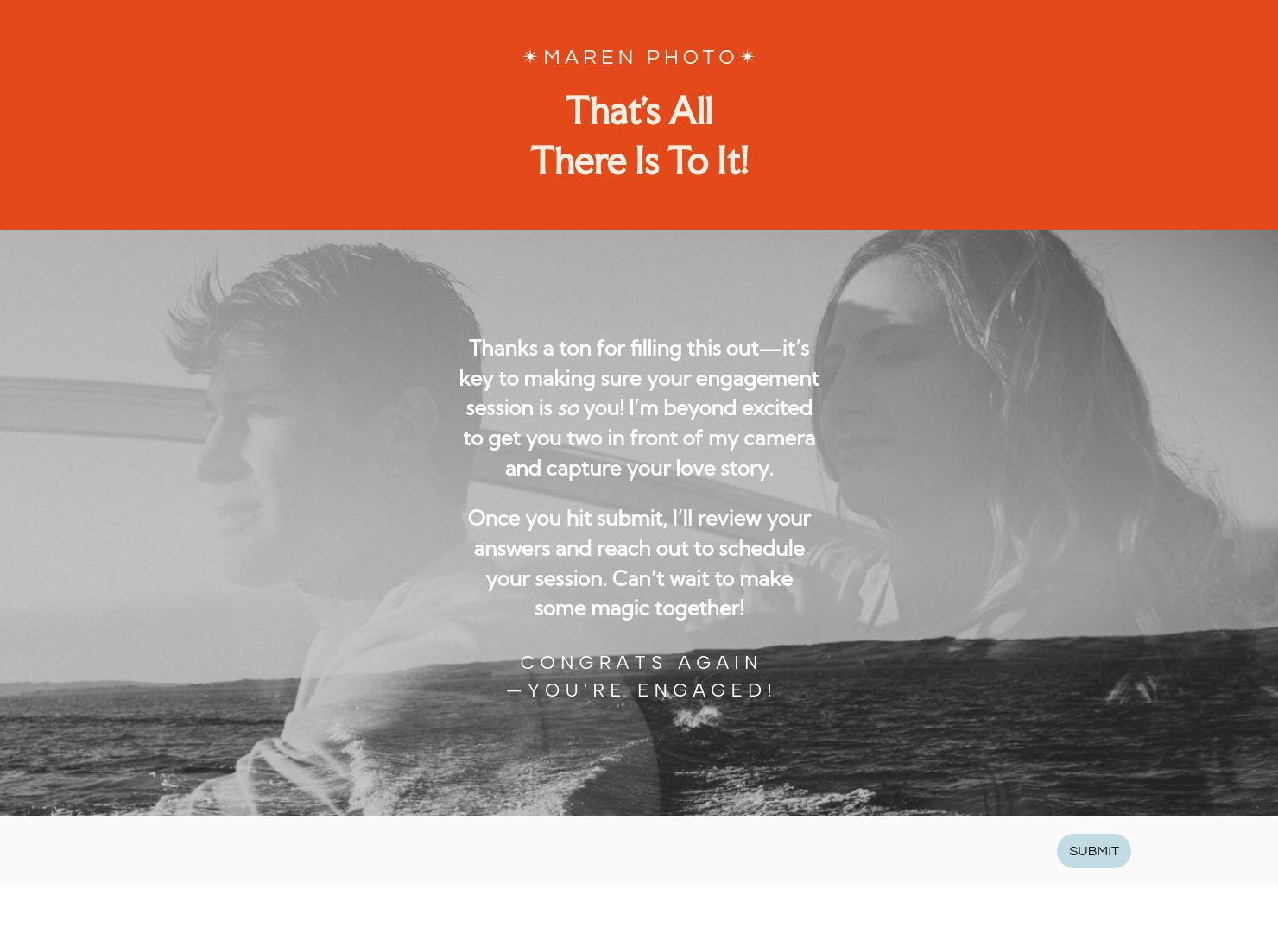
A simple thank-you reinforces that their responses have been received and that the next step sits with you. It helps the process feel complete.
The difference is rarely in the questions. It’s in how they’re introduced.
If a questionnaire arrives without explanation, it feels like admin. When you explain that it helps you plan the session and avoid confusion, clients approach it differently.
For an effective questionnaire, keep it direct and avoid overloading the form. An effective wedding questionnaire photography process gathers what you need without making clients feel like they’re doing work for you.
This template works best once a couple has booked and you’re preparing for their engagement session.
Use it when:
- you’re planning an engagement shoot
- you need key details in one place
- you want to reduce follow-up questions
- you’re onboarding new clients
- you want a consistent process
Catering has a lot of moving parts, and the menu sits in the center. If your catering menu is scattered across emails, texts, and screenshots, mistakes show up at the worst time.
A structured menu template helps in practical ways.
- Builds client trust and a professional first impression.
- Speeds approvals by making choices simple.
- Reduces payment disputes by documenting totals and terms.
- Saves time by cutting back and forth.
That means fewer surprises for clients and fewer fire drills for you.
FAQs
Below are quick answers to common questions from caterers building a catering menu that clients can approve with confidence.
It helps you gather the details needed to plan the session, from logistics to preferences, so the experience feels organised.
Keep it simple. Introduce it when you send it, explain what it is and why, outline what they need to do and how long it takes, and clarify what happens next so they know what to expect.
HoneyBook templates help you send structured documents and keep client information organised in one place. Learn more in the Files and Templates Help Center.
Yes. When sent through a Smart File, responses are stored within the project, so you can review answers and prepare without switching tools.
Related templates




Related Templates

Make it your own
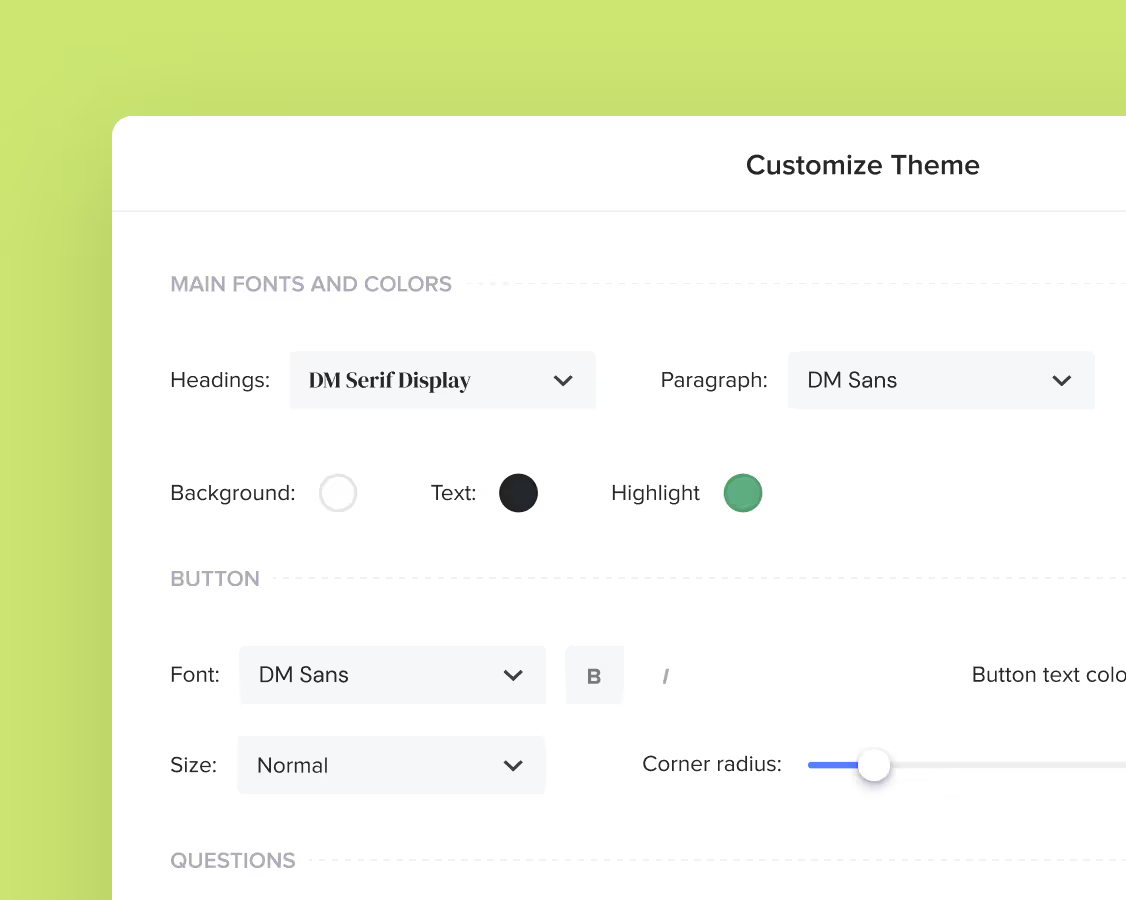
Fully customize the template to fit your needs. Quickly apply your company branding with just a few clicks.
Share with clients
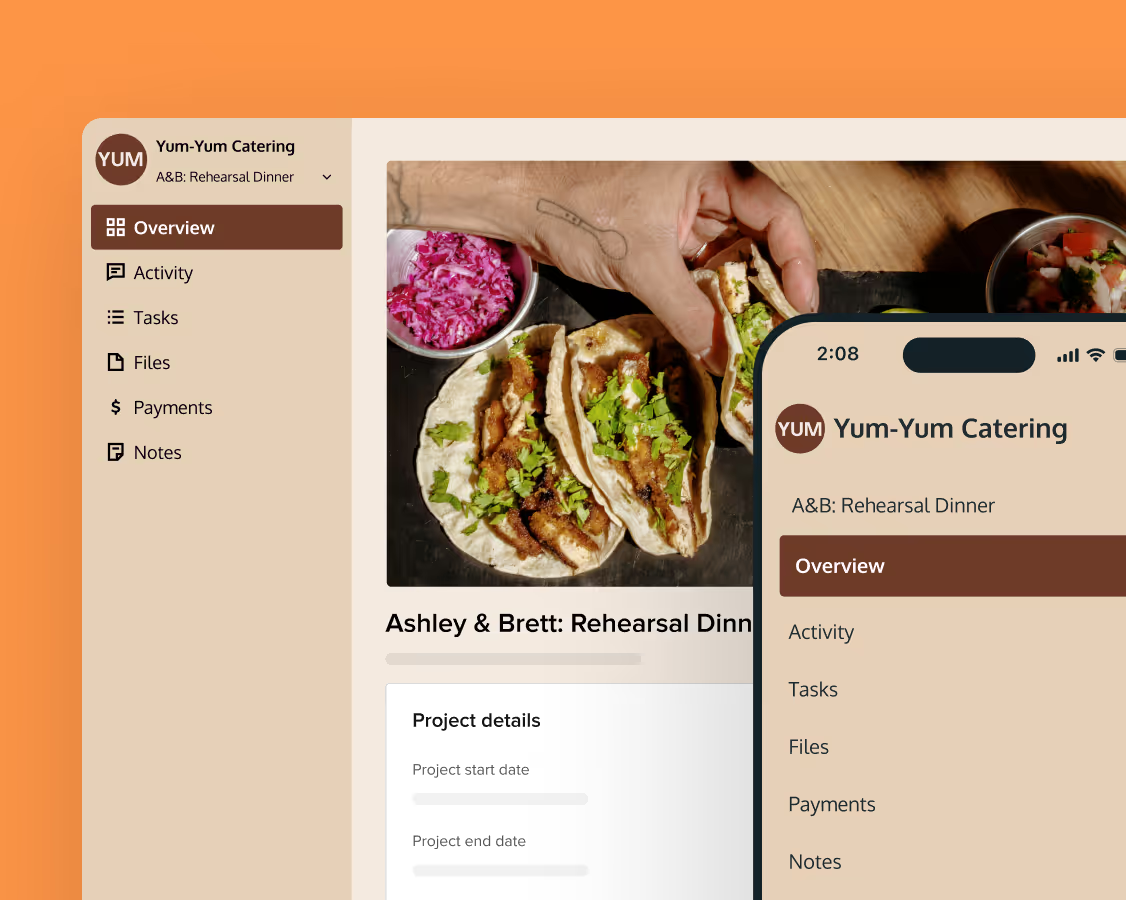
Create exceptional client experiences through HoneyBook’s dedicated client portal, allowing them to read, review, and take action from any device.
Reuse and scale
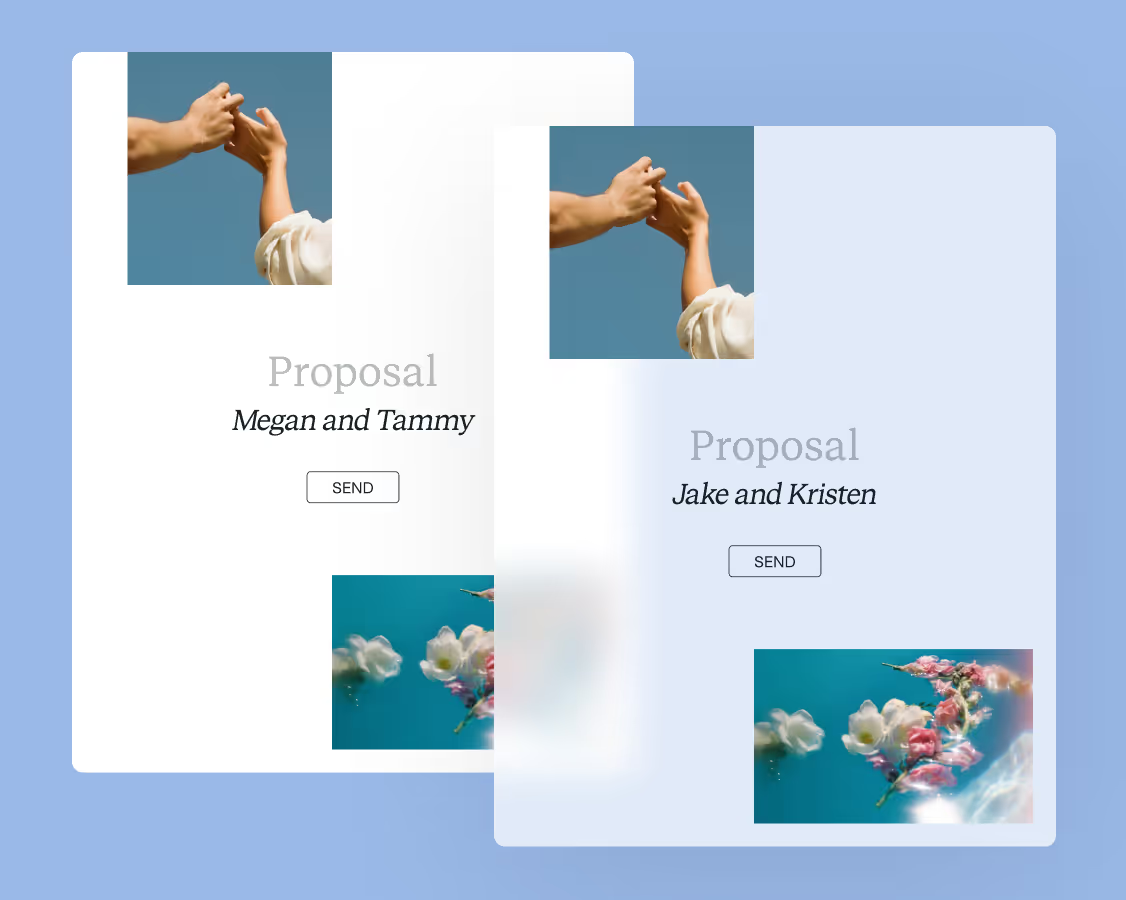
Use your customized files with different clients again and again to save time and make managing client interactions that much easier.
Join the 100,000+ businesses growing with HoneyBook.