











Invoice & online payments

Make it easy for clients to book and pay for your services–all in one file.

Scheduling
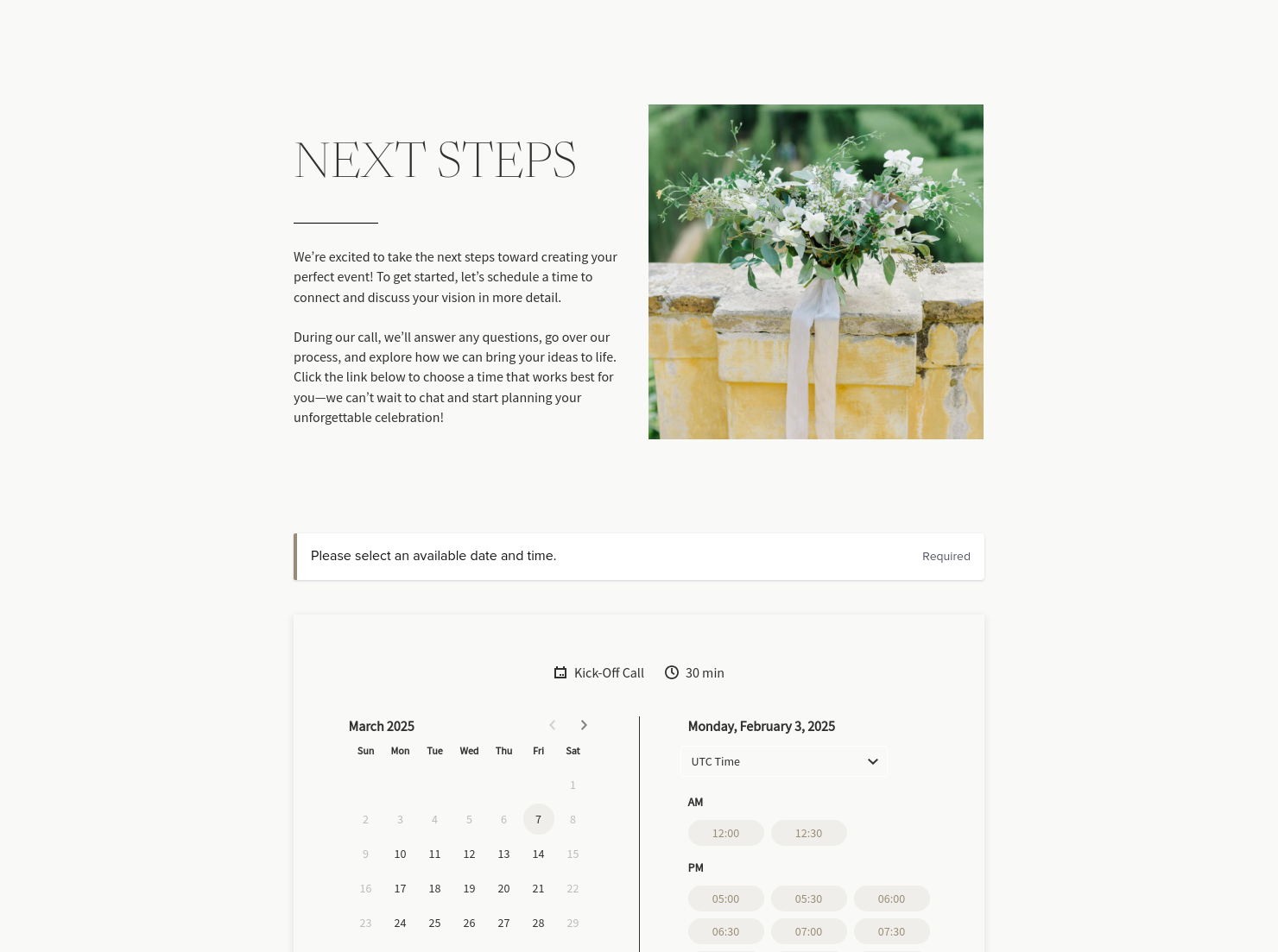
Let clients book meetings, sessions, or appointments during your available time slots.

Services
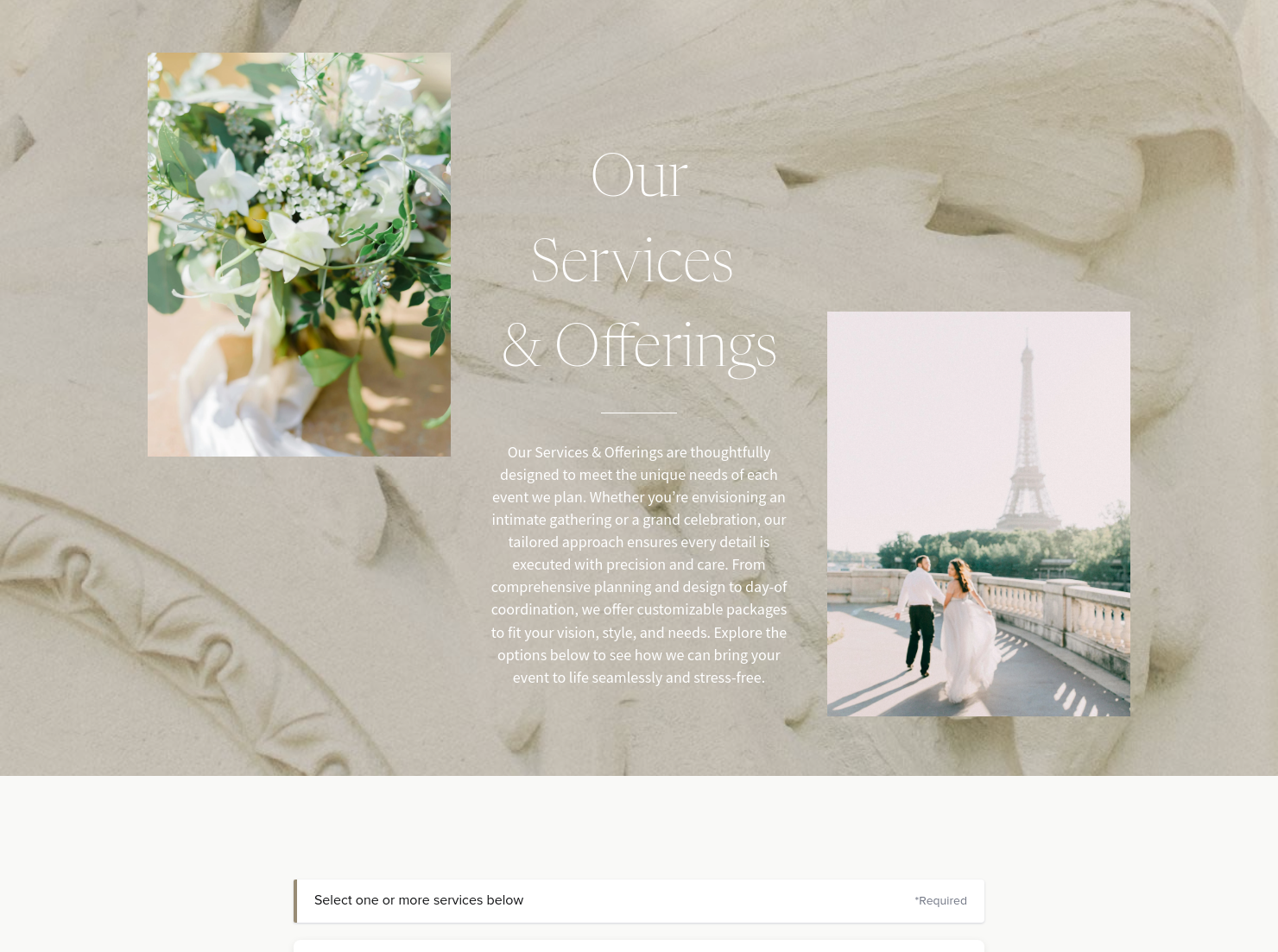
Showcase your services for easier client booking.

Ready-to-use copy
Templates come filled with prewritten copy you can use as is or edit to match your brand and business.

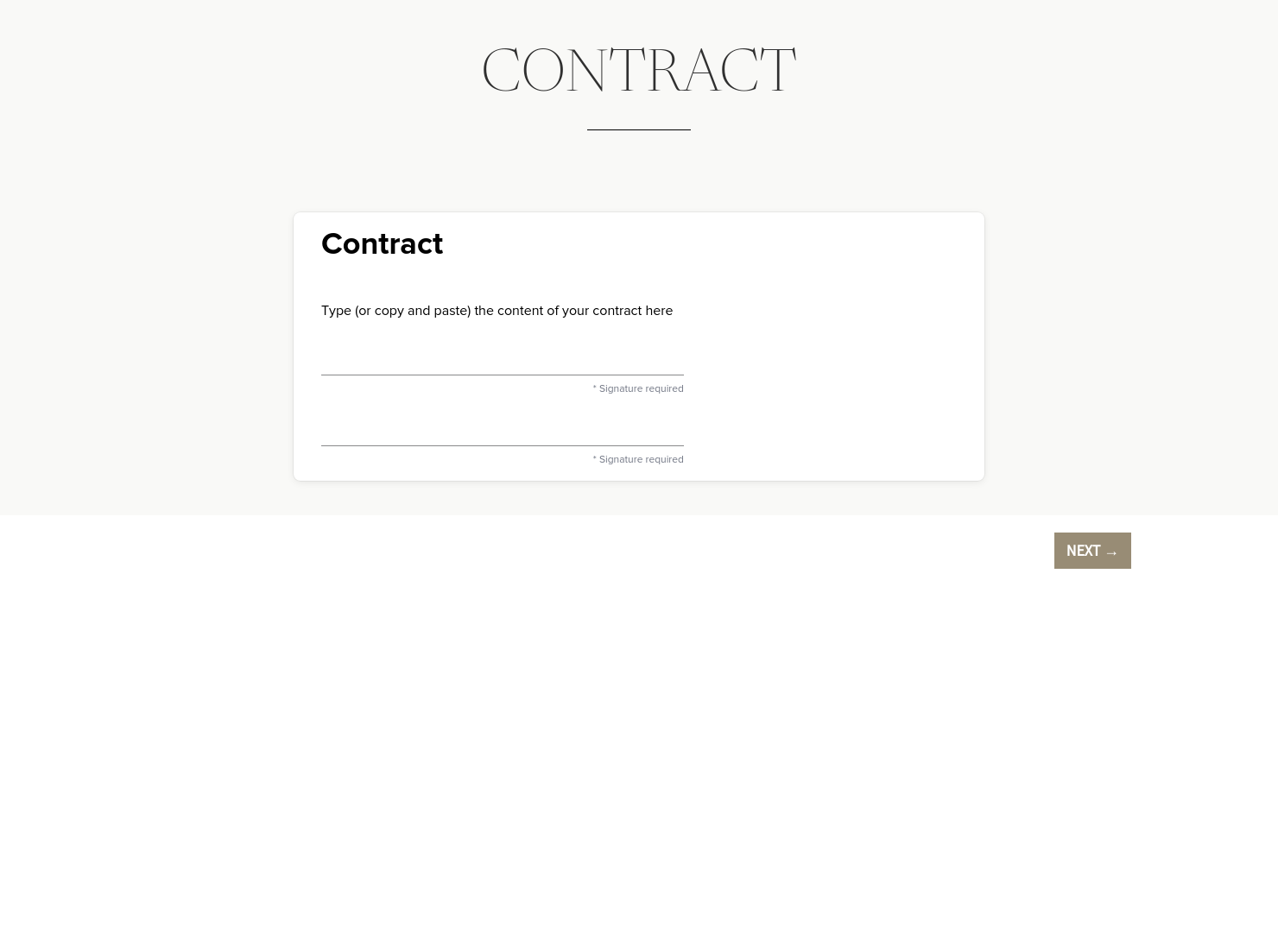
Contract for eSigning
Sign clients easily on the go via eSign with your contracts, or use one of HoneyBook's lawyer-approved contracts


“
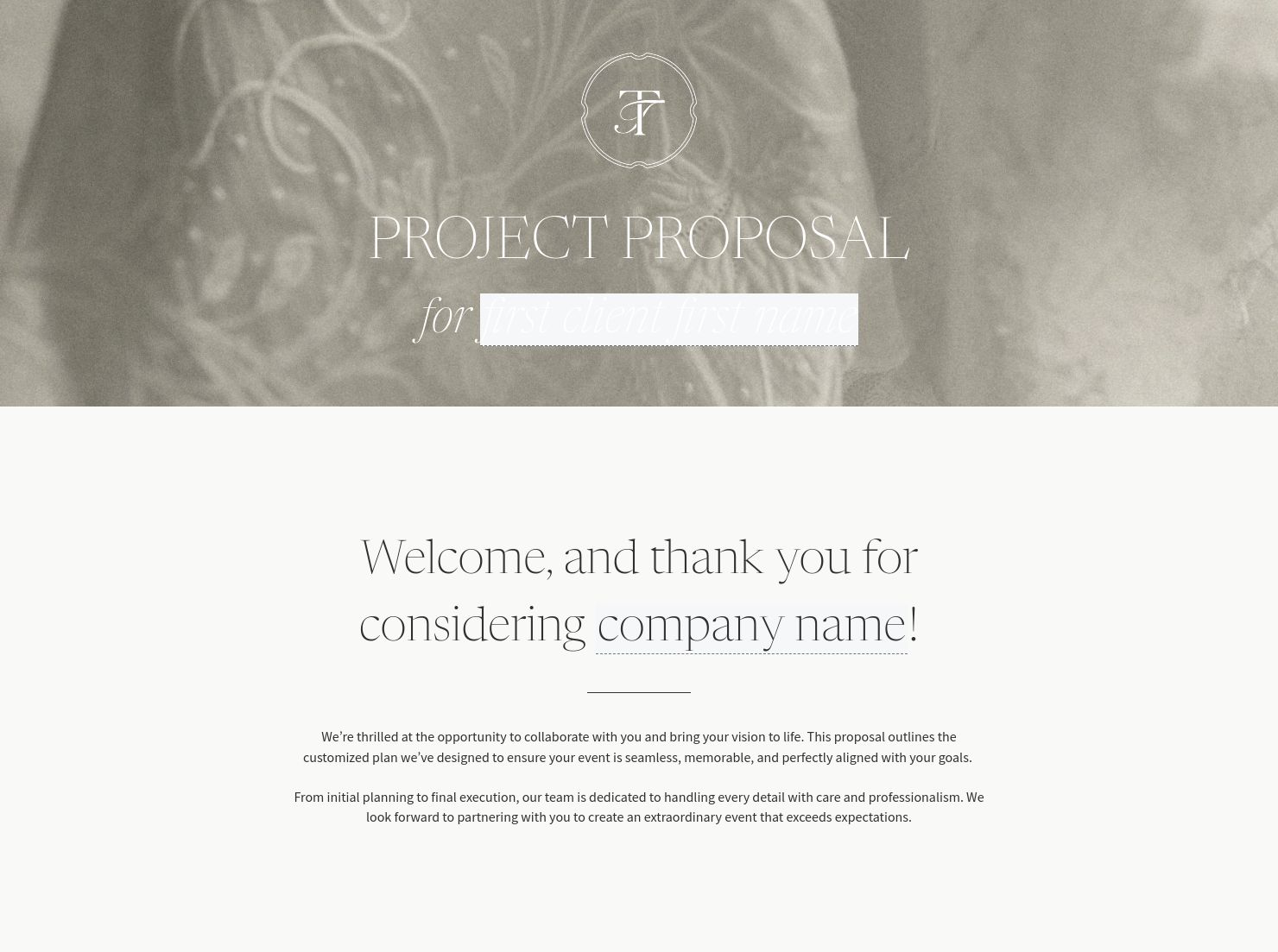
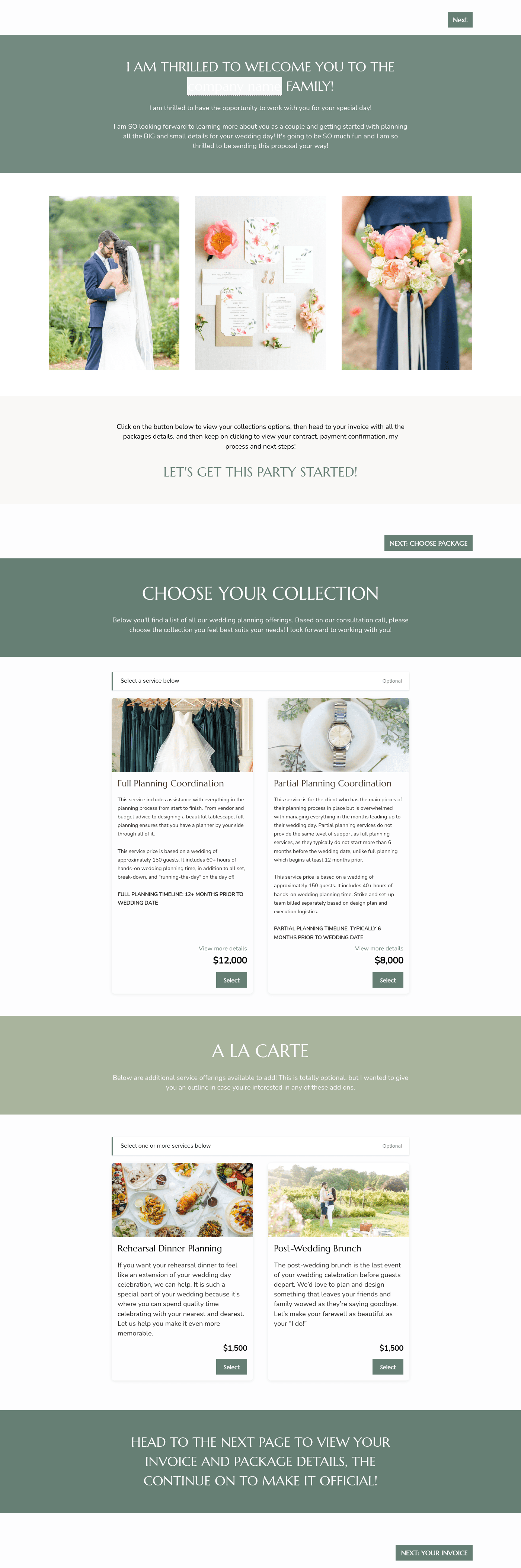
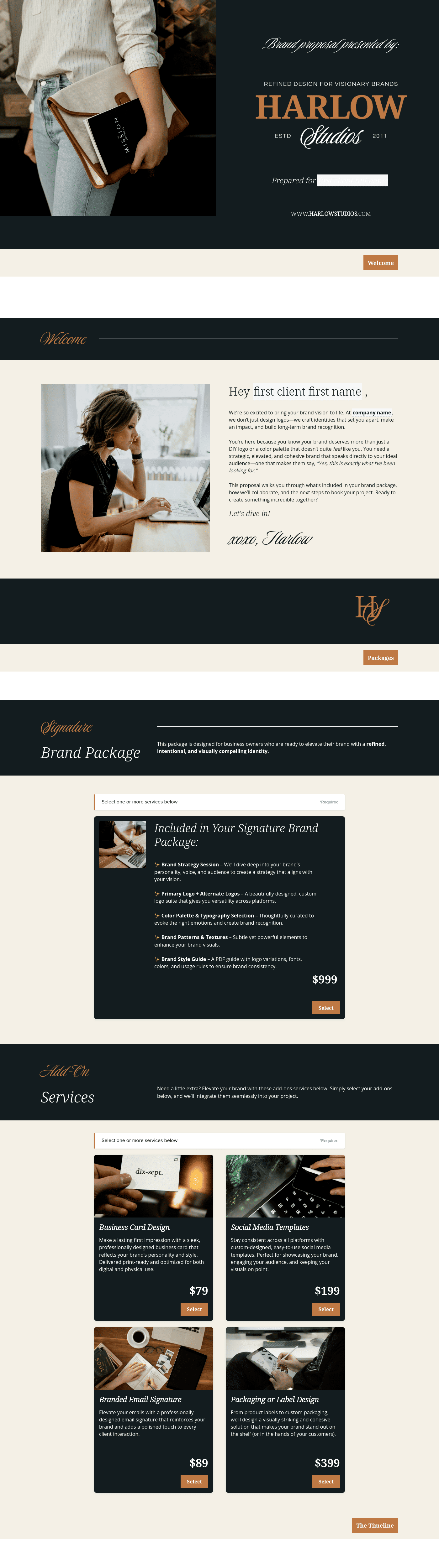
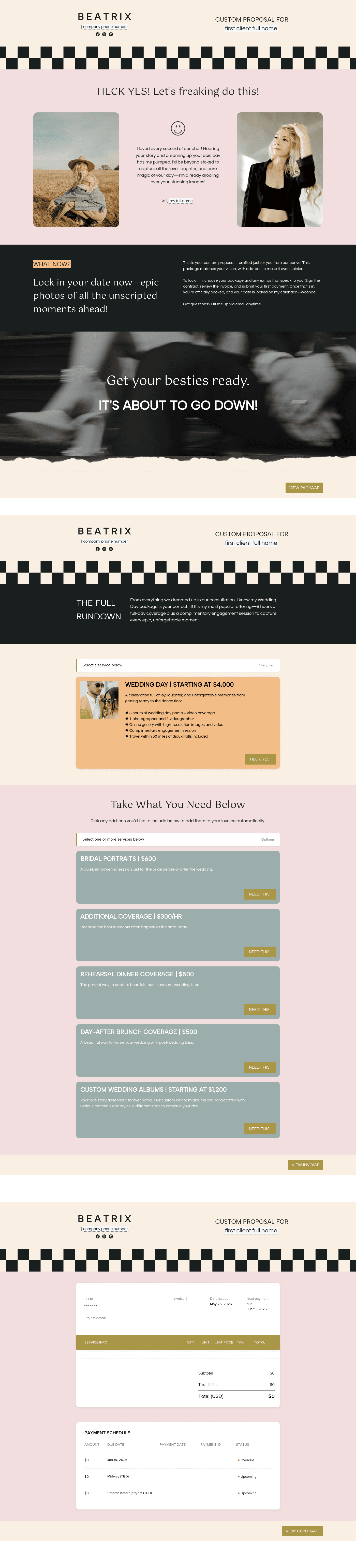
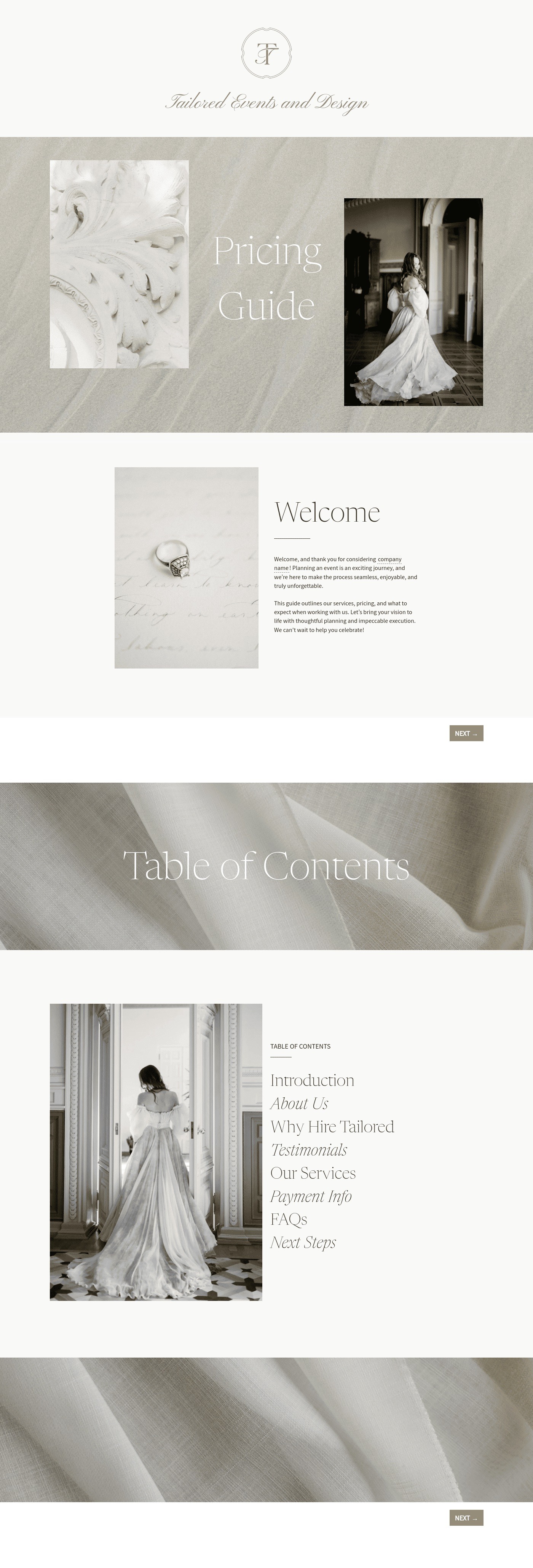
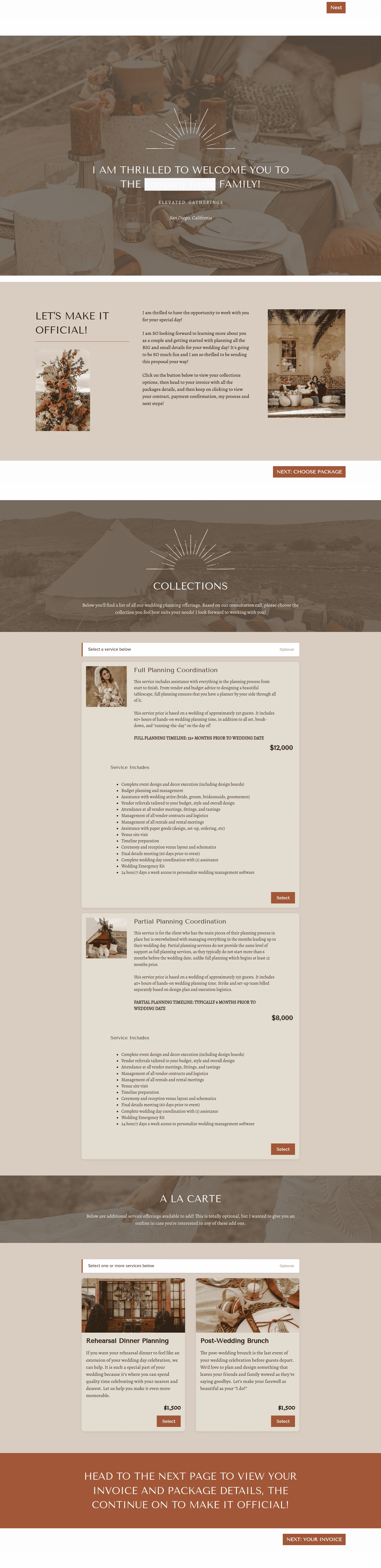
Use this proposal template to simplify booking—outline services, sign the contract, send the invoice, and schedule a call, all in one seamless step for your clients.
”

October 18, 2026

How To Price Your Services Using A Proposal For Wedding Planners
A proposal for wedding planners is where everything comes together — your services, your pricing, and the way you work. It usually follows an inquiry or consultation, when a couple is deciding whether to move forward. At that point, pricing on its own isn’t enough. It needs context. A well-structured proposal does that quietly. It shows clients what they’re paying for, how the process unfolds, and what to expect next, without overwhelming them.
Pricing is often where hesitation starts. Not always because it’s too high, but because it’s not fully understood.
Without a clear wedding planner proposal, couples tend to compare numbers without context.
A strong proposal helps you:
- present your services with clarity
- reduce unnecessary back-and-forth
- guide clients toward a decision
- reinforce professionalism
If you want your proposal for wedding planner services to feel clear and considered, each section should follow the way your work actually unfolds. Clients should be able to move through it naturally — from understanding what you do to feeling ready to book.
- A warm welcome or cover page
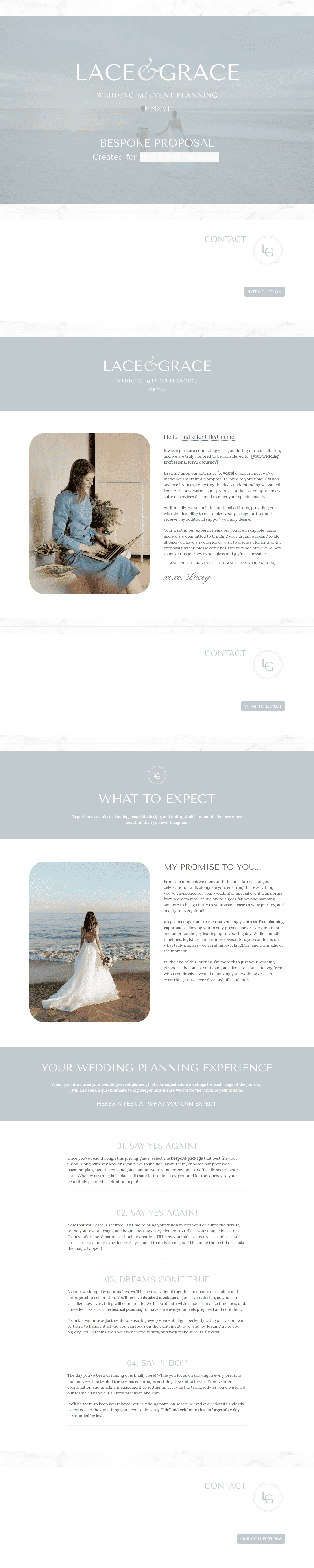
Start with a short introduction that feels intentional. This is where the tone shifts from inquiry to experience. A personalised message, even a simple one, signals that this isn’t a generic document. When delivered through a Smart File, it reads as part of a guided process rather than something detached. - Services and offerings section
This is where your pricing begins to take shape, even before numbers appear. Avoid broad labels. Break your services down into what they actually involve. For example, “Full Planning” could include venue sourcing, vendor coordination, timeline creation, and day-of management. A more limited package might focus on refining existing plans and overseeing execution.
You might structure it like this: one package includes full vendor management and unlimited communication, while another includes timeline support and a set number of planning sessions. That difference makes pricing easier to understand without needing explanation.
The difference matters. When clients can see what’s included—and what isn’t—they’re not guessing. They’re comparing with clarity. - Contract and e-signature section
A professional proposal for wedding planners should allow clients to move forward without interruption. That includes reviewing and signing the contract in the same place. With HoneyBook online contracts, acceptance becomes part of the flow. No extra steps. No delays. - Invoice and payment plan page
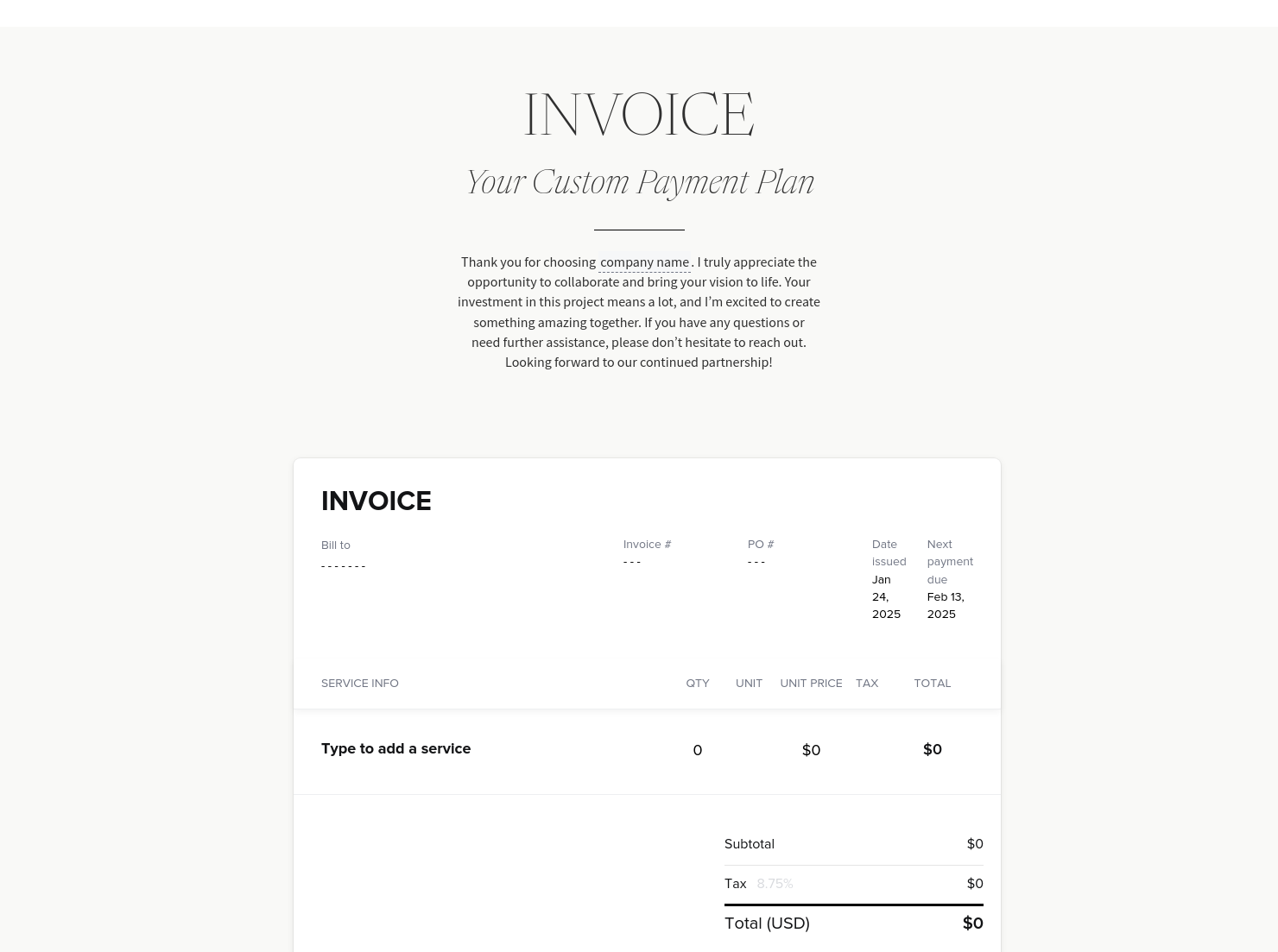
This is where pricing shifts from concept to commitment. Outline the structure clearly, whether that’s a retainer followed by staged payments, or another arrangement that suits your process.
When linked to HoneyBook online invoices, clients can act on this immediately, as it removes the gap between decision and booking. - Payment page
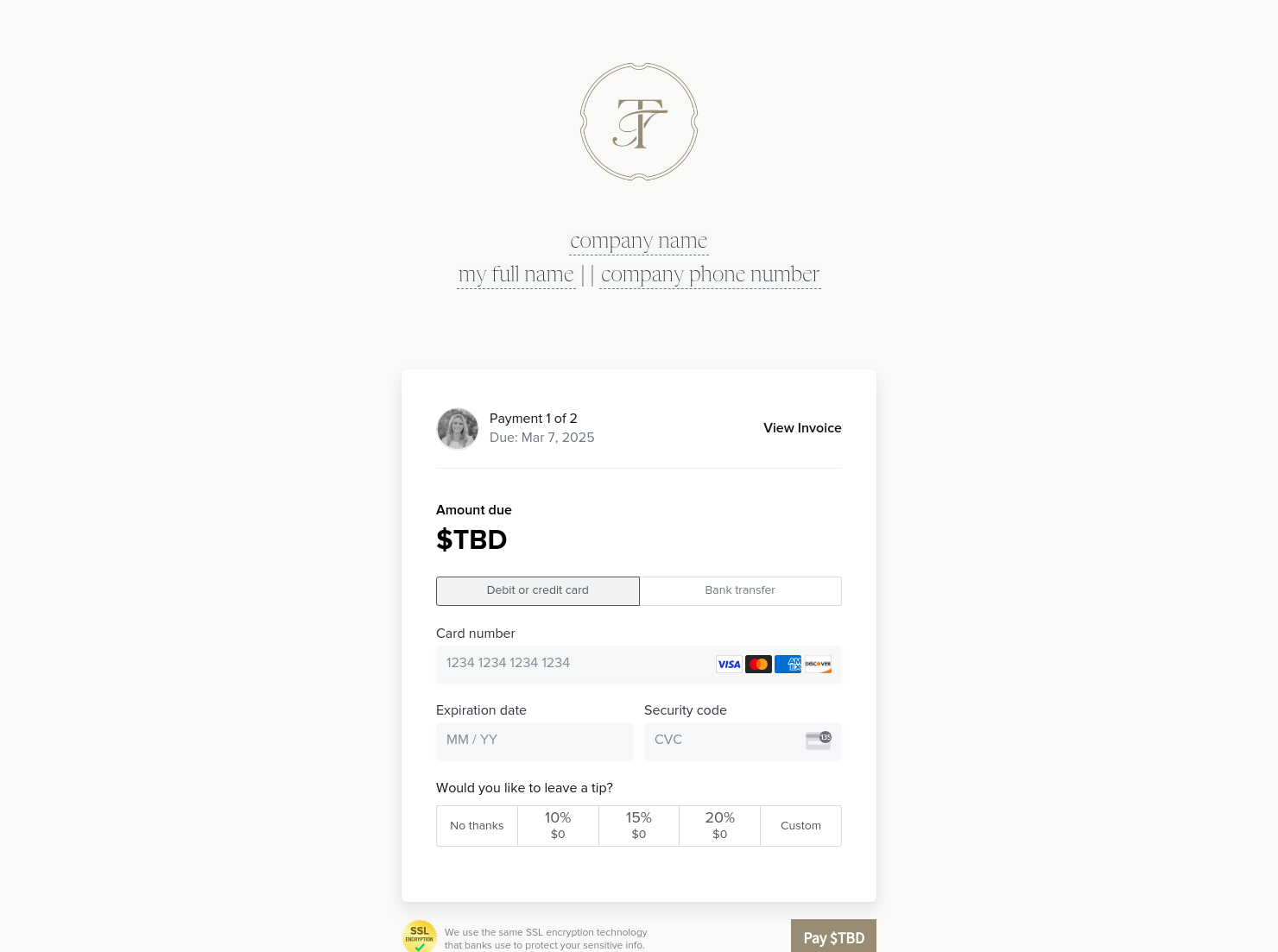
This part often gets overlooked, but it shapes the final impression. The process should feel just as smooth here as it does at the beginning. Using HoneyBook online payment software, clients can complete payment without leaving the proposal. Some proposals also include optional tips or add-ons at this stage. It’s subtle, but it can work — especially when a couple has already chosen a higher-tier package and is fully invested. - Next steps section
Close things clearly. Clients shouldn’t have to guess what happens after they pay. A simple prompt like booking a kick-off call through the HoneyBook meeting scheduler keeps the process moving and avoids that post-payment pause.
An effective proposal doesn’t push pricing forward on its own. It supports it. For wedding planners, that means showing how each package connects to real involvement. Clients aren’t just looking at cost — they’re trying to understand how present you’ll be, how much support they’ll receive, and how the experience will feel overall.
Clarity also matters for efficacy. Too many options, or packages that blur into each other, tend to slow decisions rather than encourage them. A focused wedding proposal sample is easier to navigate and say yes to.
This template is most useful when you’re ready to present your services and pricing after an inquiry or consultation.
Use it when:
- onboarding new wedding planning clients
- presenting tiered or custom packages
- confirming scope before booking
- guiding clients toward a final decision
- pricing needs explanation, and not just visibility
Catering has a lot of moving parts, and the menu sits in the center. If your catering menu is scattered across emails, texts, and screenshots, mistakes show up at the worst time.
A structured menu template helps in practical ways.
- Builds client trust and a professional first impression.
- Speeds approvals by making choices simple.
- Reduces payment disputes by documenting totals and terms.
- Saves time by cutting back and forth.
That means fewer surprises for clients and fewer fire drills for you.
FAQs
Below are quick answers to common questions from caterers building a catering menu that clients can approve with confidence.
Structure your pricing around clear services and deliverables. Clients should be able to see what each package includes and how it fits their needs.
A strong wedding planner proposal includes services, pricing, a contract, payment terms, and clear next steps so clients can move forward confidently.
HoneyBook templates bring your services, pricing, and next steps into one place, reducing back-and-forth and helping clients move through the booking process more smoothly. Learn more in the Files and Templates Help Center.
Yes. You can adjust sections, pricing tables, and package details so your proposal reflects different service tiers and client needs. Learn how in this guide to customizing Smart File pages.
Related templates
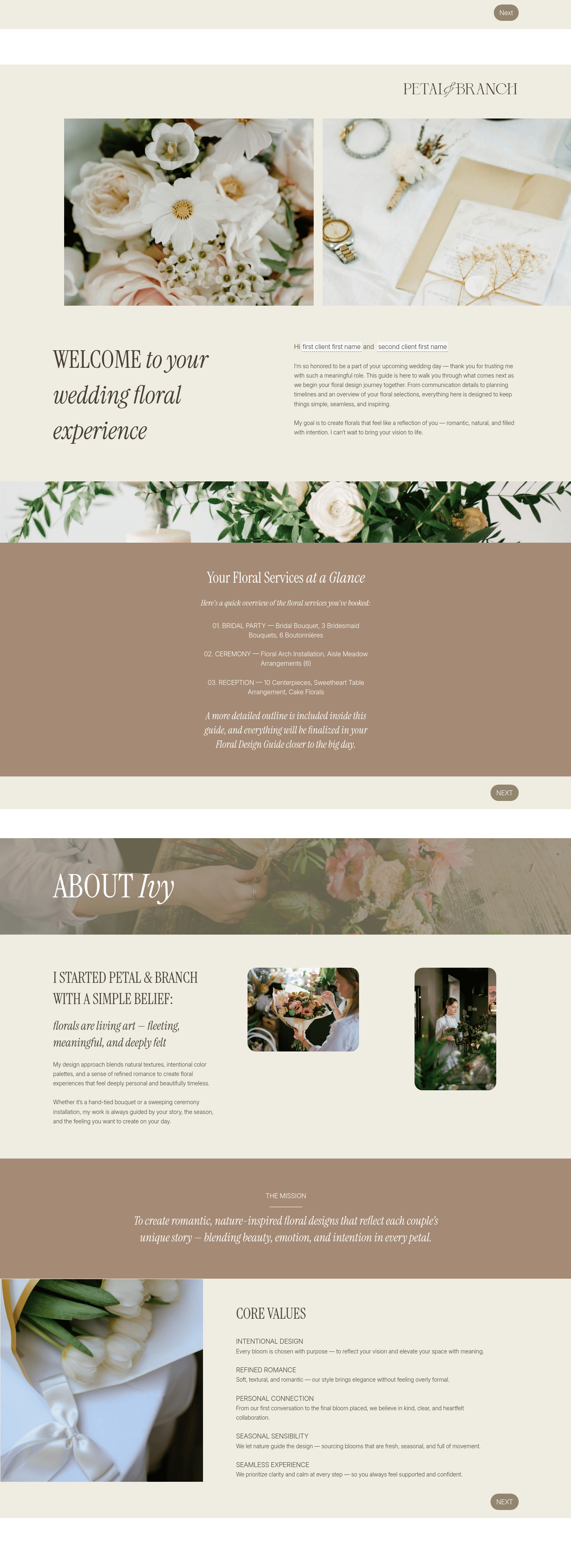
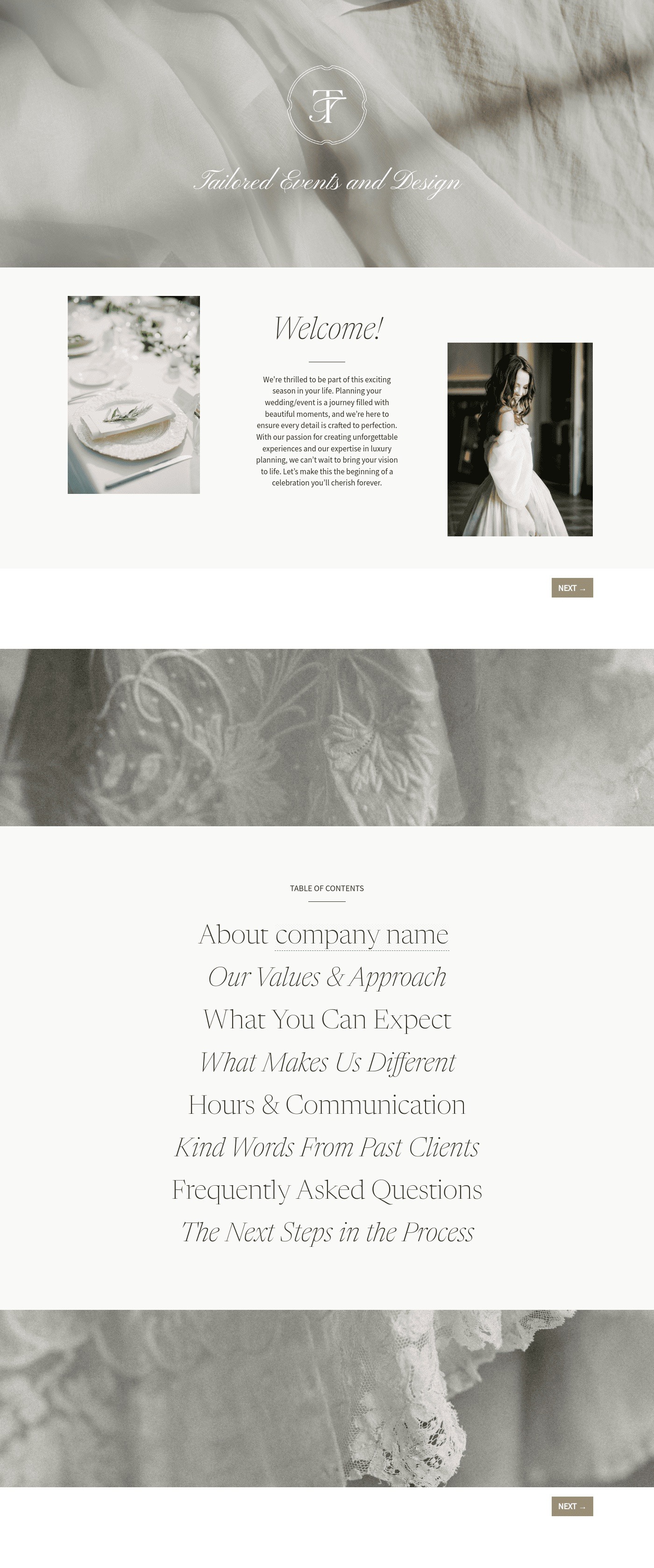
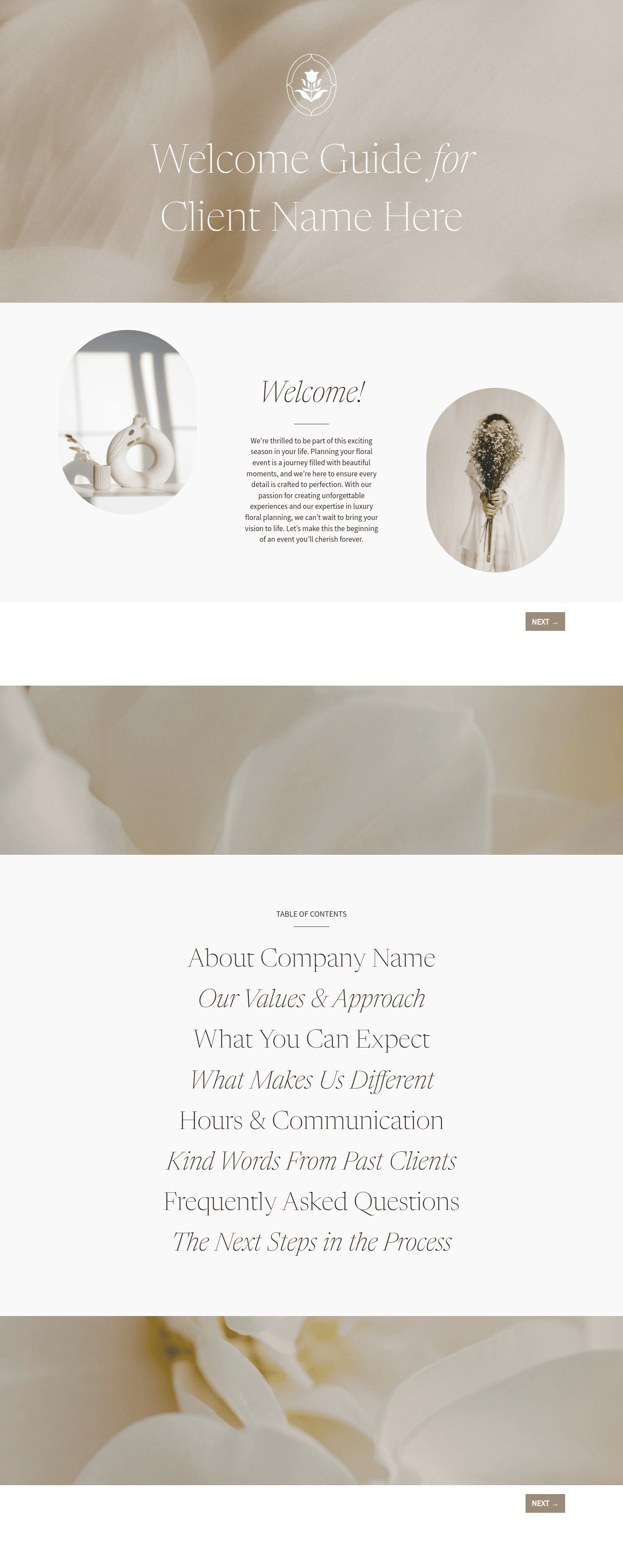

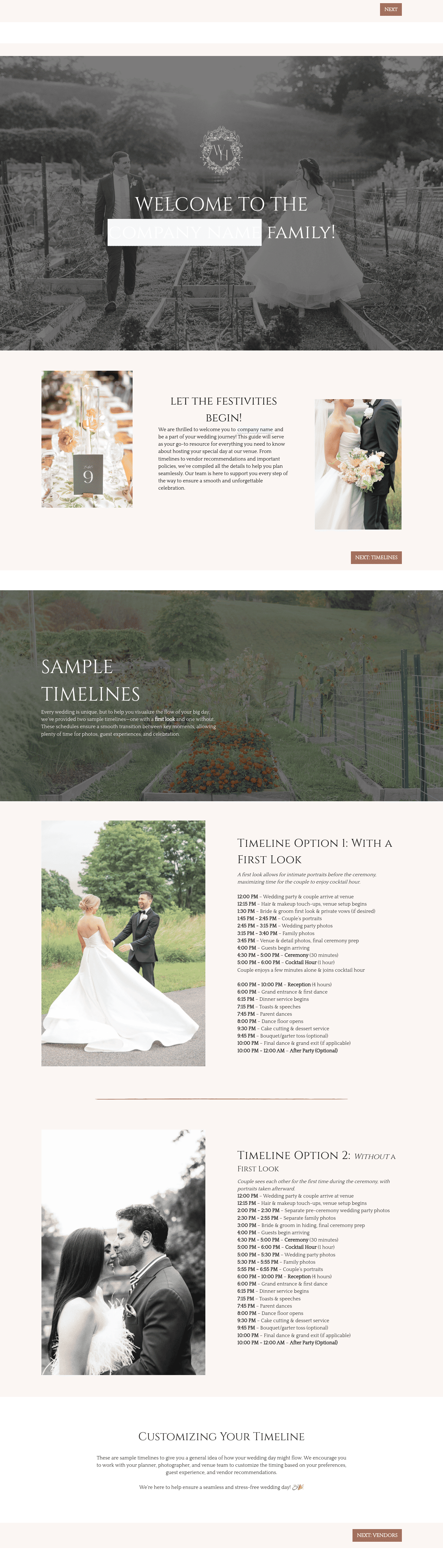



Related Templates

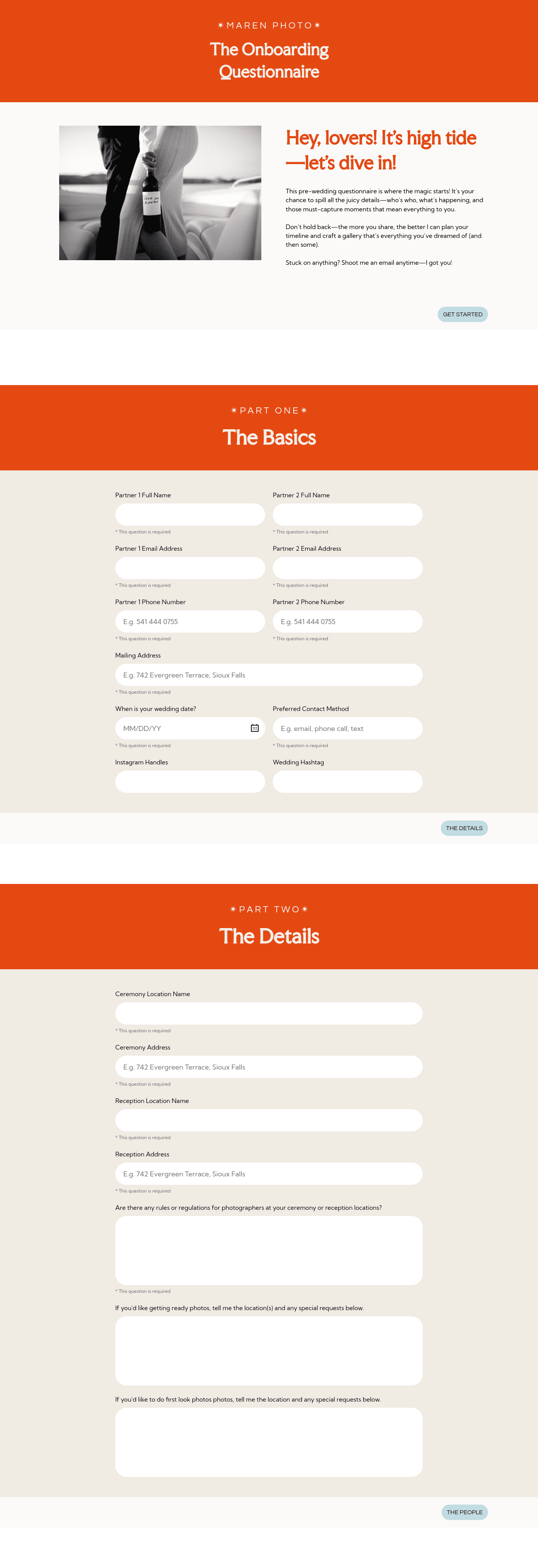
%2520(1).avif)
.png)
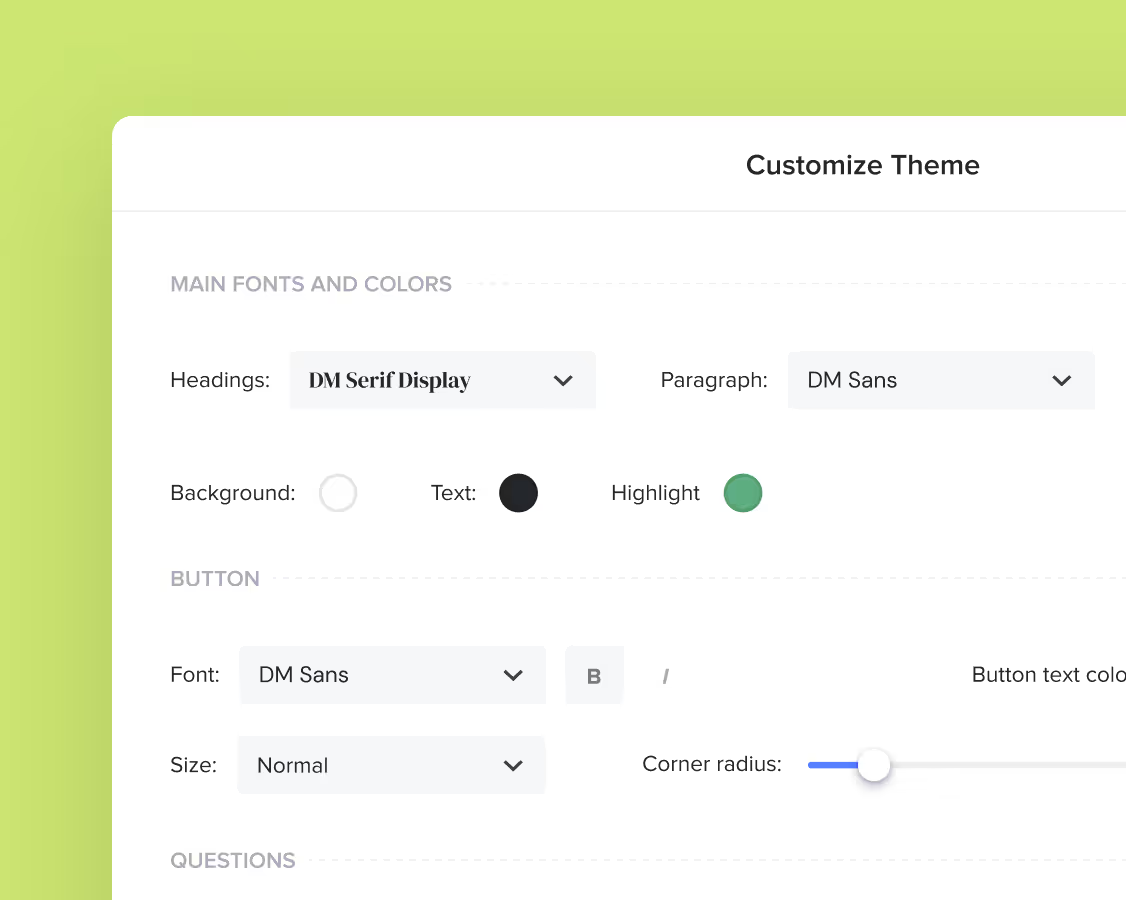
Make it your own
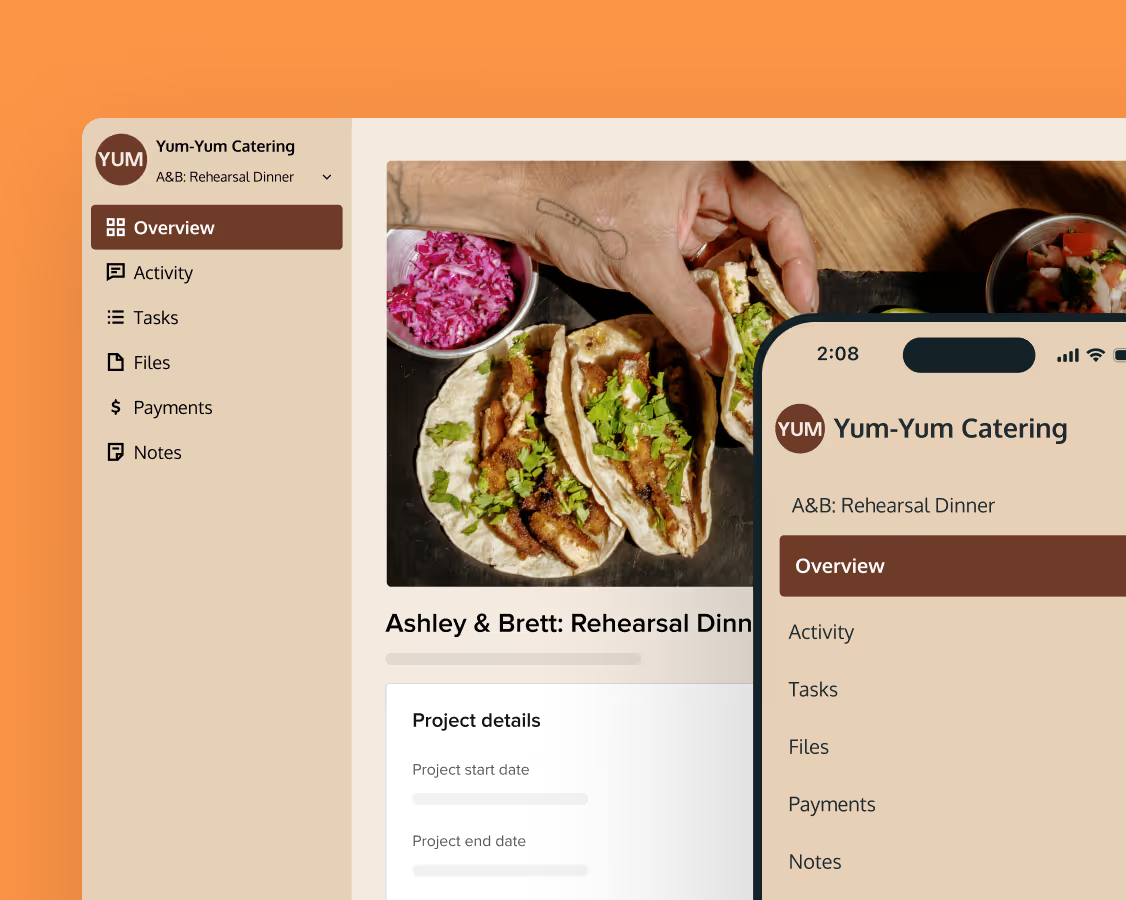
Fully customize the template to fit your needs. Quickly apply your company branding with just a few clicks.
Share with clients
Create exceptional client experiences through HoneyBook’s dedicated client portal, allowing them to read, review, and take action from any device.
Reuse and scale
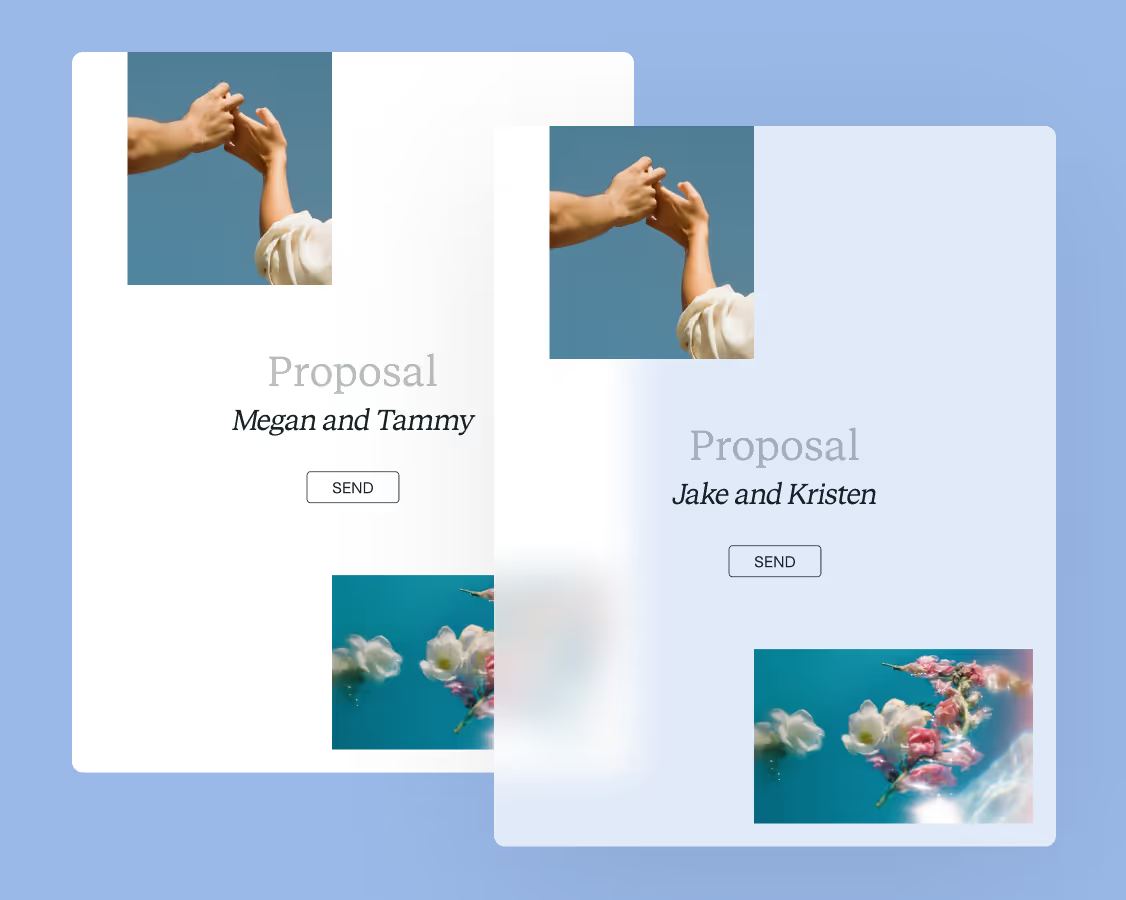
Use your customized files with different clients again and again to save time and make managing client interactions that much easier.
Join the 100,000+ businesses growing with HoneyBook.